

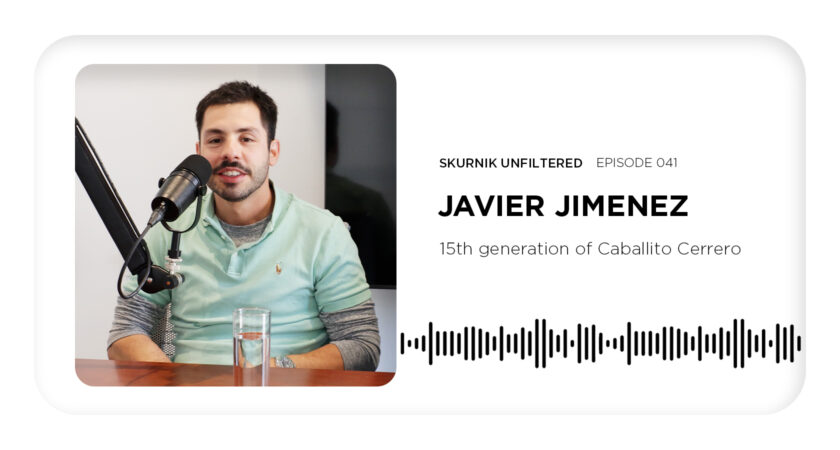
Javier Jimenez can trace his roots back 15 generations in the Tecuane Ravine, a culturally significant canyon in Jalisco that is home to a UNESCO World Heritage site. Before European contact, indigenous people carved large circular pits into the volcanic rock here for making vino de indios, an early agave distillate. The site has remained the heart of production across centuries, as vino de indios evolved into vino de mezcal, then vino de Tequila, and finally, Tequila as we know it today.
But the rules set by the government that regulate the ingredients and methods allowed for Tequila came to feel inadequate, sanitized, and a bit arbitrary for Javier and his father. How does prohibiting all but one agave species and allowing for destructive harvesting of immature plants really protect the quality of the spirit and the tradition of their ancestors? Ultimately, they renounced the official denomination of origin in favor of an unclassified agave spirit much closer to their heritage. As Caballito Cerrero, they farm historical varieties and harvest only mature agaves, crafting rich, unctuous spirits unlike anything else on the market.
With National Hispanic Heritage Month kicking off on Tuesday, September 15th, our expert on Mexican distillates, Justin Lane Briggs, sits down with Javier to discuss the forgotten history of Mexican distillation and how he and his father are keeping their heritage alive.



Next week, Cody Stephenson and Matías Riccitelli discuss the heritage of the Argentinian wine tradition.
Be sure to subscribe to Skurnik Unfiltered wherever you find your podcasts so you can stay up to date on all the exciting content to come.
Introduction
Javier Jimenez 0:03
This industry is way, way, way more antique than everybody thinks. This is an indigenous beverage, this is an indigenous spirit. We are using the same techniques as the ancient ones because that’s what we learned, and that’s what the people who live here know. They don’t know how to cut corners.
Harmon Skurnik 0:21
This is Harmon Skurnik, and welcome to another episode of Skurnik Unfiltered. Today I’m with Justin Briggs, who’s our portfolio manager for everything Mexico. Welcome, Justin.
Justin Lane Briggs 0:33
Hola everybody.
Harmon Skurnik 0:34
You recently had an interview along with William Scanlon, who is the proprietor of Heavy Métl, which is an importer of Mexican spirits that we work with, and together you interviewed Javier Jimenez, who is the proprietor of Caballito Cerrero. This is a—well, actually I was going to say it’s a brand of tequila, but they actually don’t call their product tequila. Why is that?
Justin Lane Briggs 1:01
Yeah, not anymore. Until very recently they did, but they chose to leave the denomination of origin, the DO, in, I believe, 2018. The DO places a lot of restrictions on historic production. If you look at tequila production pre-1940s or so, there were multiple varieties of agave people used to make tequila, to make vino de mezcal, wine of cooked agave de Tequila, of the Tequila region. There were as many as nine varieties that people would use consistently, and through classic examples of agricultural power being able to manipulate new rulings and restrictions and legislations, a few powerful families consolidated the varieties of agave that you could use under certification as Tequila on specifically Blue Weber or Agave tequilana. The Jimenez family never stopped producing with other varieties. They continued to produce in this traditional heritage way, and it’s really distinct, partly because they are the oldest extant example of tequila distillation in all of Mexico. Their distillery site is based on the same site as one of the earliest written, recorded sites in the history of agave distillation in all of Mexico.
Harmon Skurnik 2:02
Wow.
Justin Lane Briggs 2:03
Ruins of these early distilleries, potentially pre-Columbian infrastructure of fermenters built into the hillside where you have pits carved into the stone, over 40 of them running along the side of the mountain where you ferment in the ground this way. They’ve been there forever doing this production, so there’s sort of like, “Well, we’ve been doing it this long our way. We’re not going to change our ways just because a new ruling told us to.” Rather than to conform to the restrictions of the DO, they chose to instead leave the DO and pursue their own truth.
Harmon Skurnik 2:29
That’s a great explanation. It’s amazing that this brand is producing at this historic location where agave distillation was invented.
Justin Lane Briggs 2:38
Yeah, a UNESCO World Heritage Site.
Harmon Skurnik 2:40
And they also produce it in a very traditional way. They continue to use these historical agave varieties.
Justin Lane Briggs 2:46
Yeah, exactly. I think it’s really remarkable and a little romantic and charmingly pugilistic, like, “Bring it on, we’re gonna step out.” And it’s kind of ironic because not only are they the oldest extant example of tequila, but they can’t use the word “tequila” on their label, or they’ve chosen not to for very understandable reasons. But also, Javier’s father was one of the people who helped to establish the modern CRT, the certifying board for Tequila, and yet he’s choosing to resist the limitations of that structure.
Harmon Skurnik 3:13
I know this is a little bit off topic, but didn’t Real Minero do the same thing in mezcal?
Justin Lane Briggs 3:17
Yes, also recently.
Harmon Skurnik 3:18
Did they do it for the same reasons?
Justin Lane Briggs 3:20
Not exactly the same reasons, but similar reasons in that, there are restrictions and limitations placed by the CRM and certifying process. There are also financial limitations being placed and consolidation of power away from the producer and instead with this certifying board that they were choosing to reject. And it’s no surprise that they are both working with Heavy Métl and William Scanlon, who is featured on this interview too.
Harmon Skurnik 3:41
Interesting. Getting back to Caballito Cerrero, now I can understand why this brand has such a cult following. What is your understanding of why people just love this agave spirit?
Justin Lane Briggs 3:54
Certainly that’s a big part of it. You could have one of the oldest examples of something in the world, and if you aren’t doing it well now, it wouldn’t matter. Like, great, good on you for having something really old, but it’s gotta be good too. And Caballito Cerrero is absolutely one of my very favorite tequilas to drink—I’m gonna go ahead and say tequila anyway. It’s really remarkable stuff. There’s both a blue Weber, a.k.a. azul, available, and there’s also chato, which is a colloquial name for Agave angustifolia, what we might otherwise in Oaxaca call Espadín. There are many different names for that across the country, but they drink remarkably differently. They’re both unique and compelling. Their age expressions also get increasingly complex, partly because the family’s been working with the same set of around 17 barrels to age their tequila in. Just 17—that’s wild, that’s nothing. Other small producers we work with have several thousand barrels. And here they are, 17 barrels. Those barrels have been used for at least four decades or so, so you have these heavily extracted, stripped-bare iterations of these oak barrels that are ultimately offering an interaction with the oxygen during that aging process even more than they are offering the influence of the oak, and you wind up with these really beautiful, complex, densely structured expressions of agave rather than expressions of oak.
Harmon Skurnik 5:05
Does it resemble tequila more or does it resemble mezcal more?
Justin Lane Briggs 5:08
It resembles tequila more, at least as far as our conception in the US. It doesn’t carry those smoky profiles nowadays. It’s a steam oven, so it shares that production style, but that being said, it winds up oftentimes having this very big, rich, more unctuous profile and mouthfeel than a lot of other tequilas on the market. The paucity of their production, the limitations of their small batches, the even further limitations of their small aging regimen—all those things yield a very specific, very concentrated example of agave distillate in Jalisco. And I personally get jazzed just thinking about how much this represents the heritage of agave spirits before we began to industrialize them as aggressively as we have in the last century.
Harmon Skurnik 5:50
Well, I think it’s a good time to listen in on this wonderful conversation with Javier Jimenez of Caballito Cerrero by Justin Briggs and William Scanlon. Let’s listen in.
The Birthplace of Agave Distillation
Justin Lane Briggs 6:02
Good morning, everyone. I’m just gonna dive right in. I would love to talk a little bit about what makes Caballito Cerrero such a historic label. This is a very, very long and storied history, and I’d love for you to tell us where that begins. I know you were recently also recognized as a UNESCO World Heritage Site.
Javier Jimenez 6:17
Well, you have to understand that where the distillery is located is the birthplace of the tequila industry. When the Mexican government and all the other distilleries, the big ones, wanted to put the name “Tequila” on an historical or in a UNESCO situation to be a heritage of the world, it turns out that the beginning is the Tecuane Ravine, la Barranca de Tecuane, where Santa Rita is located.
Justin Lane Briggs 6:48
That’s the Santa Rita fábrica, your distillery.
Javier Jimenez 6:50
Yes, our distillery. And there are four more ancient sites. The oldest one is called Cielo Abierto. It’s dated around the 1600s. This is a pre-colonial distillery. The hobby of my uncle is to get very deep into historical facts, and he started researching in the indigenous archives in Spain. And well, we start working on our family tree; we like to know where we come from. And we realized that this industry is way, way, way more antique than everybody thinks. This is an indigenous beverage, this is an indigenous spirit. And we were able to learn that my dad is the 14th generation, and I’m the 15th generation of vino de indios, vino mezcal, vino de Tequila, Tequila, and today, agave spirit producer. Cielo Abierto, as I said, which is very, very old—the oldest known and most complete taberna or distillery that made Tequila—was part of my family. It was a communal site for the people that live in the ravine, a communal distillery. And at one moment or another, Maximiano Hernández, who happened to be my great-great-grandfather or something like that, in the end, he owns that land, he owns that site, and he says, “Nobody else is gonna work it but me.” Something really cool about that place is that it’s designed to be very, very functional. Even though it’s an archaeological site, it’s built to produce, and if you transform that capacity to these times, it was a really, really big distillery. It has this barbacoa oven.
Justin Lane Briggs 8:29
Like an earthen pit oven you might see in mezcal.
Javier Jimenez 8:32
Yeah, like the ones you see in Mezcal. You have a tahona, and in the site there are a lot of broken tahonas around it, so that tells you that this is a site where they worked a lot because they broke the tahona and they already have a replacement so they could keep producing non-stop.
Justin Lane Briggs 8:48
The tahona is the stone mill, often animal-drawn, to crush the agave after cooking.
Javier Jimenez 8:53
Yes. And this archaeological site is designed in stages, by gravity. It works by gravity. The most upper part is where the cooking pit and the tahona are located, and the lowest floor has the fermentation pits, which are carved into the stone.
Justin Lane Briggs 9:10
They’re cut into the ground. Having visited there with you, I just want to pause and reflect on this. It’s hard to describe how cool it is. It looks as though you’re standing on the surface of the moon or walking along the top of a giant Swiss cheese. There are all these pits, these holes cut into the ground below, littering the landscape ahead of you. How many of those earthen fermenting pits are there?
Javier Jimenez 9:30
Today they are around 50. A big part of it was destroyed when they built the road that connects to the closest town there, but there were probably 80 or 100 of them.
Justin Lane Briggs 9:42
Wow.
Javier Jimenez 9:43
And they are around 3,000 liters each.
Justin Lane Briggs 9:46
Wow.
Javier Jimenez 9:46
This will let you understand the amount of spirits they were making. They are carved in tepetate, which is a very, very hard and non-porous stone. These guys thought about everything. And on the next floor, below it, they have the distillation with fire. They were using capachas, which are clay pots and heated with direct fire. After the Spaniards visited them, they brought the Filipino still. So for what we have in information, they were selling this product in an estanco in Guadalajara, which would be like a wine deposit or a state-controlled liquor wholesaler and retailer today. Even though spirits were prohibited directly by the Spanish crown, there are letters from the auditors that claimed to the king or the queen that they were prohibiting these spirits, even though they did not listen to the king’s orders. Why? Because it was paying big, and they were using this money generated by the estanco to pay for the construction of the aqueduct to the city of Guadalajara. So once again, spirits are saving the world, one step at a time.
Justin Lane Briggs 10:57
It’s interesting, William, you were making this point earlier that gravity-fed infrastructure, that very logical building of stages of production mirrors modern distilleries as well, like that method still exists now.
William Scanlon 11:09
Yeah, if you look at the new Santa Rita fábrica, built in 1873, it follows the same function: top-loaded steam brick ovens, and then everything flows from there, but I’ll let Javier tell you more.
Javier Jimenez 11:27
Yeah, the Santa Rita distillery, as William said, was built by Maximiano Hernández, as I said, my great-great-something father. We have no idea who was the designer of the distillery, but the guy was a genius. They carved the mountain and it works by gravity. They fill the ovens from the top of the distillery, and then you go downstairs, about 20 meters below, and you get to the distillery, so you do not have to take out and carry the cooked agave. It has French column stills made from Le Havre, which is the French company that made the Eiffel Tower. The columns are stamped with that name. It also has a rail inside the distillery, like a track for a train.
Justin Lane Briggs 12:13
For listeners, it reminds me of the mining cart scene in Indiana Jones.
Javier Jimenez 12:17
Exactly. The guy that designed this was a genius. And this is during Porfirian times when everything in Mexico was reflected towards Europe, so that’s probably the reason why they brought equipment and ideas from France and Germany. It’s very, very interesting to see how the guy that designed this was planning to make a lot of spirits there. Today we have more modern equipment. We are a distillery that has been around 150 years, more or less, making agave spirits, and we stopped at the point where we felt tradition met technology right at the exact moment where quality stays. Something really interesting about Santa Rita is that today we only work with seven people. There are two families: us, the Jimenez, who have been the owners of the distillery and collaborate with another family, Villagrana. They have been there for a long, long time. I always say it’s more their distillery than mine because they have lived there all the time. It’s the joint force of these two families that are able to make Caballito Cerrero. They are those seven people that are doing the cooking, doing the extracting of the juice, doing the fermentation, doing the distillation, that we are able to create Caballito Cerrero.
Justin Lane Briggs 13:36
I love it. I know that you guys operate your own fields. You have about 400 acres, I think you said. How is that labor divvied up? Is that also your two families collaborating?
Javier Jimenez 13:45
There is a small town very close to the distillery. It’s about 50 families. Most of them are collaborators with us. We have this double system. There are certain parts of the land where we hire people to work with us to help us plant the agave to harvest everything. And there are certain parts of the land where we split the job with them. We go 50-50. I give them the land, I give them the seeds, I give them everything they need, and they only take care of the plants. And in the end, I will use that plant for the Caballito making, or I will sell that plant to a third party, and these guys earn money, so this is very good for them. It’s a certain way of helping the community. It’s something very important for us. It’s a very, very big family working together to sustain what we feel is the most important thing: the birthplace of the agave spirit that some people call Tequila. But not us.
Justin Lane Briggs 14:41
This is as much a project of creating a distillate and creating a spirit and creating the raw ingredients as it is also an act of preservation of heritage and an historical preservation act, too.
Javier Jimenez 14:53
Yeah, something that we have learned with this long career that we have, these 150 years, and our ancestors taught us, is that it’s very, very important to have your own raw materials, your own agave. Why? Because this way you are sure they are not playing around with it, they are not cutting corners, they are not using chemicals on them, they are not using lab seeds. We are using the same techniques as the ancient ones because that’s what we learned, and that’s what the people who live here know. They don’t know how to cut corners. And if we brought agave from other places, we would be bringing some of the agave diseases that you probably have heard of. We are avoiding that. The ravine has a microclimate. It’s a very, very unique place, so we like to keep it that way.
The Life Cycle and Sazón of the Agave
William Scanlon 15:41
Something that’s also special about the way you cultivate is that you harvest what you think is ready at the time and leave the others to continue to mature.
Javier Jimenez 15:51
There’s what the big company says a mature agave is and what a mature agave really is. The big company says that you have a mature agave at five years, which is a no-no. It’s impossible. A mature agave is around eight to twelve years old. There is no way I can ensure that if you plant a thousand seeds on the same field, all of them are going to be ready at eight years. Some of them are going to be ready at eight, some of them at nine, ten.
Justin Lane Briggs 16:19
We all mature at different rates.
Javier Jimenez 16:20
Exactly, just like people. So by having your own agave fields, you have the chance to select what you want to harvest and leave the rest to be mature, to the right moment, to have the exact amount of sugars in order to have the best quality product ready for your production. That’s something very important that I have learned, and my dad taught me, and his dad taught him, is that the agaves are ready when they want to be, not when you tell them. We know that agave is ready when it starts to quiotar, which is the reproductive stalk. You have to understand that the agave is a flower, it’s a plant, it’s going to flourish. And that flourishing time, as I said, goes between eight to twelve years. So when it starts to grow this quiote, you have to cut it off. That means you have between one year and one year and a half after you take it out. You can even wait two years as long as there is no rainy season. After you cut the quiote, we call that sazón.
William Scanlon 17:26
What most people don’t know is sazón would be the same thing as capón, just different terminology.
Javier Jimenez 17:31
Yeah, the Oaxacan agave culture is pretty much the same process. The only main difference, in my opinion, is that they work with a lot of different varieties, and most of them take longer to be mature. But the terms are very similar. Sazón, capón, they all reflect the same, that is, when the agave quiota, you have to take it out. If you do not take out the quiote, that agave is going to be useless. Why? Because all the sugar, all the flavor is going through that quiote, and the piña is going to be dry, so you are practically cooking nothing. It’s not going to have any sugar at all.
Justin Lane Briggs 18:05
And you’ll cut the quiote and then you’ll allow the plant to keep on generating and saturating sugars for a year or even longer?
Javier Jimenez 18:12
For a year, yeah. What’s happening is the agave piña is going to grow up and swell, and it means that agave is ready. You have to take it out or lose it.
Justin Lane Briggs 18:22
It’s wild also because that is something that we do see in the mezcal tradition, but we don’t really see otherwise in modern tequila at all. There aren’t people producing capón tequila, much to my knowledge at all. And seeing that historic method reflected, that ancestral method reflected with you guys is exciting.
Javier Jimenez 18:38
There are two types of harvesting for the agave in the tequila industry: select agave, which is the one that we use, and the other one is called arrastre, or to take out everything. When people buy agave from us, the bigger brands or other companies, sometimes they’ll say, “I need a thousand kilograms. I don’t care what quality of the agave is.” If it’s sugary, if it’s sweet or not, they need the amount of kilograms. That’s called arrastre. You take everything out and you clean the whole field. When you go on a trip and you see a truck that has really, really big ones and then some really, really tiny ones, that’s what’s happening. They clean the whole field, and that’s it.
Justin Lane Briggs 19:19
When you’re harvesting to sell to other producers, other people, will you still use the sazón method? Will you still allow it to sit for a year?
Javier Jimenez 19:25
It all depends on the client. There’s always a third party that takes care of that. It’s something that happens in the industry, and those are the guys that have the direct contact to the big guys. Actually, you never know who you’re selling to until the final moment that you’re elaborating what they call guías. That’s the moment when you see, oh, I’m selling to Cuervo, I’m selling to Bacardí, I’m selling to different companies. There’s a third party that pretty much does everything, and they say, “Well, they want the whole field.”
Justin Lane Briggs 19:53
So there could be tequilas out there that we’re all consuming that were harvested using this method, and we just don’t know.
Javier Jimenez 19:57
They don’t know, or they don’t care, which is the saddest part.
Justin Lane Briggs 20:00
I hate to depart on that, but we could do this all day. The entire conversation with you guys and what you represent to this larger category and to our understanding of agave spirits and heritage agave distillation in Mexico is endless. I’m grateful for these opportunities to talk to you that I get personally or for the larger professional context. I’m so grateful. Thank you guys very, very much for joining us. Caballito Cerrero.
Javier Jimenez 20:21
Thank you. Thank you very much.
Skurnik Unfiltered is recorded at Skurnik Wines & Spirits headquarters in the Flatiron District of New York City, which is why you might hear some city noises as we go along, like horns honking. If you found the conversation interesting, please consider liking, subscribing, and leaving a review. You can stay up to date on our show and upcoming events by following @skurnikwines on Instagram and visiting our website at skurnik.com