

Much has been said about sustainability practices in the wine business, often focused on clean farming and eco-friendly packaging. Rarely does the term include sustainability when it comes to people—how a business seeks the best for its employees, their working conditions, and their extended communities.
After observing how many California farms operated on migrant labor, Tom Stolpman started Stolpman Vineyards in the 1990s with a promise to provide stability for his essential workers. He hired Ruben Solorzano, a Mexican immigrant, to be his vineyard manager and sponsored him for a green card, which put him and his family on a path to citizenship. In the years since, the Stolpman and Solorzano clans have grown and prospered together throughout Santa Barbara County, with the Stolpman estate in Ballard Canyon as their center of gravity. Today, Tom’s son, Pete, leads the estate, and a second generation of full-time farmers learn hands-on skills from Ruben’s decades of wisdom.
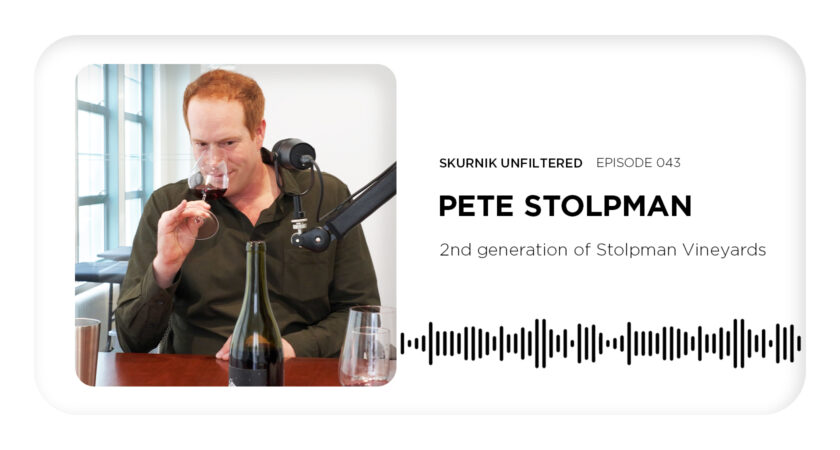
Pete joins the podcast this week with an important message about sustainability in practice, not as a buzzword. He opens a bottle of La Cuadrilla, Stolpman’s flagship red blend that comes from a block of vineyard owned by Ruben and the vineyard crew. The estate breaks even on it, and the profits get redistributed to the workers, so they can fully enjoy the fruits of their labor.



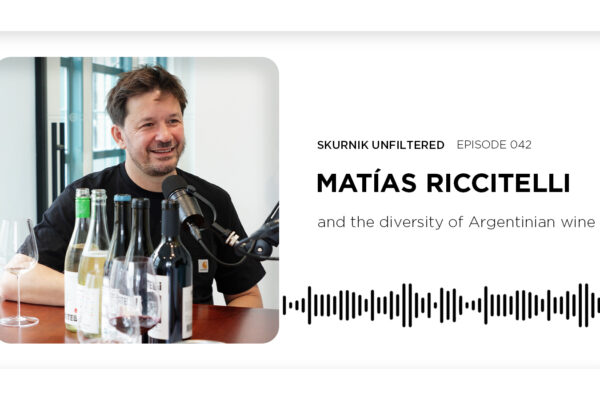
Next week, Federico Gambetta joins the podcast to talk about his personal winemaking evolution through Argentinian Malbec.
Be sure to subscribe to Skurnik Unfiltered wherever you find your podcasts so you can stay up to date on all the exciting content to come.
Introduction
Pete Stolpman 0:03
I think the most important thing we’ve done is we’ve established a soul to everything that we do and a why behind each of our cuvées. We want to remind everybody who has a glass of this wine what it’s about. It’s about the people that we’re supporting, about the quality of our farming. I can’t imagine running a vineyard any other way.
Harmon Skurnik 0:25
Hey, this is Harmon Skurnik, and welcome to another episode of Skurnik Unfiltered. Today I have with me Jamie Schwartz, who is the ambassador of all things American. Welcome, Jamie.
Jamie Schwartz 0:37
Hey Harmon.
Harmon Skurnik 0:38
You recently sat down with Pete Stolpman, one of my favorite people. Stolpman Vineyards. I gotta say right off the bat, I mean, what they have done in the last 15 to 20 years is transformed not only that domaine, but also the way that we view Santa Barbara. They’ve done some really extraordinary things viticulturally and in winemaking, right?
Jamie Schwartz 1:01
Yeah, 100%. They established the Ballard Canyon AVA, which I think is really important to showcase that specific area specializing in Rhône varieties, but they also have a love of Italian varieties, so you see things like Sangiovese in the mix too. Kind of unconventional, but that’s the beauty of American wine, right? We can do everything. And they nail it with all the grapes they work with.
Harmon Skurnik 1:20
Yeah, they work with grapes like Gamay, Trousseau, Grenache, in addition to Syrah, which they have mastered the style of—a beautiful, cool-climate Syrah. Then they’re not only experts in farming and winemaking now, but they also are experts in marketing, I would say. They’ve done an incredible job of creating labels like Love You Bunches, which is just incredibly popular, and So Fresh and things like that. I think Pete seems to be kind of a marketing guru of some kind.
Jamie Schwartz 1:48
He totally understands coming up with these different sub-brands of Stolpman. We say it all the time, but there is a Stolpman wine for everyone.
Harmon Skurnik 1:56
Also, I think what makes them interesting is the way that they treat their staff. They have an incredible full-time staff that have been there and are loyal to the winery for many, many years. They treat them well, they help in sharing some profits with them. They have their own plots of land that they cultivate, and they bring them into the picture. It’s not just, well, you know, we hire some migrant workers who come through to pick the grapes. These are full-time workers and they treat them well. It’s a wonderful model.
Jamie Schwartz 2:25
It’s sad that we don’t see this as a norm in the wine industry, and they’re really a unicorn in that regard. I hope people will listen to this and take that away because being sustainable is obviously important and a buzzword, but it’s not just about your vineyard practices. It’s 100% about how you treat your people, and they are at the top.
Harmon Skurnik 2:42
We at Skurnik really enjoy and love our partnership with Stolpman. Why don’t we tune in and listen to your conversation with Pete Stolpman now?
Jamie Schwartz 2:50
Here we go.
Harmon Skurnik 2:51
Let’s do it.
The Story of La Cuadrilla
Jamie Schwartz 2:53
I have the good pleasure of sitting with my friend Pete Stolpman from Stolpman Vineyards, sitting here with a bottle of the 2023 La Cuadrilla. It’s a red blend from Pete and his family, and it’s a really important part of the Stolpman lineup. And with that, I’m just gonna kick it to Pete to walk us through this wine, what’s so special about it, and how it relates to the whole story of Stolpman Vineyards.
Pete Stolpman 3:17
Yeah, if we have to pick one wine that we’re gonna drink today together, it’s this wine. It’s the most important wine we make. From day one, my dad made a commitment that if his dream of starting a vineyard back in 1990 was to come true, it was going to positively affect everybody involved. What that was alluding to is that he didn’t want any part of migrant labor. He wanted to know the people who worked in the vineyard. He wanted to know their families, their children. He wanted to be able to sleep at night knowing their families had stability because they had a full-time job. They didn’t have to move around for different crops. They were all immigrants, they weren’t migrants. And luckily for all of us, my dad met Ruben Solorzano, and my dad asked Ruben, “Hey, can we employ you year-round? I want the same crew here year in and year out.” And Ruben said, “Yes, no problem,” knowing that it’d be a huge privilege to offer people a career, not just a week of work. And Ruben recruited the best, the brightest, and they turned out to be an insanely loyal group of people to become the original La Cuadrilla, the crew. The name comes from the cuadra. Ruben began giving a cuadra, a block of vineyard to the workers. It was their own. They owned it. They had to make every decision in their own block, which meant they had to pay attention to every methodology of how we were pruning, when we were pruning, were we shoot thinning, were we leafing, when and how were we training, were we adjusting the crop, leafing further, when and how we were harvesting. They had to make every decision as a farmer, not just as a worker. We started making a wine from that block for the crew to start taking pride in their labor even more by enjoying the fruit of their labor. La Cuadrilla was born for the crew to enjoy because none of the crew members grew up drinking wine. They grew up with beer and tequila in Jalisco. And even before we started making the wine, the crew took so much pride in their career, farming their own block. It was a story they could tell their families. And when we began bottling this, it was a game changer. All of a sudden, it was something that was shared at the family table. Parties were thrown because we gave the crew members each a lot of wine. Storage became an issue, so everybody threw a big party and word spread like wildfire. We started keeping a portion of production to sell to our mailing list, and it became part of our identity that our customers came to know, that we were stewards of our land and that we were equitable and took care of our people as well. So when I took over in 2009, my commitment became that 10% of our production would be this red blend, and it’s actually grown to be about 18% of our production because the commitment is we want to grow the profit sharing every year. The idea is it’s the entry-level red blend of the vineyard. It speaks to each vintage, always Syrah, 50-60% Syrah, a good chunk of Sangiovese, Grenache, Mourvèdre, representing what we have planted. We break even on it, and then the profits turn into a, right now, average ~$3.25 per hour bonus on every paycheck, so it’s an investment in people. And then we do a fiscal year end of November 1st. We add up the remaining profit and divide that by seniority and distribute that in the best party of the year under our 700-year-old oak tree, get the band playing. It’s a really proud moment where I stand up and now my sons are up there, Jess, my wife, Ruben, and his wife María, of course. And one by one, I get to call up each member of the crew from the most veteran to the rookies and give out that bonus check. I can’t imagine running a vineyard any other way. I know everybody out there. I remember playing soccer and volleyball with the children of the crew, and now I get to watch my two young boys playing with the children of the crew. Now those kids that I played with are all professionals—electricians, nurses, you name it. And that’s really cool in itself, that my dad’s vision of giving workers stability, giving them a good job, really affected their children, that they were able to live, go to school, have stability, and take advantage of the opportunity that America should present to the second generation. And 35, 36 years in, we have watched it come true. To see the generational shift, I was that little kid, and now my kids are out playing with the children of the crew. It’s just a beautiful place. I’ll never forget, we had this British photographer out in the vineyard. He had traveled the length of California from north to south documenting harvest. He was on a hilltop taking long shots with a big lens, and I just struck up a conversation, and he just breathed out this long sigh. And he goes, “Man, I just wish I could have photographed here at this vineyard the entire time. Not every vineyard is like this. The labor bus pulls up.” And this is back in the day before mechanization. Now all those vineyards are mechanized. It’s just a really special place. It’s a beautiful place. Everybody’s proud to be there. Everybody feels connected to it and the care that goes into each and every vine. I don’t think you can do that without having an engaged crew that cares about what they’re doing.
Jamie Schwartz 8:43
I think investing in your people is so important and one of the things I love to champion about Stolpman.
Ruben Solorzano
Jamie Schwartz 8:50
Tell me more about Ruben. He’s an incredibly important part of the story of Stolpman Vineyards.
Pete Stolpman 8:57
Yeah, there are some people that just have a magic sparkle in their eye. I’ve never met anybody like him. Youngest out of 11 kids, grew up subsistent farmers in Jalisco. It’s really interesting. The first time I went down there, we were eating and drinking so much. Finally, one morning, Jess was like, “We need to go on a hike. We need to get exercise. We need to do something other than eat and drink.” And José, the oldest brother, had kind of taken control of the trip. Ruben came back and said, “Okay, José said we’re going to drive 45 minutes and we’re going to hike to this beautiful peak where we can see the whole valley.” And Jess is just like, “No, we don’t need an hour and a half round trip, like, look, there’s a beautiful mountain right here. Let’s just go on a hike.” So Ruben goes, talks to the older brothers, comes back. “Okay, we’re going to drive 10 minutes to our cousin Juan’s, and then we’re going to go on a different hike.” And we get up to the top of the mountain, and casually Ruben’s just like, “Oh, yeah, so this is where my grandfather was shot to death in a gunfight.” People had stolen cows, and he chased them up here. They were trying to get over the ridge, and it came to a head, and he was shot and killed. And that day is when Ruben’s father, the grandfather’s son, decided that all of his kids were going to finish high school and have the potential to get out of this hard life. José, the oldest brother, became the village school teacher, taught all his brothers and sisters in that little schoolhouse in the ranchito. Enrique, brother number five, and Marcos, brother number seven, happened to go to Santa Barbara and got jobs in vineyards. And Ruben being the cherished little king, number 11 out of 11, of course, José made darn sure that he learned good English and did well in school. And then Ruben decided to follow Enrique and Marcos to Santa Barbara, and he met Jeff. Marcos was already working with Jeff, and my dad was able to sponsor Ruben and get him a green card, and Ruben became our vineyard manager in 1994. Unfortunately, you can’t do that for people today. There’s no route to sponsor someone here, even if they’re the most special person in the world. Ruben and his wife María, they’re both full citizens today. Lupe, María Guadalupe, she is in charge of the crew eight to 10, 12 hours a day. And it doesn’t hurt that María is the second youngest out of 10, Ruben’s the youngest out of 11. We have this huge family empire throughout Santa Barbara County viticulture, and we have the new generation, the nephews, the nieces, the kids coming up now that are gonna take over. Hopefully we have generational security through the Solorzano and Buenrostro and all the different Briseño families. It’s a beautiful thing, and it’s really helped Stolpman when we’ve had these amazing strokes of luck, like Love You Bunches, that I’ve been able to plant more Sangiovese. I’ve been able to lock in great Grenache, amazing Happy Canyon Sauvignon Blanc from J. Wilkes, and where we find opportunity, not just Ballard Canyon, but I love the whole eastern half of Santa Barbara County wine country—Los Alamos, Ballard Canyon, Solvang area, Los Olivos District, Happy Canyon. It’s very easy to be organic. We don’t have high fungal pressure, we have the wind every day, low humidity. It’s just a beautiful place to grow wine grapes. Probably too extreme for Pinot Noir, but that’s cool. There’s plenty of great Pinot Noir to our west. But Ruben and I have really found our home in that greater region. And on the entry level, I mean the wines have never been better and the farming’s never been better. Without a doubt, Ruben is the most important part of our company and proudly the godfather of both my kids. He’s only 12 years older than me, and we’re both partaking in clean, healthy living, so hopefully we both have another 30, 40, 50 good years. His son Omar is a teenager now, and my kids are loving the biz, so hopefully, again, we have generational security because we don’t really have exit plans. We don’t think about that.
The origin of Ballard Canyon
Jamie Schwartz 13:04
I’d like to talk more about your parents’ foresight and the progressive vision they had. How did Stolpman Vineyards come to be in the first place?
Pete Stolpman 13:12
My dad moved to California when he was 17, started a valet car parking company, and had all these private clients in the Hollywood Hills. They were teenage boys running this company, and they were the only ones willing to work private parties in the Hollywood Hills. A couple of these movie producers drank Bordeaux, and that’s when my dad was just like, “Okay, if you’re gonna be successful, you drink fine wine.” He also figured out that if he ordered a bottle of wine at a restaurant out on a date, he wouldn’t get carded. That strategy worked on my mom. And on their honeymoon, they wound up in Napa. My dad could already kind of talk wine talk and bullshit his way through a barrel tasting with a winemaker, and that’s why he became a good lawyer: he was good at bullshit. My dad and mom both became lawyers out of Long Beach, California, graduating law school in the early 1970s. At that time, a lot of my mom’s friends lived in northern California and were getting into eating fresh and local. The wine scene was going through a renaissance. Napa Valley was creating, in my mind, some of their best wines to this day. There were a lot of great French wines arriving via Kermit Lynch in Berkeley. They were all going to Berkeley to buy wine, and the Skurniks were getting their start out here in New York. Things were changing very quickly in American and Californian food and wine culture, and my parents and their friends were fully on board and cooking and drinking every wine they could find, and that just progressed. And my dad, being my dad, just went down the rabbit hole. Back then, you could go to the Napa Valley wine auction and hang out and go to hot tub keg parties at Frog’s Leap. It was not the private jet thing that it is today. And through that, actually, my dad made a lot of connections and just started researching and talking to people. That’s part of how he found that a lot of people back then were using migrant crews for pruning and for picking. And he was like, “Okay, noted. I don’t want any part of that.” He had already figured out that limestone was nobility in Europe for many, many regions, and he loved those wines, and now it was becoming more of a known entity in California and being sought out. He began looking at properties on the western edge of Paso Robles where there are limestone pockets. He was aware because he was looking at federal geological survey maps that showed there was this big limestone outcropping in the northern end of what is today Ballard Canyon. But it was not for sale, and it was part of this giant cattle ranch. He’d met this guy, Jeff, who had graduated from UC Davis with a master’s and moved to Santa Barbara, and he was really trying to push the quality of the infant Santa Barbara industry. Jeff called my dad one day and said, “Oh my god, that limestone in Ballard Canyon, they’ve carved it up, and one of them’s for sale.” My dad, that weekend, took the family. I was up there with him, and he shook hands with the cattle rancher, and we were finally able to close on the ranch in 1990. Believe it or not, that’s the short story.
The wines that can be made in Ballard Canyon
Pete Stolpman 16:18
I get so much, like, “Oh, Ballard Canyon, Southern California, it’s so warm down there.” I’m like, no, we’re in this cold wind tunnel. Yeah, we get a higher peak heat, but we get a much lower nighttime temperature to retain acidity, and arguably, we’re even windier up in the elevations of the hills. We’re cool climate, in my mind, and we get the concentration from dry farming where we can get these yummy wines. My perfect wine can be made in Ballard Canyon because my perfect wine is rich, it’s delicious, it’s giving and generous, but it is alive and has freshness and has verve, and it’s titillating and secondary, and all of that, I think we’ve hopefully we’ve proven to the world we can make. It’s all about dry farming these tiny concentrated grapes, taking the most gentle touch in our winemaking, nailing the picks and bottling relatively fresh.
Jamie Schwartz 17:18
I have a vision of what that perfect wine is, but I’m curious: is it red or white?
Pete Stolpman 17:27
It’s both. I love white wine, and I love the rainbow spectrum that we’re making today. Andrés or Mexico City importer coined Stolpman as “natural, not natty.” I take so much pride in making Sauvignon Blanc that’s nuanced and crisp, to then richer white blends, to skin-contact Savagnin, to Cognac-esque Chenin Blanc, all the way to golden L’Avion, then to orange, then to this like unicorn, not rosé, not red, Vin Gris, then to the whole chilled red category of which we like at any given time are making five, six, seven chilled reds, and then into the world of red. And I mean, I think you can hit that vision of delicious yet fresh and lively all along that spectrum. It’s just in a different form, different color.
Jamie Schwartz 18:26
I mean, it’s a testament to the site that your parents identified, you know, it’s a Goldilocks zone for so many varieties. I say all the time that there is a wine for everyone in the Stolpman lineup. It just covers such a wide range of tastes, styles, price points. There’s age-worthy wines in the lineup, but there’s everyday drinkers as well. And knowing that also you all are taking care of your people, and it’s not just that you’re second generation, but there’s second generation farmers—and sounds like soon to be third generation—that’s relatively unheard of in American wine. Do you think there’s any misconceptions about Stolpman?
Pete Stolpman 19:07
I think the misconception would be well, Stolpman’s trying to do so much. How can they do all of it well? We are trying to do a lot, but over the past couple of years, we’ve done a lot of thinking, and now we have like a clear perception in our heads of who we are. We have 37 full-time vineyard workers, and we break everything into “families” now. In no particular order, it’s So Fresh, with Love You Bunches. To me, that has so much soul that we have these concentrated grapes. We don’t need to crush them. We make delicious, compelling carbonic wines. We have the Unfiltered & Esoteric, so Uni, unfiltered Sauvignon Blanc, Vin Gris, Savagnin, Chenin Blanc, Trousseau, Gamay, all the passion projects that are delicious in their own right. And then we have the Classics: Sauvignon Blanc, Syrah. And then Tom Stolpman’s collection—stuff that we will forever be loyal to my dad about that are really only for the mailing list. And then the future of pushing the envelope will be The Great Places, the pre-clonal Syrah. A few different families, but yeah, we have them all compartmentalized in our crazy brains. And right now it’s working. I think the most important thing we’ve done is we’ve established a soul to everything that we do and a why behind each of our cuvées. And even a cute bottle like Love You Bunches, that’s the story of hand harvesting, of being loving with each bunch. La Cuadrilla, we commit retail suicide every year, changing the label because we want to keep that connection. We want to remind everybody who has a glass of wine what it’s about. It’s about the people that we’re supporting, about the quality of our farming. Today we’re certified organic, biodynamic, we’re taking care of our land. I don’t throw enough credit to my winemaking team, Kyle, Matt, and Tim. We have three extraordinarily talented guys in the cellar with the same vision that I have. When we taste a great wine together, there are no words that are exchanged. We all make eye contact, like this is something that we would be proud to make.
Jamie Schwartz 21:19
Well, cheers, Pete. So happy to have you here.
Skurnik Unfiltered is recorded at Skurnik Wines & Spirits headquarters in the Flatiron District of New York City, which is why you might hear some city noises as we go along, like horns honking. If you found the conversation interesting, please consider liking, subscribing, and leaving a review. You can stay up to date on our show and upcoming events by following @skurnikwines on Instagram and visiting our website at skurnik.com
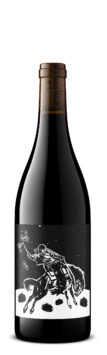
Stolpman Red Blend ‘La Cuadrilla’
- Practicing Organic
- 50% Syrah, 20% Grenache, 15% Mourvèdre,15% Sangiovese
- 70% Estate fruit from Stolpman Vineyards, 30% from Ruben Solarzano’s vineyards in Santa Barbara County
- 20% whole-cluster
- Native yeast fermentation in concrete fermenting tanks for an average of 22 days
- Aged 9 months in 500L neutral French vache forest Ermitage puncheons
- 12,900 cases produced
- 14% abv
- Stolpman breaks even and shares profits with vineyard workers