

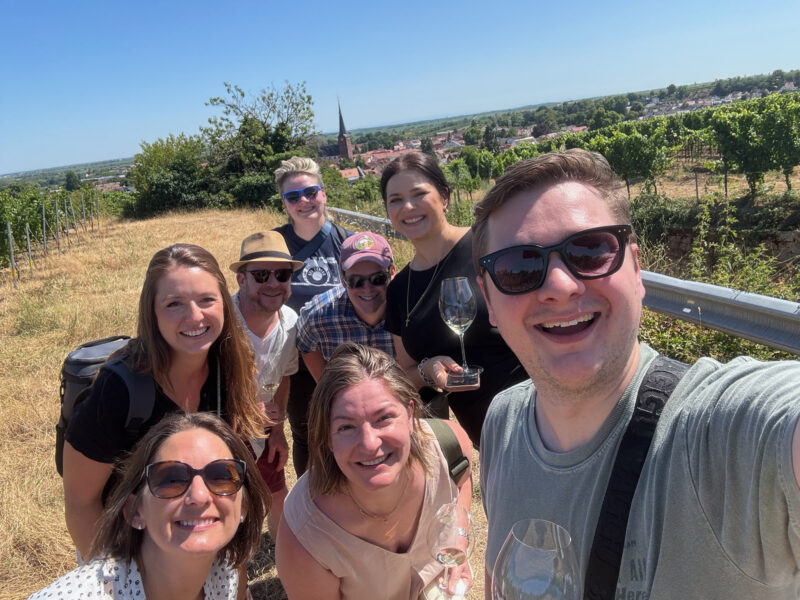
The itinerary included the vineyards of Baden, Rheinhessen, and the Mosel.
The warmth and limited rainfall throughout the 2026 growing season in Germany have posed unique challenges for both the vines and the people caring for them. These challenges will differentiate smaller growers who are able to thoughtfully adapt their practices to changing climatic conditions from those with fewer opportunities to do so due to their historical production volume. During a National Team trip to Germany this July, much of the discussion between the Skurnik team and the vineyard owners centered around vine training and irrigation techniques as our growers strive to produce the best wines possible during an abnormally hot and dry year.
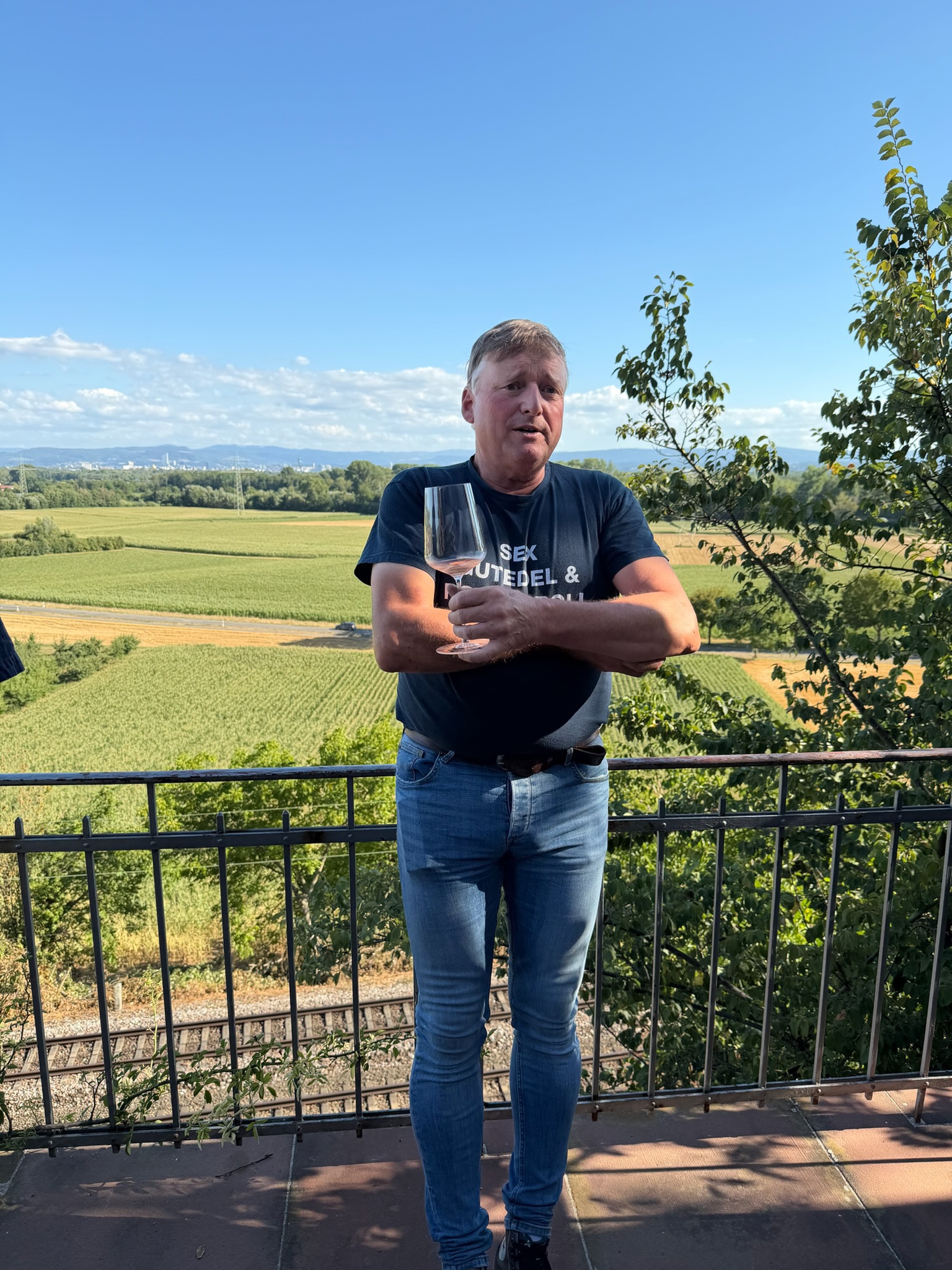
Our first stop on the trip was the municipality of Efringen-Kirchen in southern Baden, where we stood on a hillside in Germany overlooking Basel, Switzerland, the Swiss Jura, and the border with Alsace. Hans-Peter Ziereisen is a light-hearted Southerner whose greatest passions are his vines, the terroir of southern Baden, but perhaps most of all, sharing wine with friends.
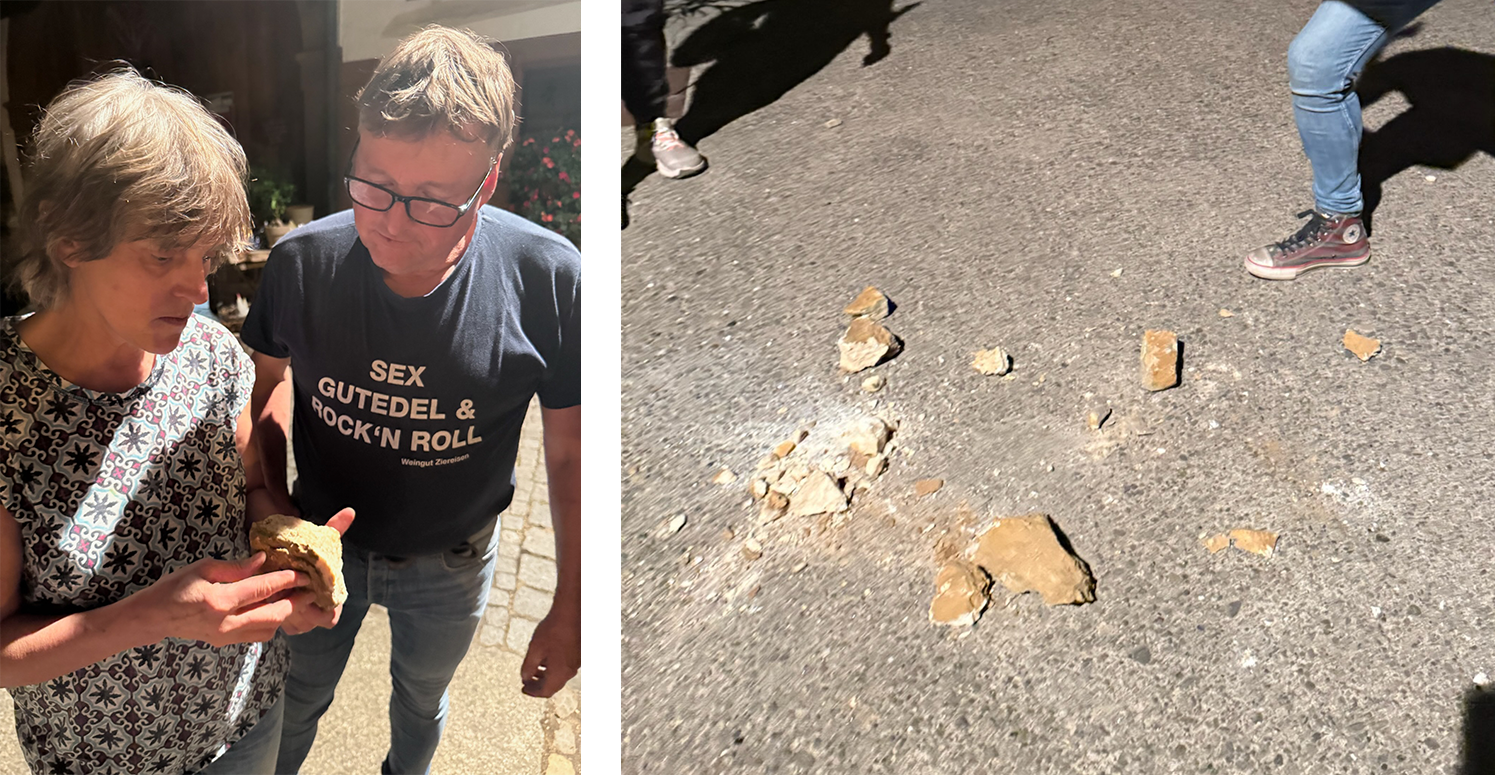
Hans-Peter showed us the importance of careful canopy management during the hottest time of year. Remove too many leaves around the bunches—as an inexperienced group of vineyard workers had done at another winery—and the grapes become unusable for quality wine. But whatever happens above ground is only part of what shapes Ziereisen’s wines. The visit also gave us a chance to explore the unique terroir of this limestone-rich corner of Germany, which shares a geological band with Burgundy but expresses it’s own distinctive character. After a wonderful evening of food and Ziereisen wines, Hans-Peter revealed one aspect one this character in theatrical fashion by smashing a piece limestone from his vineyards to reveal the occasional calcite or dolomite crystallization inside.
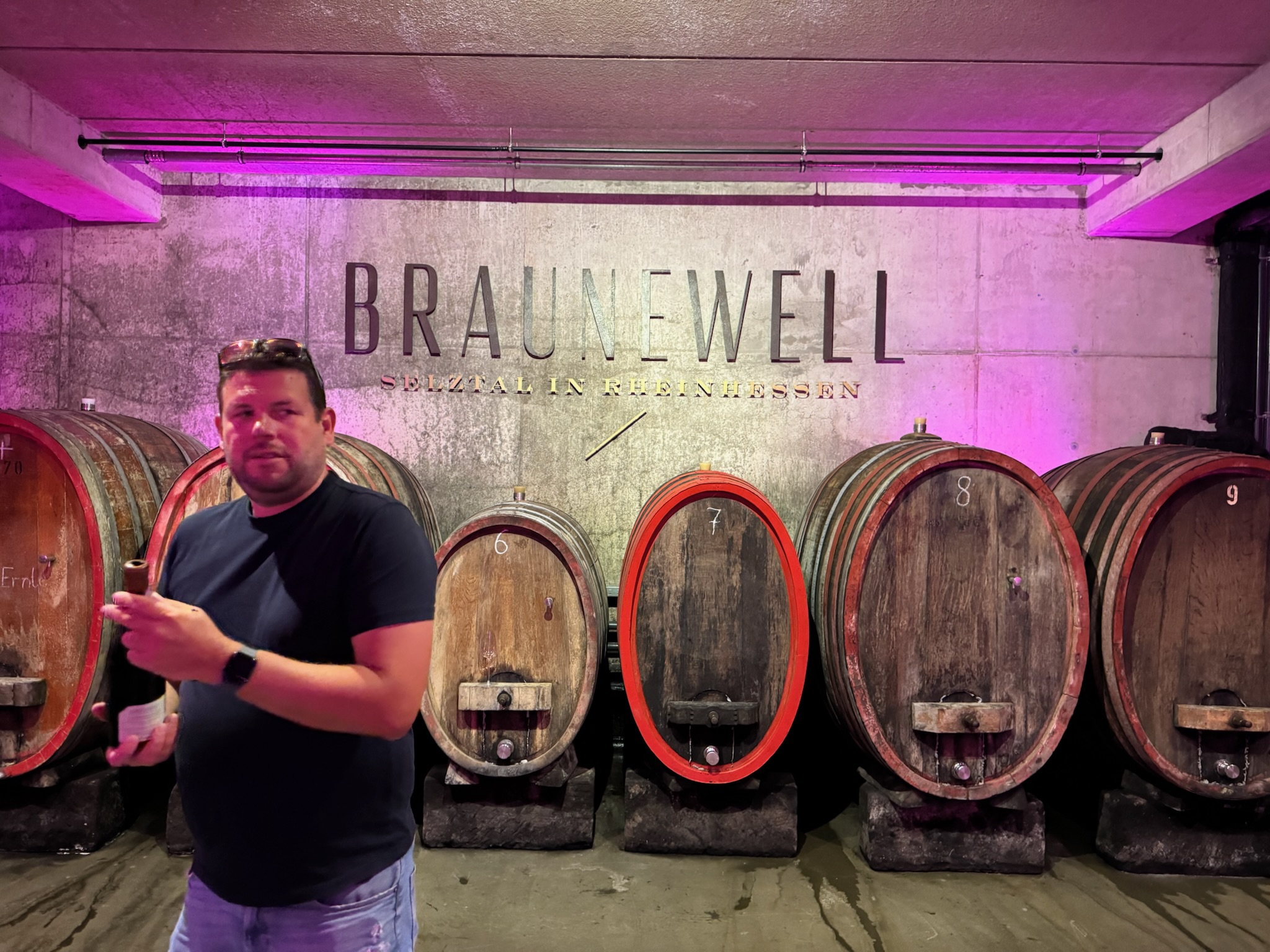
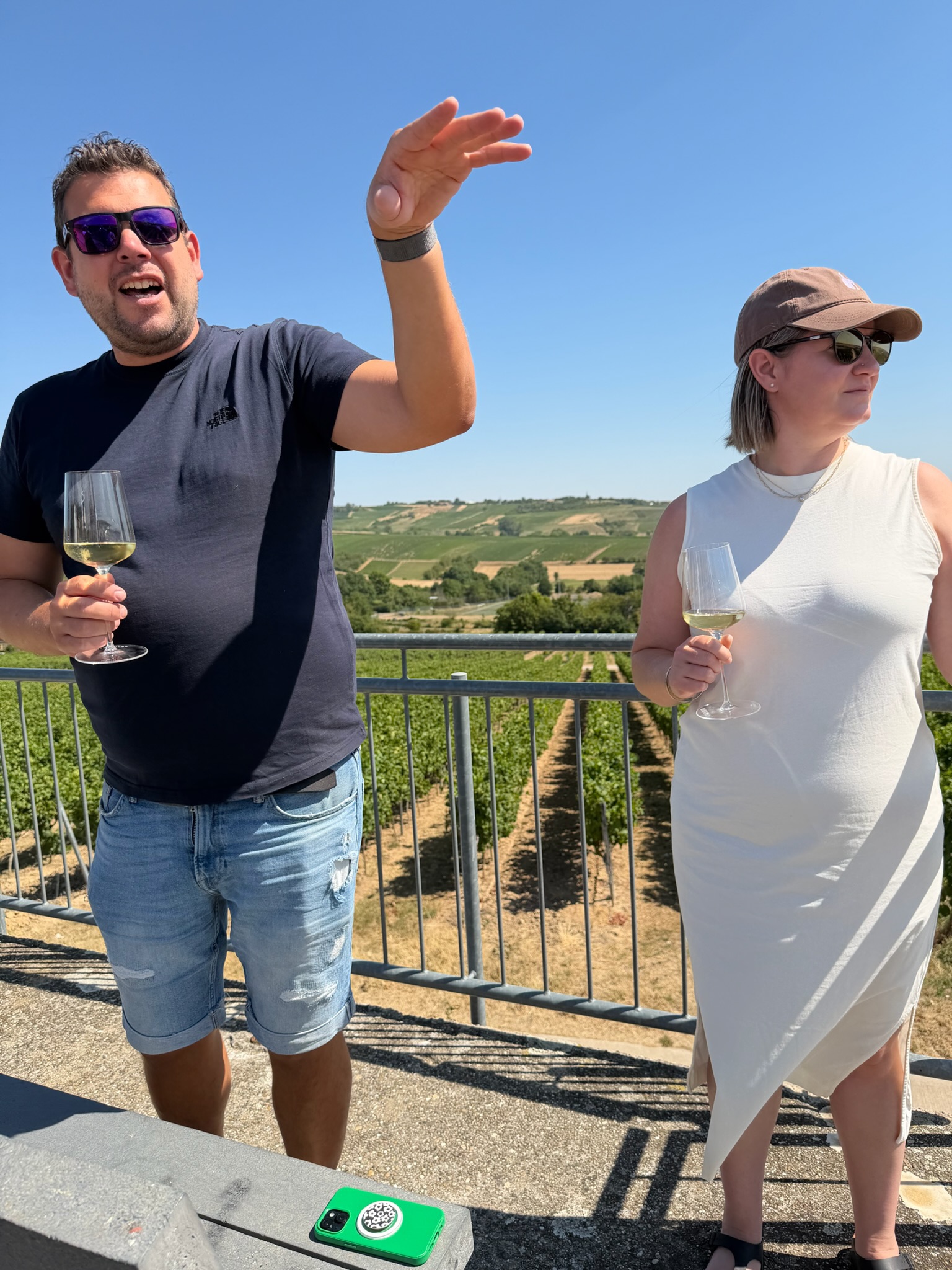 During a day in the Rheinhessen touring the vineyards of Adelsheim, we took a break from the 95-degree heat in the shade of trees and bushes as we attempted to understand the region’s changing landscape and terroir.
The Rheinhessen is marked by rolling hills, some gentle and others much steeper. When the Rhein river carved the landscape and the area lay underwater, it had a harder time wearing away slate and quartz than it did with the softer limestone. As a result, the rolling hills remain primarily limestone-based, while the steeper slopes are composed largely of slate.
This diversity gives the region tremendous range, from the salty, complex Chardonnay of Knewitz to the fresh, fruit-driven Rieslings, and the outstanding sparkling wines from Chardonnay, Pinot, and Riesling, as seen at Braunewell.
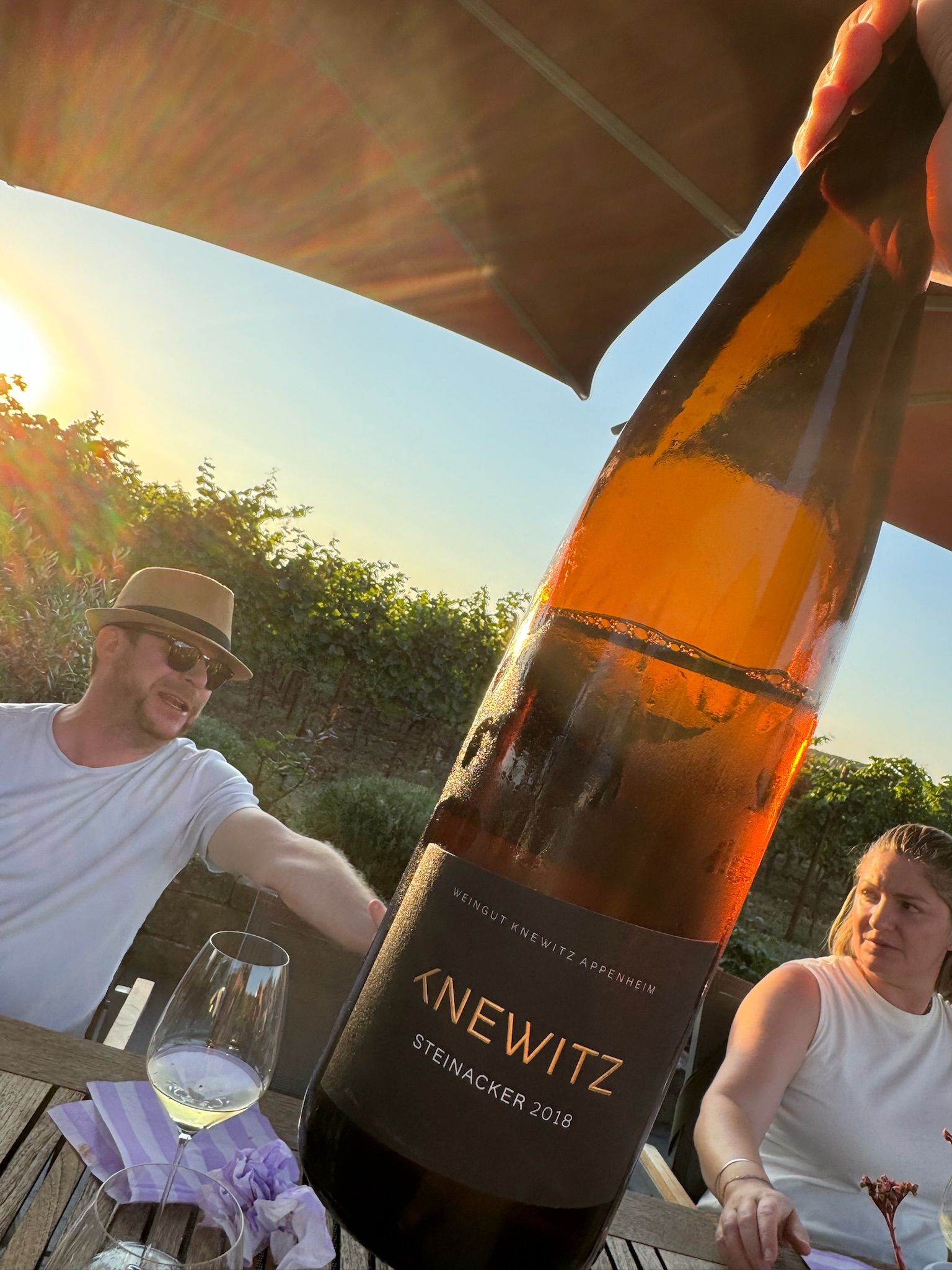
Nowhere did we feel the oppressive summer heat of 2026 more than in the Goldberg vineyard in the Rheinhessen, which sits just below Hundertgulden. Both vineyards are nicknamed for the extraordinary prices they commanded when they were sold centuries ago: “Gold Mountain” and “One Hundred Guilders” respectively. This iron- and limestone-rich slope produces complex and salty wines that rank among our favorites from the Knewitz family.
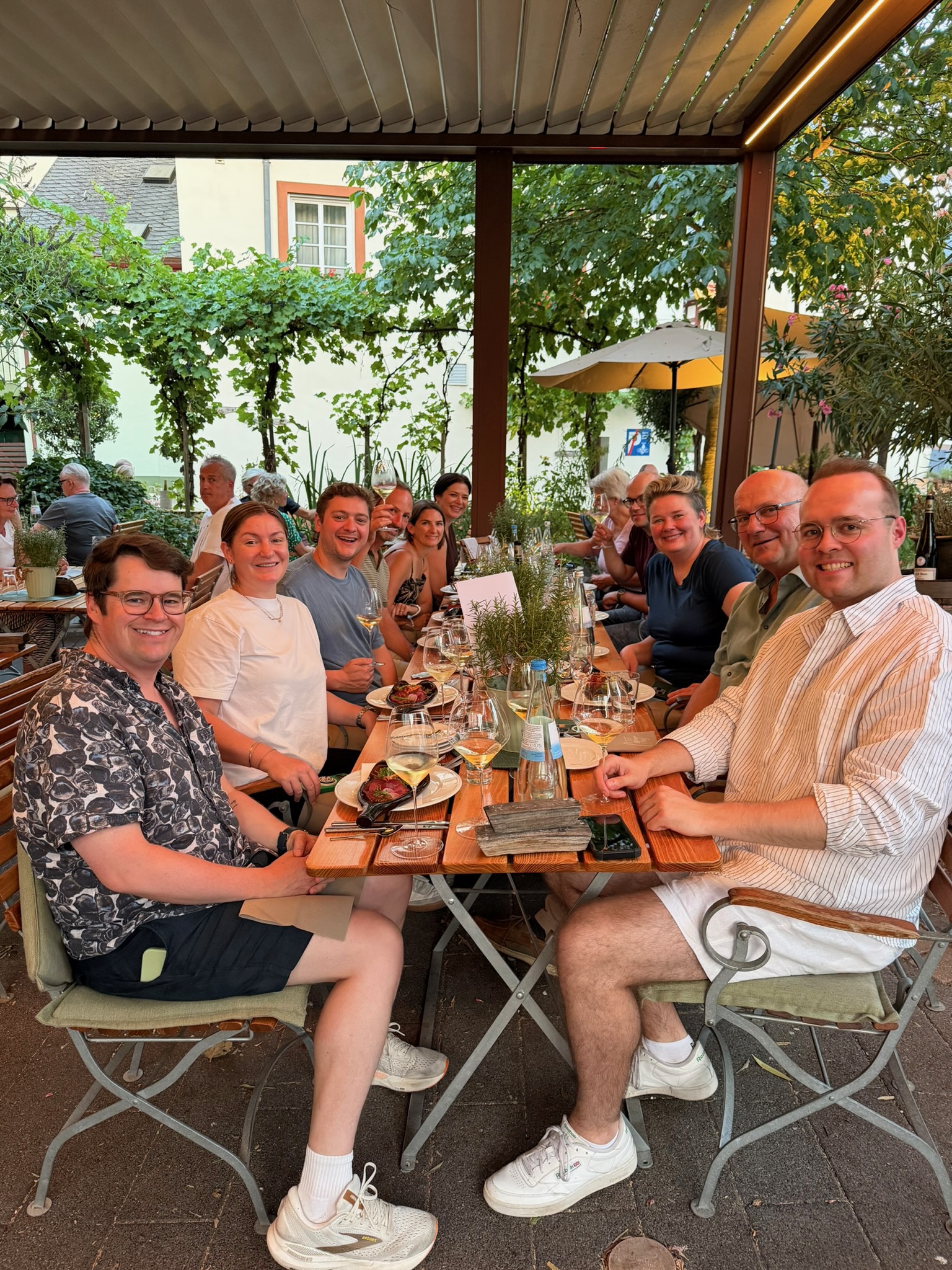
We cooled off somewhat upon arriving in the Mosel, where temperatures naturally started to dip and clouds rolled overhead. As we walked the vineyards of Urzig, Zeltingen and Wehlen with Sebastian Selbach, we relished the breeze that reached the top of the steep slopes of the Mosel and repeatedly looked skyward, crossing our fingers for rain.
While overlooking Wehlener Sonnenuhr, we finally felt a few drops—so few we could count them on one hand—before the teasing dark cloud drifted away.
Sebastian told us he had been spending his early mornings irrigating the vines, something that has become an annual necessity during increasingly hot and dry vintages. Johannes Selbach added that they were lucky to have a wet winter before this exceptionally dry summer, but the intense heat and lack of water have begun to take a toll on some of their oldest vines. Unfortunately, these are the conditions we are seeing with increasing frequency as the climate continues to warm.

Further down the Mosel River, Christopher Loewen is one of the quiet stars of our portfolio. His wines are focused on old vineyards, including ungrafted plantings going back as far as 1896. Those deep-rooted vines produce remarkably complex, concentrated wines even in the difficult vintages like 2026, when water is scarce.
Christopher farms just 18 hectares, refusing to expand because he shares a philosophy with Dönnhoff: quality wine comes from him personally walking the vineyards and ensuring every vine receives the attention it needs.
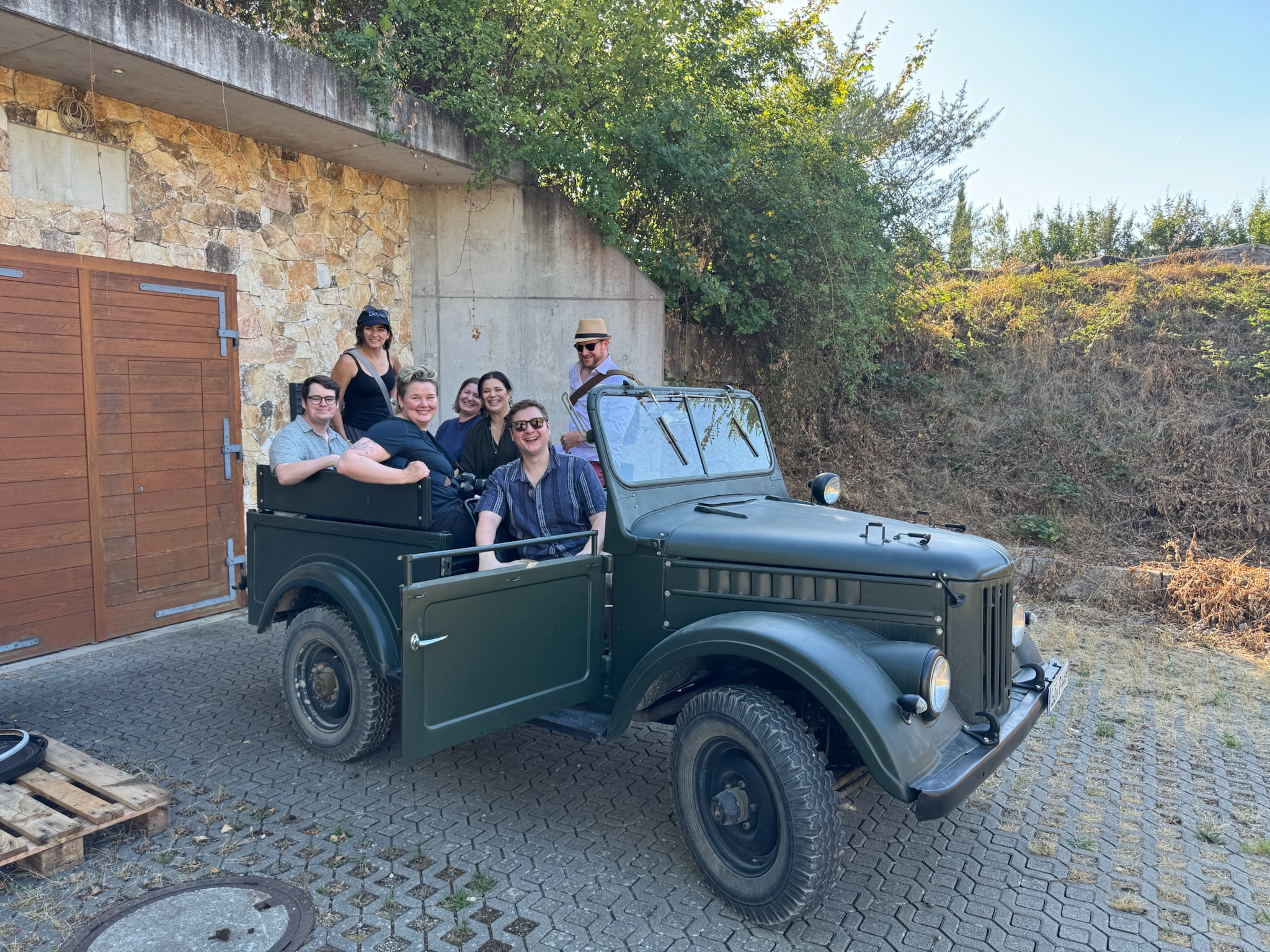
One of Christopher’s favorite pastimes is taking the long way to dinner, driving through his vines and those of his neighbors to see how everything looks and what everyone is doing. That level of attention is what makes Loewen wines the stars they are in our book, crystalline wines with a beautiful balance of acidity and fruit.
Though we baked in the vines for most of the week, what we learned about managing vines in hot years also reinforced what makes our German portfolio so distinctive. More and more, higher temperatures are becoming the norm, and around the world, wineries are struggling to adjust to the hotter climate. It’s clear that one distinct advantage to working with small, family-run wineries is that the growers intimately know their vines and every inch of their vineyards, allowing them to adjust their practices and produce consistently delicious wines even under increasingly difficult conditions. We are fortunate to work with growers who spend every day in their vineyards, giving each vine the attention it needs.
Braunewell | Knewitz | Loewen | Selbach-Oster | Ziereisen