

The Battle of Brooklyn began over stolen fruit in a neighborhood watermelon patch, a piece of borough history that now inspires one of New York’s most distinctive spirits.
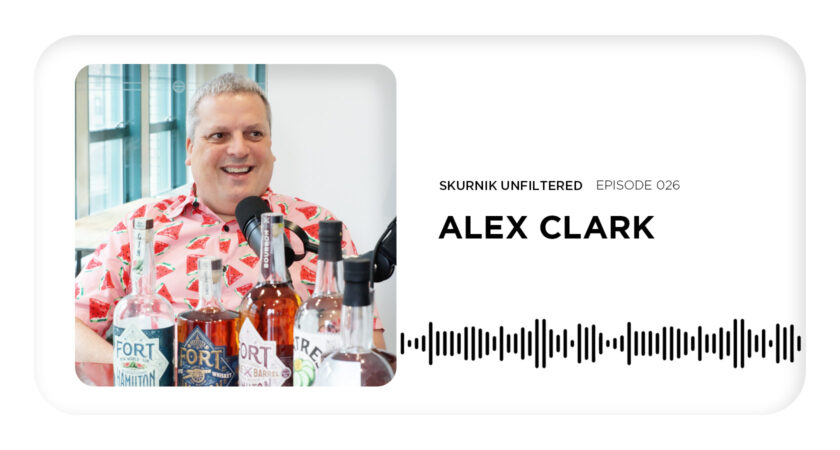
In this week’s episode, Whiskey Specialist James Pellingra talks with Alex Clark, founder of Brooklyn’s Fort Hamilton Distillery. Alex traces his path from London DJ to the center of the New York classic cocktail boom, sharing how his hospitality roots and love of American Revolutionary history inform his approach to distilling.
The conversation centers on Fort Hamilton’s reason for existence: bringing back the pre-Prohibition style of New York rye whiskey. Long before corn subsidies made bourbon dominant, rye was the true foundational spirit of American distilling. Alex breaks down what makes an Empire Rye Whiskey and what it means to resurrect a distillate that the US government sought to eradicate.
Alex also reintroduces Fort Hamilton’s New World Gin. Built on a New York corn base, it balances cucumber with fresh watermelon, a direct tie to that historic battlefield skirmish located just a block from the modern distillery in Industry City.
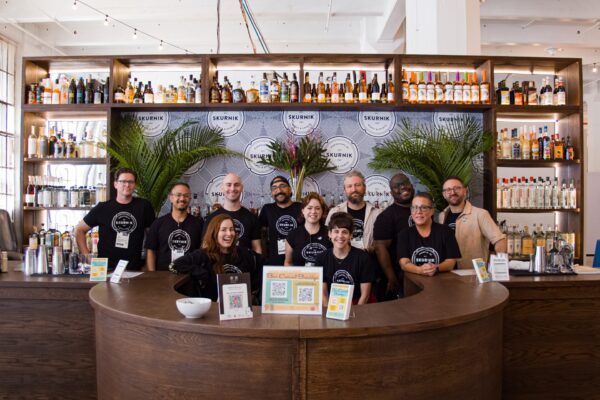
BCB is held at Industry City in Sunset Park, Brooklyn on June 9th and 10th. The Skurnik bar will be open both days from 11am-7pm in Building 7 for you to meet our spirits specialists and visiting distillers. Register for BCB here.



Next week, tune in as American wine expert Camille Elguero sits down with Corrine Rich and Katie Rouse of Birdhorse Wines.
Be sure to subscribe to Skurnik Unfiltered wherever you find your podcasts so you can stay up to date on all the exciting content to come.
Introduction
Alex Clark 0:03
As a brand, you have to have an identity. It’s easy to just make products, but why you exist is much more important than what you produce. The “why” for us is recreating this classic New York rye style that hadn’t been around for over a hundred years.
Harmon Skurnik 0:25
Hey, this is Harmon Skurnik, and welcome to another episode of Skurnik Unfiltered. Today we’re going to be talking about whiskey with Alex Clark, the proprietor of Fort Hamilton Distillery here in Brooklyn, New York. And I have with me James Pellingra, who’s our whiskey specialist and portfolio manager.
James Pellingra 0:47
Thanks for having me today. It’s always fun to sit down with Alex and hear about his origin story, specifically back to the days where he was spinning records in New York City and bartending and learning about the classic American cocktail scene, which all led to what we now know as Fort Hamilton Distilling.
Harmon Skurnik 1:08
When did he decide to start Fort Hamilton Distillery?
James Pellingra 1:11
The mid-teens. He was with Widow Jane. He really wanted to focus on American rye whiskey in a meaningful way, specifically whiskey that was produced pre-World War I, pre-prohibition. And most people never think about this, but rye whiskey is the whiskey that built America. It wasn’t bourbon. All the settlers in the colonies were originally growing rye because it grows exceptionally well here. Corn at the time was not the foremost grain produced, and most of our producers or distillers were making rye whiskey, classic rye, not high corn content rye, so either 95.5% or 100% rye whiskey.
Harmon Skurnik 1:52
At that time, bourbon made from corn didn’t even exist? Or it was just very, very rare?
James Pellingra 1:56
It was very, very sparse. At the time, most of the whiskey production was coming out of the New England territories, Maryland, New York State, Pennsylvania. Think about the roots of Michter’s and classic rye whiskeys within American culture. Alex wanted to focus heavily on that. He wanted to produce in a similar fashion, with similar grain to what was being utilized back then in smaller barrels and really bring that to the forefront. But not only that, but also showcase it in cocktails. When Alex was getting back into bartending with the Marea Group, the American classic cocktail was booming at the time. It was a resurgence of that style, the Manhattan, the Old Fashioned, Sazerac. And Alex wanted to bring that to the forefront of the New York City bartending world, and in a very traditional capacity that was akin to what was being put out during revolutionary times or pre-prohibition. That was the jump start to what we now know as Fort Hamilton. Obviously, there’s been numerous items released since then. We’ve got a cucumber watermelon New World Gin, which is exceptional. We’ve got Fortress Vodka, we have Bourbon, we have Double Barrel Bourbon, a lot of new SKUs and interesting things, but everything, for the most part, has been built and styled for classic American cocktails.
Harmon Skurnik 3:19
What’s interesting is that Alex Clark himself is a British native.
James Pellingra 3:23
Correct.
Harmon Skurnik 3:24
Why was he so focused on the American whiskey?
James Pellingra 3:27
Alex’s love for rye whiskey really stemmed from an interaction he had with Drew Kulsveen from Willett. He was down in Kentucky sourcing barrels for Widow Jane when he and Dave Pickerell stopped by Willett Distilling, and Drew busted out an old, old bottle of American rye whiskey. And since that tasting, Alex fell deeply and madly in love with classic American rye whiskey, the profile and the style. What catapulted the entire project of Fort Hamilton was that tasting, so all of it’s attributed back to Drew Kulsveen and Willett, pouring him a little rye whiskey from back in the day.
Harmon Skurnik 4:11
What an amazing story. Well, let’s listen to that story and many, many more with your interview with Alex Clark, owner of Fort Hamilton Distillery.
Alex’s background
James Pellingra 4:24
Very excited to be here with you. Obviously, you and I spend quite a bit of time together. We chat every single day.
Alex Clark 4:31
We do.
James Pellingra 4:31
This is the the first time we’re on camera doing this, which is very exciting.
Alex Clark 4:35
Yeah, I’ll behave myself.
James Pellingra 4:36
You and I have obviously spent a lot of time together in the past. We’ve had our shots of Opal at 11pm, post-events, in which you have divulged quite a bit of your origin story to me about your time overseas, your time moving into the American cocktail scene. I thought that would be a great place to start today, just because it’s such an interesting story. It really divulges quite a bit of who you are as a company and where you and your wife came from. If you wouldn’t mind, how did the Alex Clark story start?
Alex Clark 5:12
Well, in 1974 in South London, technically. King’s College Hospital in Camberwell, on Cold Harbour Lane. That’s where I was born. Grew up in South London, massive Crystal Palace fan, obviously.
James Pellingra 5:25
I’m a Chelsea fan, I’m sorry.
Alex Clark 5:26
God damn. All right, cut. Ha! I worked in pubs in London, bartending my way through university. Eventually decided I needed to get a real job, and a friend who was a trader at a bank suggested I might be a good broker. He fixed me up for a couple of interviews and I ended up getting a gig as an exotic currency options broker, which sounds more fabulous than it really was.
James Pellingra 5:55
That’s a great title.
Alex Clark 5:56
Yeah, it is a great title. I started broking barrier options in the City of London. Basically, there’s two types of brokers: there’s one that’s really good with numbers, and there’s one that’s really good at getting you out late and getting you drunk and getting your business the next day. I’ll give you three guesses which one I was.
James Pellingra 6:13
Yeah. I’ve seen your math, so I know.
Alex Clark 6:16
Ha! Exactly. Thank you. Good point. I ended up doing that, and then they wanted to know if I’d be interested in moving to New York. I was 24 years old and I had nothing better to do. In actual fact, I had harbored dreams of coming to America for a long time. Growing up watching, Knight Rider, Dallas, etc., in grim South London, it looked like a really spectacular country. I was really excited to get on a plane and move to New York in 1998. Shacked up at the Howard Johnson on Park Avenue. That’s where they put me, which was interestingly, a terrible hotel, but it was right next to Las Halles, which was Anthony Bourdain’s restaurant. I spent an inordinate amount of time down there with clients, enjoying the scene as it were, and really enjoying the New York dining scene with an expense account. I got really stuck into all that. I enjoyed taking my clients out till four in the morning, five in the morning, six in the morning, who knows? Unfortunately, work required me to be in the office at seven in the morning, and ultimately I decided that wasn’t really for me. I ended up quitting the company and went back to my main love, which was music. I was also a semi-professional DJ in the UK. And when I moved to the US, I brought my decks with me and started making mixed CDs for Sasha Petraske, or mixtapes, I think they were back then, even, just to around the time tapes and CDs changed over. He heard me spin and he was like, “Could you make some tapes for my bars?” And so I did that for a minute, and then I ended up DJing in one of his places at East Side Company, which was on the Lower East Side, which is, I think, his only bar with decks in them. Sasha being the guy who started Milk and Honey, of course. And I did gigs all over town. Did that for about six years professionally, and that was all I did. I got really stuck into the nightlife scene here in New York and loved it. And then eventually my wife and co-founder of Fort Hamilton, Amy, became pregnant with our son, and I decided I needed to get a real job. I said to Sasha, “Put me behind the bar.” I think they all thought this would be hilarious, the British DJ getting behind the bar at one of Sasha’s joints. Ultimately I knew how to bartend because I’d done that in London a lot, but I didn’t know what a “classic cocktail” was, really. But all this scene was blossoming around us on the Lower East Side where we lived, down on Canal Street, and it was a very fertile time for the cocktail culture in New York and furthermore through America and now the rest of the world. They taught me how to make a Manhattan, and they taught me how to make an old-fashioned, and the list grew, and I really enjoyed it. I enjoyed the culture around it, I enjoyed the history that was around it too. The idea with with Sasha’s bars was to recreate these original cocktail recipes as authentically as possible, using the best ingredients, not taking any shortcuts, really putting a superior product on the table at the end of it all.
Discovering the lack of American rye whiskey
Alex Clark 9:34
And what I found strange was, at the time, you could only buy one type of rye whiskey in New York.
James Pellingra 9:40
It was very limited.
Alex Clark 9:41
Old Overholt was it, in the early 2000s. Michters was going to come around, I think, shortly thereafter.
James Pellingra 9:48
Sazerac was around at that time, but it was too expensive for cocktailing at that point.
Alex Clark 9:52
I think it could have been, yeah. But the most ubiquitous one was Old Overholt, which is 80-proof, made in Kentucky, rye whiskey made with lots of corn. And it occurred to me that this may not be actually the type of whiskey that was in the original Manhattan, because the whiskeys that were around in the 1800s when that cocktail was invented were mostly made in the northeast of America. You do some digging around and you realize, Oh, Prohibition killed all those distilleries that were active in the Northeast making rye whiskey. And then corn subsidies were enacted by the government, which encouraged everyone to use corn in their whiskey. And lo and behold, in the 20th century, bourbon, corn-based whiskey, becomes the biggest whiskey in America. So in our lifetimes, bourbon has been the king of the whiskeys. But if you go back to before Prohibition, rye whiskey was the dominant whiskey by a country mile, and that is why a lot of the classic cocktails of America are rye whiskey-based. It sort of struck me, as there was a disconnect there between us being able to buy one or two brands of rye whiskey in New York, which are all now being made in Kentucky by Kentucky distillers with corn, versus the original style of whiskey that was made with no corn in the Northeast of America. In fact, some of the earliest distilleries in America were right here in New York. So what was that all about? Well, fast forward a couple of years, I did three years behind the bar at Balthazar. And then a friend of mine, Dan, who had a parachute company in Red Hook and owned some buildings out there, sold that company to a defense contractor. He had a five-year non-compete, and wanted to do something with the buildings. He called me up and said, “I think I want to build a distillery. Can you help me?” And I remember there was a Richard Branson quote saying, “Always say yes and then figure out how to do it later.” So that’s what I did. I was like, “Sure, I can help you with that.” And then we figured out how to get it done, and that project ended up becoming the Widow Jane Distillery, which is now owned by Heaven Hill, I believe. It’s still in Red Hook. As part of that mission, we hired Dave Pickerell, the master distiller from Maker’s Mark previously, and then the guy who invented WhistlePig, which is a rye whiskey brand out of Canada and bottled in Vermont. He kind of cornered the market on aged rye there, and he did a great job with it. He was like the Johnny Appleseed of craft distilling in America. Without Dave, craft whiskey in America would be in a much worse position than it currently is.
James Pellingra 12:26
By far, yes.
Alex Clark 12:27
And the quality of the whiskey would be terrible. He shared some inside knowledge with everyone and shared inside contacts, and on that note, we were looking for whiskey to source for the Widow Jane brand. We flew down to Kentucky, banged on some boardroom doors. This is 2011, 2012, and whiskey distillers in America were just starting to realize that they did not have enough product for the boom that was on the horizon. They started shutting the doors and deciding to not sell to third parties or brokers. The supply became really tight on aged whiskey. But we did find 3,000 barrels of whiskey that were available from MGP. There was some deal that had gone south that we snapped up. But on that mission to find those barrels, we knocked on Willett’s door. Dave had just installed the still for Drew, and Drew pulled out a bottle of rye from 1909. It was a Monongahela-style rye whiskey, so that’s a style made along the Monongahela River, known to be made with no corn, just rye grain and malted barley, somewhere between 90% rye, 10% malted barley, and 80% rye, 20% malted barley. He pours us this six-year-old rye whiskey, and it blows my mind. I’m like, “This is the best American whiskey I’ve ever tasted. Why are we not making whiskey like this anymore?” Ultimately, that is the style that was around when the Manhattan was invented. And it occurred to me that that style needed to exist again. I talked it over with Dan. We didn’t really agree on how to make the rye whiskey at Widow Jane.
Starting Fort Hamilton Distillery
Alex Clark 14:07
After a while, I decided that my heart lay in recreating that style of whiskey, so I quit Widow Jane and started to figure out how to recreate that style of whiskey from under a different label. I went back to bartending. I started working at Marea on Central Park South, which I ended up doing for about six years whilst building Fort Hamilton, or what became Fort Hamilton. It didn’t have a name to start with, obviously. It was just a project. We started using other people’s distilleries, other people’s equipment, other people’s licenses. It was very much a passion project with that goal of recreating that original whiskey style at its core. And doing this with no money was was a real challenge, as you can imagine, but that’s the way we’ve done it. I think that the advantage that we have, if you can call it that, is the fact that we’re hospitality professionals. Amy bartended in Austin, Texas, where she’s from. I bartended in London and New York, and what we bring to this brand is an absolute knowledge of working in a bar, working in hospitality, and what bartenders want to see, what might help them. This project is now in its tenth year, and we are gaining some serious traction and seem to have the wind in our sails. And we’ve been with Skurnik every step of the way. Adam Schuman, who built the Spirits Portfolio here, came to me at Widow Jane and we discussed how he was building his portfolio out. I told Adam, “I’ll end up coming back around again with a different project. And when I do, I guarantee you’ll be my first call.” In spring of 2017, we took a meeting. By that point, I had a name for the brand, which came to me sort of accidentally. We knew we were making this classic New York rye style that hadn’t been around for over a hundred years. We wanted a name with history and gravity to it, and I was struggling to come up with one. Our house we bought in South Brooklyn, crucible of the Revolutionary War, we live off the Fort Hamilton Parkway F train stop. I would come back from my shifts at Marea, scribbling whiskey names down furiously, and they’d all be pretty rubbish. And I’d get off the train every night at Fort Hamilton Parkway and go, “That’s a pretty good name. What’s Fort Hamilton all about?” So I Googled it. It’s like, Oh, this is the last functioning army base in New York City. It’s where the British landed to quell the American Revolution. That’s kind of an interesting story, and no one else seems to be doing anything with the Revolutionary War. And “Hamilton” the musical, was having a bit of a moment, and he somehow seemed to be the founding father that hasn’t been cancelled yet. So it was like, Okay, this could work. The IP was available, we nailed down the trademark, and then I called Adam up and I said, “Listen, I’ve got something, and, man of my word, let’s have a meeting.” And he said, “Sure. Come into the office.” We sat down and I did the big reveal. And he said, “Fort Hamilton. Like “Hamilton,” the musical?”
James Pellingra 17:32
Which he’s obsessed with.
Alex Clark 17:34
He’s obsessed with it, right! I think Gina, at the time, was his assistant, and she was like, “Oh my god, he’s driving everyone crazy, playing that CD over and over and over again.” So he was like, “Like Hamilton, like Alexander Hamilton?” And I was like, “Uh, yeah, that Hamilton. That’s who they named the the fort after.” He said, “I’m gonna make sure that Skurnik picks this up. Nothing will stand in my way. I will not stop until we have this in our portfolio.” He didn’t even taste the product. Maybe he did. But anyway, we landed in the Skurnik portfolio like that, and that was a really big moment for me. I remember I got a text, I was on the bar at Marea, and found out that you guys were picking it up, and that was like, Oh shit, we may be doing something here after all. It was such a wing and a prayer to get to that moment. The first batch came out in 2017 in the fall. It had two hot winters in in Industry City, which is heated during the winter and one hot summer. It was good whiskey. We kept laying barrels down ever since, and we’re up to around six and a half years with this current iteration. We’re really hitting our stride, which is great. We’ve since expanded the portfolio, much to my surprise, because when we started, I didn’t have a grand vision of, like, we’re gonna end up with all of these SKUs.
James Pellingra 19:03
Well, it makes sense with your bartending background.
Alex Clark 19:05
Yeah, we want to provide something for everyone. And because we’re a New York Farm Licensed Distillery, we use New York grain in every product that we make. The only things we don’t touch on are rum and tequila because agave doesn’t grow here and sugar doesn’t grow here. We’ve created different styles that are great for bartenders to use at different price points that they are not offended by, with the sort of unique edge on everything, including our New World Gin, which is distilled with watermelons and cucumbers.
The origin of New World Gin
James Pellingra 19:38
Why cucumber? Why watermelon? Why together? What was the unifying decision to come out with this specific botanical mix? It is quite curious to me, obviously. Cucumber with Hendrick’s is very popular, but throwing in watermelon specifically, which is not a typical New York fruit that we see grown here?
Alex Clark 20:00
Well, yes and no. Technically I think it came from the Indian subcontinent, but it was brought over by colonists many years ago. The overriding brand identity of Fort Hamilton is Revolutionary War, right? The Fort Hamilton name is the army base that was built in the 1800s to defend New York from, basically, the British. Sorry about that.
James Pellingra 20:26
Ha! Thank you, the War of 1812.
Alex Clark 20:29
I wanted to make a modern gin. And as a bartender for so many years in the city and beyond, I knew that there were a lot of gins that tasted very similar, and we wanted to have a point of differentiation, and we also wanted to somehow have a tie-in to the Revolutionary War. Obviously, over the years I’ve done a lot of research on the Battle of Brooklyn, which happened right next to where our distillery is in Industry City in Brooklyn. Turns out that the British landed at the current site of Fort Hamilton in 1775 and started marching north up to one block from where our distillery is, where they encountered the Red Lion Inn, which was surrounded by a watermelon patch, and they started stealing the watermelons and were busted by the American pickets who started unloading their muskets on them, and that’s how the Battle of Brooklyn started, just one block from our distillery, in a watermelon patch.
James Pellingra 21:26
There it is.
Alex Clark 21:26
I found that story and I was like, “Well, that’s interesting. I wonder if we can make gin with watermelons.” I Googled “watermelon gin” and nothing came up. No one had done it before. We immediately started playing around with watermelons, trying to R&D a gin with it. By itself, watermelons were cool, but they weren’t as impactful as I really wanted. I started toying with the idea of blending the watermelon with cucumber and trying to find a balance between the two because cucumbers and watermelons are very closely related in the squash family; they’re very complementary flavor profiles. Once I played around with them and discovered this balance between the watermelon and the cucumber, where you weren’t sure if you were tasting watermelon or whether you were tasting cucumber, and it sort of changes hour by hour, day by day, depending on your taste buds and what’s going on, once I struck that balance where it was kind of this guesswork going on, it was like, “Wait, is it watermelon? Is it cucumber? I’m not sure. It’s delicious, whatever it is.” That was a moment I was like, “We can definitely build a gin around this.” I knew I wanted a very citrus-forward gin, so we started dabbling with dried orange, dried Seville orange, bitter orange, dried lemons, dried limes, dehydrated limes, sun-dried limes, which have this great exotic flavor to them. None of it produced a product that was bright or fresh to my liking. As a bartender for so many years and garnishing cocktails with endless amounts of freshly zested citrus peel, which you express over the cocktail and which gives you this brightness and this clarity and this precision to the cocktail and gives it this entirely different dimension that completely changes the drink, I decided that I wanted that. That’s what I was looking for. Eventually, I just started peeling fresh fruit and distilling that and ending up with a very different, very compelling citrus note, which worked incredibly well with the watermelons and the cucumbers. I finally dialed in the balance of the citrus, and so we’ve got watermelon, we’ve got cucumber, we’ve got fresh oranges, fresh lemons, fresh limes. Then it was time to dial in the rest of the ingredients, which are juniper and coriander. It’s got quite an orange-forward profile to it , so for me, putting my chef hat on—because I’ve always loved cooking, but I was never crazy enough to be a chef, which is why I love working in fine dining restaurants in the front, and I’d always be in the back asking them how they were doing stuff and why they were doing stuff—I put my chef hat on and thought, “What goes great with orange?” Cinnamon and orange is classic, star anise and orange is classic, juniper and orange is great, coriander and orange is great. We dialed in the final ingredients that way and finished it out with orris root, or Florentine Iris, which is a stabilizer and keeps your flavors all locked in, which is why they use it in almost all gins. And that’s it. That was it. I added one more ingredient, I think pink peppercorns or something like that, and then I couldn’t taste anything. It tasted like all those other gins that they tell you there’s 47 botanicals in there, and you’re like, “I can’t taste a single one.” So, we took that out and that was it. We’ve really flipped the script on what gin is supposed to be. We also use New York corn as the base of it. Almost all gins in the world are made with a wheat base, which is naturally going to be sharper and and more tense on the palate, whereas using a corn base, you’re going to get a much more round, richer flavor profile to start with, which then works really well with the citrus, really well with watermelon and cucumber. It’s a really interesting gin. Everything that we do is designed to work really well on a cocktail. That’s the first thought in my head: “What would a bartender do with this? Does this help them out?”
James Pellingra 25:26
A lot of bartenders definitely gravitate towards your products. They make a lot of sense. The non-chill filtration and maintaining all those glycerins and oils within the spirits make a huge difference in the outcome of your final product, as well as the fact that you’re using all fresh botanicals as well, which is very unique.
Alex Clark 25:45
It’s a pain in the ass.
James Pellingra 25:47
And expensive.
Alex Clark 25:48
It is, but because we’re juicing the fruit too to use in our cocktail program, it’s a cost that we would have incurred anyway, in many ways. During the summer, when we’re making a lot of gin—because it does have a slight seasonality to it—sometimes we have too much fruit for our program, and we’ll just give it away to other local bars and restaurants. The labor is actually the biggest concern on that one because peeling fruit is not for everyone. As a bartender for many years, I can peel quite a few limes in an hour, but most people cannot. And unfortunately, there is no such thing as a lime peeling machine, as I’ve discovered over the years. Please, if anyone can invent one, that would be super useful.
James Pellingra 26:30
They have apple peeling machines. I can’t imagine there wouldn’t be a lime or a lemon peeler out there.
Alex Clark 26:34
Limes are much smaller, and the skin, it’s not so much that it’s tougher, it has variations in the thickness of the skin. For this product, we’re peeling the fruit like we would if we were using it in a cocktail. We’re getting no pith on it. There’s none of that bitter pithiness around the gin either. You have to be very careful about how you peel a fruit when you want to achieve that goal. I think this is the thing that means that there will still be humans employed after the AI revolution. We’ll all be peeling limes for Fort Hamilton. That’d be perfect.
James Pellingra 27:10
It sounds fun to me as long as you feed us gin.
Alex Clark 27:12
Deal.
Recreating pre-Prohibition Empire Rye Whiskey
James Pellingra 27:15
Onwards and upwards from the world of gin, let’s talk about the whole reason you got into this thing: whiskey, specifically rye. You elected to utilize local rye as well, rather than sourcing from Canada or the Midwest, and therefore yours is classified as an Empire Rye, which is very important. It’s a recognized category, which is very exciting.
Alex Clark 27:44
Yeah. I think that we understand the business from a couple of points of view. First is, I think as a brand, you have to have an identity. It’s easy to just make products, but why you exist is much more important than what you produce. The why for us is recreating New York rye whiskey, the way it was made before the government destroyed it. That’s the style of whiskey that I had tasted on that barrel sourcing mission down in Kentucky back in the day. We haven’t really reinvented the wheel—all we’ve done is put the wheel back on the bus, the way it was before it was ripped off by Prohibition. This product is a very faithful recreation of the original whiskey style of America, which means we’re using New York grain, we’re using 30-gallon barrels, which is smaller than the industry standard size, which is now 53 gallons, but didn’t become industry standard until the Second World War. If you’re recreating whiskey from the 1700s and the 1800s, you’re not going to use a 53-gallon barrel, so we use 30-gallon barrels for this product exclusively. It’s heated during the winter. Traditionally, Northeastern ryes were heated during the winter because winter is very cold here. If you leave your whiskey in a barrel in a field in upstate New York, it’s going to be in sub-zero temperatures for a majority of the winter. That means it’s not going to have any interaction between the whiskey and the wood. There’s not going to be maturation occurring, so your whiskey can stay in that barrel a lot longer, but it’s going to taste a lot younger than the years it’s been in that barrel, whereas if you age it in a heavily insulated brick building with steam radiators on the inside—just like we have at Industry City—then your barrels are going to mature during the winter too. 30-gallons is also a smaller size, so you get a larger liquid-to-surface-area ratio. More whiskey is in contact with the interior of the barrel at any given time, therefore more maturation occurs. There’s a very big difference, by the way, between maturation and aging. There are a lot of people that are fast aging by throwing wood chips into barrels, putting extra staves in there, and spoofing it that way. But I’ve always found those projects to be somewhat underwhelming. There’s a marriage that occurs between the distillate and the wood that can only really occur with gentle time. Forcing the aging process always ends up meaning you taste wood and you taste distillate. What you really want to taste is a marriage between the wood and the distillate becoming one unifying flavor profile. I always think the fast aging projects fail miserably at that. What we’ve tried to do is develop the flavor profile here in a way that speaks to the history of America and American whiskey, and what we’ve ended up with is a rye that is much softer than you might think it would be, given that its mash bill is 90% rye grain and 10% malted barley. But you know what? It tastes a hell of a lot like that rye I tasted from 1909 down in Kentucky when we were sourcing those Widow Jane barrels. I think we’ve actually managed to achieve what we set out to do, which is to make this style of rye again successfully. When you say there’s no corn in it, people automatically assume “spice monster.” This is not what this is whatsoever. It’s soft, it’s rich, it’s round: that’s how whiskey used to be made in America before corn subsidies encouraged everyone to use as much corn as humanly possible in their distillations. You’ll find a lot of ryes coming out of Kentucky that are the bare minimum legal definition of rye whiskey: 51% rye grain in the mash bill, 49% corn. You’re only 1% away from being a bourbon at that point, so how rye is that rye? I think what we’re trying to do is say, “Before government interference, whiskey tasted better.” And we’re out here to prove that point, but it’s taken us 10 years to get here because I couldn’t just go down the street and buy somebody’s New York rye because no one had done it that way for over a hundred years. Blind taste people on this, and if they don’t know, some might say, “Well, that tastes like a bourbon.” I think what’s really exciting about it is we’ve created a rye that bourbon drinkers really appreciate too.
James Pellingra 32:15
If you were to blind a customer and they were to taste your bourbon or your rye against a Buffalo Trace or one of the other main leaders in cast strength rye on the market, they would not be able to tell the difference between a New York State product and a Kentucky or an Indiana product at all.
Alex Clark 32:32
100%. New York was distilling whiskey before Kentucky was even a state. Bourbon County was in Virginia, but nobody’s going to tell you that on the Bourbon Trail in Kentucky, are they? Let’s look back at how things used to be done. Let’s tell the truth about how whiskey arrived in America and what happened. Originally, the first ever distillery in America was on Staten Island, which surprises a lot of people. And it was a rum distillery, making rum from sugar derived and traded with the British colonies in the Caribbean. And when the American colonists decided they no longer wanted to do business with the British, they had to reach for a sugar source closer to home, and rye grain was the most heavily planted grain in the Northeast at the time, so it was a natural choice to become the first ever grain to be distilled and then aged in a barrel. Consequently, rye whiskey became the first ever whiskey distilled in America, and it was all being made in the Northeast. Our current tagline is, “The Spirit that United the States.” Militias from across America joined to defeat the British. I’m not mad at it; I’ve just come back to claim what’s rightfully mine. The rye story started in New York, but you can make rye anywhere in America. This is a real, faithful recreation of that whiskey style.
James Pellingra 33:52
Alex, thank you so much for joining me today and the whole Skurnik team. It was delightful and insightful. I look forward to continuing down this path with you. It’s been a lot of fun so far. There’s a lot of adventures to be had, especially as you grow the business and our friendship and our experiences together, which I’m sure we’re going to have a lot more, especially at BCB this year, which is going to be a ton of fun considering it’s in your home neighborhood, Industry City.
Alex Clark 34:22
Yeah, it’s in Industry City in Sunset Park, Brooklyn, which is where we built our distillery, so that’s handy. You don’t have to travel too far to come to party with us or just come and visit anytime. The distillery is open seven days a week. We have a tasting room, we make amazing cocktails, we’ve got pool tables that are free to play. And you can find out more about us at forthamilton.com
James Pellingra 34:45
Thanks again, Alex. We really appreciate your time and look forward to our next interactions.
Alex Clark 34:50
Can’t wait. Cheers.
James Pellingra 34:51
See you soon.
Skurnik Unfiltered is recorded at Skurnik Wines & Spirits headquarters in the Flatiron District of New York City. If you found the conversation interesting, please consider liking, subscribing, and leaving a review. You can stay up to date on our show and upcoming events by following @skurnikwines on Instagram and visiting our website at skurnik.com