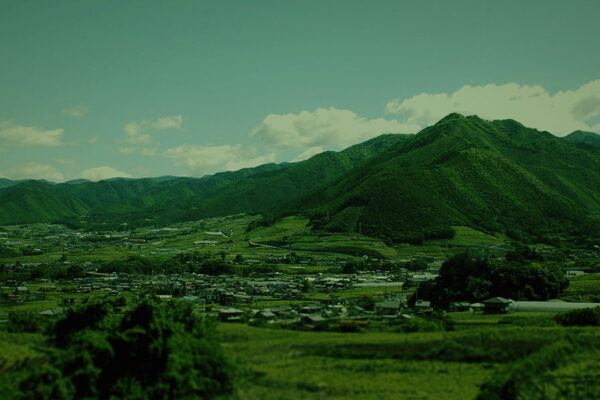


For decades, South Africa’s Swartland region was dominated by industrial farming cooperatives that pumped out massive amounts of inexpensive bulk wine and diluted any hint of terroir. It wasn’t until the turn of the millennium that a fresh generation took notice of the gems right under their noses: forgotten old-vine vineyards and, thanks to hundreds of millions of years of tectonic activity, the oldest soils of anywhere on the planet. Chris and Andrea Mullineux, alongside pioneers like Adi Badenhorst and Eben Sadie, helped redefine the region with stunning Chenin Blancs and Syrahs, proving that Swartland wines could indeed deliver a distinct sense of place.
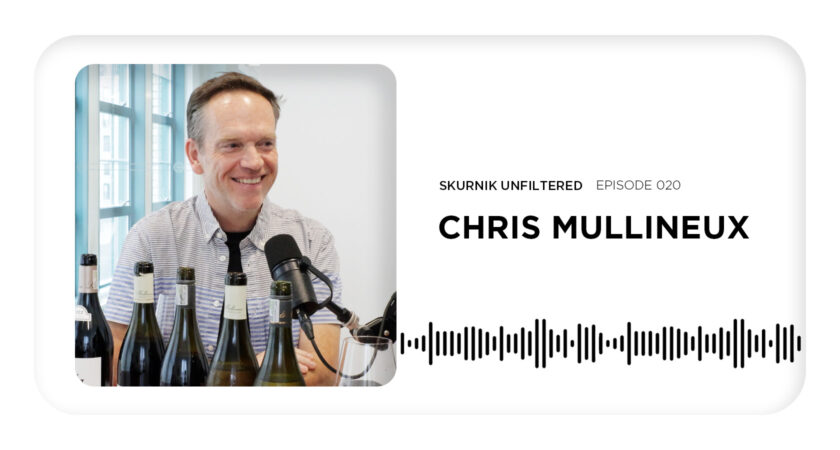
Now their movement has grown beyond the Swartland to the broader Western Cape. Independent winemakers from Stellenbosch to Hemel-en-Aarde are dialing in their farming to express a uniquely South African terroir, one that in Mullineux’s case “tastes like sunshine.” In this episode, Chris Mullineux joins Desiree Russo for a flight of wines from three of his projects: Kloof Street, Mullineux, and Leeu Passant. They discuss regenerative farming, geek out on soil, and survey the unexpected varieties that may come to define the next chapter of South African wine.



Next week, tune in as Spanish wine expert Max Working sits down with Ricardo Peñalba of Torremilanos.
Be sure to subscribe to Skurnik Unfiltered wherever you find your podcasts so you can stay up to date on all the exciting content to come.
Introduction
Chris Mullineux
I think if a wine is trying to copy somewhere else or be something else, it might taste good, but it needs to have an authenticity and a sense of place to it. And then it must be obviously balanced and beautiful to drink. If a wine can put those two concepts or elements together, for me it’s a perfect wine.
[music]
Harmon Skurnik
Hey, this is Harmon Skurnik, and welcome to another episode of Skurnik Unfiltered, where we peel back the layers and get behind the scenes of our favorite wineries and winemakers and find out what makes them tick. Today we have a great one. First of all, we have the great Desiree Russo, who is the portfolio ambassador for the world portfolio, which we define as what? Anything that’s not European and North American, pretty much?
Desiree Russo
Yeah, I always say that our portfolio is the Southern Hemisphere and the Ancient World, just to add a little of pizzazz.
Harmon Skurnik
I like pizzazz. The breadth and selection of wines from all over the world keeps things interesting for sure. Today we have a very special guest that you sat down with recently, Chris Mullineux, one of my favorite people and part of one of my favorite couples in the world, a superstar winemaking couple of Chris and Andrea Mullineux. Chris is South African and Andrea’s American.
Desiree Russo
Correct.
Harmon Skurnik
And they’re based in the Swartland, which is a pretty hot region. Well, not hot in the sense of climate, but hot in the sense of popularity these days.
Desiree Russo
Yes, for sure.
Harmon Skurnik
And a lot of that’s due to them, no?
Desiree Russo
Yes. I like to consider them one of the pioneering winemaking couples in the Swartland for making these beautiful Chenin Blancs and Syrah that really speak to where Roundstone is located in the Swartland, but also working with parcels that belong to the greats like Adi Badenhorst. And… I’m pausing because I’m being brought back to when I first went. And the Swartland is a life-changing region to visit because that’s where you fall in love with South Africa, because it’s the people, but it’s also the soils. The soils are some of the oldest soils in the world. They’re 500 million years old. It’s the oldest mother rock in the world that have been shaped by the movements of plates. And that’s why we have these mountains of granite soils. And that’s where you have Chris and Andrea’s Chenin Blanc and Syrah coming from, these granitic hills in some parts, and they just tell such a story of— it’s not just about the varietals, it’s about the soil. It’s about just being surrounded by these mountains.
Harmon Skurnik
Well, the soils are ancient, but the region as a winemaking region is not ancient. It’s relatively new, right?
Desiree Russo
It is relatively new, especially when we think about the viticultural history of Italy or France or Europe in general. But it is relatively new.
Harmon Skurnik
Or even Stellenbosch.
Desiree Russo
Yeah. Stellenbosch has vineyards that were planted in the late 17th century. And you have plantings in the Swartland that date back to the 1960s with the cooperatives, so it is relatively new, but also, you don’t have those super old vineyards in other parts of South Africa, like, let’s say in Elgin, for instance. But the Swartland is exciting because it really put South Africa on the map, because you have South Africa being a region that was known for bulk wine production. And now you have these parcels that really put South Africa on the map because you’re making these Rhône-style wines. But the big focus for Chris and Andrea is that it’s a Mediterranean climate. It’s about capturing that Mediterranean sunshine, which you’ll hear Chris Mullineux talk about in the podcast. And then also you have this distinct diurnal shift at night, which really shows in the wine, where the acidity almost glitters on the palate.
Harmon Skurnik
Chris, I believe, is the grape grower, or vigneron, whereas Andrea is the winemaker.
Desiree Russo
Yes.
Harmon Skurnik
And they also are extremely serious about grape growing and organic regenerative, all that sort of thing. They’re certified regenerative. I don’t think there are that many vineyards in the world that are certified regenerative.
Desiree Russo
Yeah, so they are certified regenerative.
Harmon Skurnik
ROC. Regenerative Organic Certified.
Desiree Russo
Correct. And at the time of the podcast, they were not certified. And we just found out just a couple of weeks ago that they’ve received a certificate. Oh, so it’s recent, just this year? Yes, literally, we got a press release.
Harmon Skurnik
I was talking to Chris about it at our Grand Portfolio Tasting, and he said they’re not interested in putting that on the label. It’s something they do because it’s the best way to farm; it’s the best way for the earth and for the soils to be healthy. They’re not really interested in making it a marketing push, but it’s great for us to know how serious they are about this organic regenerative.
Desiree Russo
100%. I think also it’s a very holistic way of looking at it. It’s not just about grape growing, it’s about how they have cattle on the lands to generate compost, but it’s also about looking after their team as well. It’s a very holistic approach of how they are really changing that game, especially in South Africa. It’s this whole way of looking after how that project comes together. And it’s really about celebrating people, it’s about celebrating the soils, it’s about celebrating two varietals that I believe really put South Africa on the map.
Harmon Skurnik
Chenin Blanc has been on the South African map for a long time. I think maybe they make the best Chenin Blanc in the country. The wines are just incredibly expressive. I just ordered one on a wine list in a restaurant in New York City recently, 2017, and it was just showing beautifully. And also Syrah. They’re associated with the Swartland, which is a terrific grape-growing region, as we just discussed, but also they have a second label that’s in a completely different region in Stellenbosch called Leeu Passant. And like the region itself, they’re focused on Cabernet and Chardonnay there.
Desiree Russo
Yes. And they also work with Cinsault, which is the oldest registered vineyard in all of South Africa. And apparently it was just on the side of a road, and they completely resurrected it.
Harmon Skurnik
How old is it?
Desiree Russo
I think it dates back to like 1900 or 1905. It’s it’s very old.
Harmon Skurnik
Yeah, those wines are great too. There’s no short shrift there. Those wines are world-class amongst themselves. Let’s not ruin it for all our listeners by revealing everything about them. Why don’t we tune in to your conversation with Chris Mullineux and sit back and enjoy.
[music]
Starting the winery
Desiree Russo
Awesome. Thanks, Harmon. Chris Mullineux!
Chris Mullineux
Good to see you Des. How are you?
Desiree Russo
Good to see you. I’m okay. How are you?
Chris Mullineux
Good, thank you. Good to be here.
Desiree Russo
Fantastic. I’m so glad the weather finally decided to be a little bit cooler.
Chris Mullineux
Yeah, it feels a bit more bearable. Yeah. I come from a very dry place, so the humidity gets to me.
Desiree Russo
I know humidity is not fun.
Chris Mullineux
Yeah.
Desiree Russo
Speaking of where you’re from, tell us where in the world you’re located and who are you?
Chris Mullineux
Of course, I’m from a region called the Swartland, just outside of Cape Town in South Africa, right on the southern tip of the African continent.
Desiree Russo
So cool. I remember visiting you in the Swartland, and I wanted to come back in my second life to be a grower in the Swartland because of how magical it was. You are of Mullineux, and obviously Andrea and you make the wines. I think the story of how you guys met is really sweet. How did you meet, and what led you to go to the Swartland?
Chris Mullineux
Cool. So yeah, I’m South African. I was born in Cape Town, grew up there, studied winemaking in Stellenbosch, which is the wine capital, I suppose, of South Africa. Also studied something else before that, but wine is my thing. I was traveling around the world as as young winemakers do, doing internships, and met this amazing Californian winemaker, Andrea. Someone one day needs to make a movie about it. It might sound cheesy, but we met on a train going to a wine festival in Champagne.
Desiree Russo
Of course.
Chris Mullineux
We had an awesome weekend together, and then just happened to be working both in the south of France for the next four months. We spent a lot of time together, bonded and connected over the amazing wines of the Mediterranean. Andrea had already done a vintage in South Africa; she’d worked a harvest in Stellenbosch, so it was pretty easy for me to convince her to come back. She already knew how awesome the country was. We ended up working together at another winery for a couple of years. Eventually we got engaged, got married, and decided to start our own winery before we had kids
Desiree Russo
That’s the first child, right? The winery.
Chris Mullineux
Yeah, exactly. But yeah, just to go with life and try and make something special in South Africa. That was 2007, we started.
Desiree Russo
Okay, wow. And then what made you choose the Swartland in particular?
History of the Swartland
Chris Mullineux
The winery where we were working at before was in a region called Tulbagh, just outside Swartland, and it was a relatively new winery. The first four vintages, we had been planting vines. We didn’t actually have any fruit, so we were leasing vineyards all over the Cape and making wine from Stellenbosch, from Elgin, from all over the show. But the wines that we were making from the Swartland just blew us away. The wines that we were able to make from the region just were insane, they were just so beautiful. We definitely follow a more natural approach in the vineyards and the cellar. We were trying to make wine that has a sense of place. And just with the Swartland fruit, the wine was just absolutely beautiful. So naturally textured and vibrant and pure and fresh that we just gravitated to spend more and more time there. And then just built up friendships with the growers, with other winemakers there. So when the time came for us to start our own winery, there wasn’t even a second option. We’re going to the Swartland.
Desiree Russo
That’s amazing. And speaking of the Swartland, could you share a little bit of history about the Swartland and how it relates to South African agriculture? I know it was once known, or it is known, as the breadbasket of South Africa, but then up until the Swartland Revolution, most South Africans wouldn’t have even thought about going to this region. Am I correct in saying that?
Chris Mullineux
For sure. First and foremost, it’s quite a particular place. We have a very dry climate. So the summers are really dry, very, very sunny. It’s quite an extreme place for viticulture. The wines have a lot of natural intensity to them. The farms tend to be very large, and we’re talking hundreds of hectares, thousands of hectares in size, but it’s also mixed farming; most of the farms there are not just farming grapes. The farmers will be farming wheat, they’ll have cattle, they’ll have oats, they’ll have olives, and then they’ll have some vines as well. They’re not necessarily wine people. What happened is, over time, these huge wineries were built where farmers would get together and build a cooperative winery. They would all own the winery together, they would deliver their grapes there, and the cooperative winery would make the wine and then sell it. And a lot of that was sold in bulk, so the region was kind of known for a very long time for making just huge volumes of supermarket wine, basically. But what was happening was, you did have these incredible pockets of special vineyards, old vines there that were being blended in with other, maybe less interesting younger vines or the wrong variety. People didn’t really realize that there were these gems, there was this incredible potential in the area, but it wasn’t being shown to consumers. That was our opportunity. Being first generation winemakers, we haven’t come from families who’ve owned vineyards or wineries before. We could easily go to the Swartland, go to these farms and identify the best sites, the best pockets of vines, lease the vineyards from the farmers. We would farm them ourselves, so farm for quality, not for volume, and from the get-go make insane wines. The wines were just absolutely beautiful. That drew us to the area and it drew a handful of other winemakers. So our very good friend Eben Sadie, Adi Badenhorst, and Callie Louw from Porseleinberg, the four of us moved to the Swartland more or less within the same five, six year period, and just started making these wines that spoke of these old vines and the incredible climate of the Swartland. So that’s how we ended up there.
Defining South Africa’s terroir
Desiree Russo
That must be so exciting, when you first started to make the wine, and then you automatically see the wines that you’re making are so special from the get-go. Obviously there’s always fine-tuning with every vintage that Mother Nature throws at you, right? But to be able to have that moment of, “there’s something incredible here and we want to shout about it.” I can’t even—I’m getting goosebumps just thinking about it. Soil is obviously super important for you, and you give your top cuvées the names of your terroir series for Syrahs, but also the Chenins. What else stands out for the Swartland?
Chris Mullineux
We have a very dry, sunny climate, so that is a very big part of the character of the region. Swartland’s a very big region if you just look on a map, but it’s dry and sunny everywhere. There’s not regions where we get a lot of rain in one corner and it’s dry in others, so that’s kind of an overall dominating effect in the climate. Obviously, certain varieties thrive there, things like Grenache, Mediterranean varieties that are well adapted to dry conditions, they thrive there. Whereas varieties like Cab or Merlot or Pinot, they’re gonna struggle. I think that’s one of the exciting things that’s happening within the whole of South Africa over the last 15 years, is the regions are focusing on what works for them. And that’s made South Africa become so exciting because we’re not just trying to make any old wine, we’re really thinking about our place. It’s important that we work with the right grapes, but then we’ve discovered that Swartland is a large area, it has different mountains, and the mountains are very different from each other. They’re made out of different bedrocks. The soil is very ancient. Some of the soil is very decomposed, very weathered, so very, very deep soils, particularly the granitic soils we have, and that allows the roots of the vines to dig down deep and find moisture, even though we have this dry climate. They make very particular, very precise, very linear wines that go with that incredible texture. But then you just travel four or five miles away, you get to another mountain, Kasteelberg, which has brown slate soils, which you would find in the Mosul or on the Rheingau or Côte-Rôtie. Very shallow, very rocky soils, completely different to the granitic soils. But the weather is the same, the climate is the same, so you can imagine that that completely different soil makes the vines grow in a completely different way. And the expression that we get in the glass is completely different as well.
Desiree Russo
I use this phrase that I steal from one of your tasting notes, is you have this ability to take a magnifying glass, and I just find that so fascinating. And also the winemaking, I assume, is pretty much the same across, especially for the single-terroir wires. Obviously we have the Swartland, but how does that differ from the more historic regions, let’s say Franschhoek or Stellenbosch?
Chris Mullineux
I think what one of the other cool things about South Africa is—you’ve been, so you know—you can land in Cape Town, and within an hour from Cape Town, you can pretty much visit every wine region. Obviously, you can go north or northeast or directly east or even southeast. And because we’re surrounded by two oceans, the Atlantic on the on the West coast, which is very cold, the air is very dry. And then on the south coast, we’re bordered by the Indian Ocean, which is warmer and more humid. And then we have these mountains, the Cape Fold Mountains that run near to the coastline. Those things together make an incredible diversity from one region to the other. So when you go from Swartland to Stellenbosch, it’s only a half-hour drive, but it’s like going from Côte-Rôtie to Bordeaux in half an hour. It changes dramatically.
Desiree Russo
That’s crazy.
The next chapter of South African wine
Chris Mullineux
So what’s really exciting is not just in the Swartland, but in Stellenbosch, in Constantia, in Hemel-en-Aarde, the producers are now focusing on what’s suited to their place. In Stellenbosch, the climate is absolutely perfect for Cab, Cab Franc. Certain sites of Stellenbosch are really cool. They face the south, very close to the ocean, so their Chardonnay grows beautifully. And then if you move further south along the coast of Hemel-en-Aarde, Pinot Noir starts growing beautifully. South Africa is really starting to understand what grapes work in what place. And the winemakers are making the wine in a very transparent way, not over-oaking, not over-extracting. You’re really starting to understand what is the sense or place of Stellenbosch, what is the sense of place of Hemel-en-Aarde. It’s a super exciting time to be a winemaker in South Africa.
Desiree Russo
I think the other thing that folks may not realize with South African wine growers is that there is also a sense of camaraderie. As we say here, the rising tide lifts all ships. And I find that so beautiful. You’re all basically gassing each other up, which is amazing. It raises awareness, and you’re a pioneer. How have you seen the Swartland change since you’ve been making wine? I mean, I always like to think about how Eben Sadie was probably one of the lone winemakers in the Swartland, and then you’re starting to see all this talent come in. What are you most excited about the Swartland’s next chapter? You just had the Swartland Revolution again, which looked amazing. But I also know that there were a couple of Instagram shots of people drinking your Assyrtiko in Greece, which I think is so cool!
Chris Mullineux
Yeah, to your first point about the camaraderie, it’s fantastic. We’re a relatively small industry in South Africa. There are, I think, 600 producers in the whole country. There is a real sense of working together and building the reputation of South Africa together, not just in Swartland, but across the whole country. It’s really very special, and it’s real, and it’s an authentic thing. It’s awesome. And that sharing of experience, sharing of knowledge, sharing of ideas really helps us learn from each other and improve everything we do. It’s one of the secrets of why South Africa is so exciting. About Swartland in particular, the Revolution you mentioned was a festival that we started 15 years ago in the region to bring attention to how exciting the the region was. People had thought that Swartland was all about bulk wine, supermarket wine, and we had started bottling what we thought were incredible wines from this beautiful landscape, and we wanted to bring people to the region to see it firsthand. We started the festival to change people’s perceptions, and it was really remarkably successful. But in terms of the next chapter of Swartland, I think what we’ve learned, over the last 10 years particularly, is how important farming is. Being bordered on the west coast by the the cold Atlantic, the air there is very, very, very dry. So that is, I think going forward for us, a big challenge. And what we’ve learned is that farming naturally with cover crops, with mulches, with composts, really helps to buffer our vines against that. Covering the ground with mulches, growing cover crops also to keep the soil cool, to keep the soil covered. And over time that plant material breaks down and puts carbon into the soil, which acts as a sponge to hold the water. So, where our vineyards have been farmed naturally for longer, we’ve seen them almost not notice the dry vintages. They really are super well buffered against really dry weather. More and more, we’re focusing on how we farm, not just what we’re doing in the winery. That’s really important. And we’re doing that because we firmly believe it’s the best way to make fantastic wine over the long term.
Desiree Russo
I thought that was so impressive when we visited last time, the fact that you are recycling all of your water and you have this natural system of the reeds, catching everything, materials other than grapes, which I think is impressive. And I think you’re also about to go off the grid for electricity too?
Chris Mullineux
Yeah, well, basically we’re in a very rural place, so we have no municipal water. We have to be totally self-sufficient in terms of water. We don’t get supplied any water from anybody except what falls out of the sky. We have to collect that water in our lakes and reservoirs for using. And electricity as well. We’ve got a lot of sunshine in South Africa, so using solar just makes total sense. Our location has forced us to be resilient and as sustainable as possible. And looking forward to the future, you mentioned Assyrtiko, we have planted a whole lot of new grape varieties, but probably 20 different varieties: Verdelho, Macabeo, Vermentino, Roussanne, Lledoner Pelut, many, many new varieties. I think that’s looking forward to the next chapter. We know Chenin Blanc, which we’re gonna taste just now, is incredible in South Africa and specifically Swartland. But looking forward over the next 20, 30, 40, 50 years, we want to be prepared to see what other varieties might work well. We’re not throwing the baby out with the bathwater, we’re not gonna stop making Chenin, but yeah, we planted a little bit of all these other varieties. It’s about a thousand vines of each. We can make two or three barrels of each a year at the moment, just to see what are the varieties that are able to really withstand the dry weather and make our wines even more interesting and complex over the long term. So, yeah, lots of little experiments.
Desiree Russo
I love that.
Chris Mullineux
But we’re not radically changing things up.
Tasting Kloof Street Old Vine Chenin Blanc ‘Swartland’
Desiree Russo
Just a fine cunnings, yeah. That makes that makes total sense. Speaking of Chenin, I think we should try some Chenin.
Chris Mullineux
Yeah, cool.
Desiree Russo
I think obviously there’s always a comparison of Loire Valley Chenin, but what makes this Old Vine Chenin Blanc uniquely South African?
Chris Mullineux
Obviously, Loire Chenin is—we love it. It’s a huge inspiration for us, but we’re not trying to imitate it. We’re not trying to copy it. We want our Chenins to have an authenticity to them and a sense of place. We always tell people the first thing with South African wine is, you want to taste the sunshine. You want those those sunny days that we have pretty much every day through the growing season must be expressed in the glass. And that, combined with the dry weather and the old vines that we have, brings this beautiful texture to the wine. This lovely mid-pallate intensity. That’s not from picking ripe grapes. It’s not from oak, it’s not from batonage or anything else. It’s just because of the growing conditions. We have these tiny little clusters, tiny little berries with lots of natural richness and texture to them. And that, obviously, is important that we express that with freshness and balance because it can go too far if you’re not careful. Chenin is the perfect grape for that, because Chenin is a grape with naturally very high acidity. When you taste our Chenins, it’s always looking at that balance between that mid-pallate, almost creaminess on the palate, balanced by this lovely linear, fresh vibrancy on the on the palate. That our DNA, our sense of place with our white wines in Swartland.
Desiree Russo
Right. I call it the stepping stone into your world. The fact that these are 40 plus-year-old vines, I just think it over-delivers and it’s coming from three different types of soil. But why is it also called Kloof Street?
Chris Mullineux
Kloof Street is, we call it our introduction wine. Maybe people who haven’t had a lot of South African wine, they’re curious to try it, but they want to try something that’s not going to break the bank. As you said, still from old vines, still made with a lot of attention to deal. It’s natural ferments, natural malos. But what we do here is we ferment it mostly in steel tanks. 20% in old barrels and the rest in steel, just to preserve that lovely tightness and freshness on the finish. Kloof Street was the name of the street we lived on when we started the winery in 2007. “Kloof” is a valley in Afrikaans. Our street we lived in was at the bottom of the valley, Kloof Street. It’s quite a common word. You’ll see many wineries have the word Kloof in the name. When we started the winery, we were leasing space in someone else’s cellar, and we needed a liquor license to sell wine. So the the attorney said, “Just bond it to your house, to your garage.” So our liquor license, the address on it is Kloof Street. It always reminds us of when we started the winery. That’s where the name comes from.
Desiree Russo
Got it. I love that story, the fact that it’s when you started and you named it after the street that you lived on. But again, this is delicious, simply put.
Chris Mullineux
South African Chenin has a lovely kind of citrus, flinty aromatic profile to it. There’s a little bit of stone fruit from the sunshine again, but for me, it’s really defined by the palette. This lovely balance of texture and lovely balanced acidity. It’s not green and hard. It’s almost a cool acidity to it. Perfect for summer, which is here now.
Tasting Mullineux Old Vines White ‘Swartland’
Desiree Russo
Like today.
Chris Mullineux
Yeah.
Desiree Russo
Cool. Well, let’s move on to the Old Vines White. I call it a kitchen sink blend. This is literally everything that you find in the Swartland. What I love about it is it really captures that Mediterranean sunshine that you talk about. And there’s this beautiful, acidity that just shimmers on the palate. But two things about this is: Why is this wine important to you? And how does the Old Vines White help tell that story of the Swartland?
Chris Mullineux
This is a very unique style of wine. We’re obviously taking old vine Chenin. These vineyards are older, they’re 72-years-old dry-farmed vineyards. I like the word “kitchen sink,” but it’s actually very well thought out. We don’t just chuck everything in.
Desiree Russo
It’s a very nice kitchen sink.
Chris Mullineux
It’s a blend of the varieties that have proven themselves to work really well in the Swartland over a long time. Chenin was first planted in South Africa over nearly 400 years ago, but the other varieties have also been growing in the Swartland for a long time. So it’s pretty much all old vines. Clairette Blanche is a grape that’s originally from the south of France, but it’s been growing in South Africa for a very, very, very long time. Grenache Blanc also works beautifully in South Africa and the Swartland, particularly. It’s very much at home there. We have a variety called Semillon Gris, which is a pink Semillon. It used to be very, very widespread in South Africa before phylloxera. There’s only five vineyards left in the whole of South Africa, which means five vineyards left in the whole world because it’s not found anywhere else. But in the 1800s, it was all over South Africa.
Desiree Russo
Wow.
Chris Mullineux
It’s all varieties that that have proven themselves over a very long time to work really well. They’re adapted to the sunshine, adapted to the warm, dry weather. Chenin on its own is absolutely beautiful, but by blending in these other varieties, we add more complexity, a little bit of floral lift, a little bit more stone fruit on the nose. We’re just building the wine to have more layers of flavor, more complexity, and also this beautiful consistent balance every vintage. If you come to the Swartland, if you visit wineries, pretty much every producer makes a white blend like this, based on old vine Chenin. But depending on what the growers have planted, some people have a bit of Roussanne or Marsanne. There are some new varieties like Verdelho, Macabeo coming in, but they’re always based on that incredible old vine Chenin. With those combinations together, these are food wines. These are wines that have this incredible natural balance, this harmony to them. The texture doesn’t come from new oak. The freshness has a very balanced acidity to it. It’s bone dry, it’s not sweet, the alcohol’s in balance. The wine has a beautiful harmony to it, and that lets these wines pair with so many different types of cuisine, whether it’s shellfish, poultry, pork, spicy dishes.
Desiree Russo
On its own.
Chris Mullineux
Yeah, they’re wines that have this incredible harmony that lets them pair with many, many dishes.
Tasting Kloof Street Swartland Rouge
Desiree Russo
It’s delicious. It is so good. Next up, we have the Kloof Street Red. I wanted to pour this because this is also showing off different varieties that are being grown in the Swartland. There’s obviously Cinsault, but there’s also some Tinta Barocca, and I think a lot of folks don’t necessarily think about Tinta Barocca being grown in in South Africa. How did Tinta Barocca get there?
Chris Mullineux
So Kloof Street Rouge, firstly, is a blend of varieties that have proven themselves over many decades and longer to work well in the Swartland. Grenache, Cinsault, Tinta Barocca, and Syrah. Tinta Barocca obviously is a Portuguese grape. If you go back to the 1700s, 1800s, a lot of our wines that we made in South Africa were sweet wines or fortified wines. We made a lot of Port-style wines, so there is a lot of Tinta Barocca, there was a lot of Pontac planted, so lots of Portuguese grapes. And now we have a lot of old Tinta Barocca vines in the Swartland. Unfortunately, Port production is going down a little bit, or a lot, so there’s a lot of these old, amazing Tinta Barocca vineyards that we have in the Swartland that are just beautiful and they make incredible wines. Tinta Barocca is quite a powerful grape. It’s got a lot of wild tannin and a lot of intensity, so it’s interesting. It is the one wine that we do ferment a bit differently in the cellar. We have quite a short time on the skins, normally about four or five days only, whereas all the other wines are the reds are three, four, five weeks on the skins. But we’ve learned to be a little bit careful with it. The tannins can be really intense. Kloof Street Rouge, is a great wine to introduce people to what South Africa is about, made from old vines, natural ferment, a little bit of whole cluster ferment, pressed, and then this wine is aged in very large old vats, 5,000-liter old, old vats. No new oak at all on the wine, so the intensity again comes from the age of the vines and the beautiful climate we have. And when we taste the the Swartland reds, particularly what defines them for me is the beautiful tannins. We in Swartland have these firm tannins, but they have a silkiness to them. They’re beautifully balanced and harmonious, even when the wines are young.
Tasting Mullineux Syrah ‘Swartland’
Desiree Russo
They’re so gentle. They’re there for sure, but it’s not overpowering whatsoever. And that fruit and that acid just comes out and holds everything together. All right, let’s taste the Syrah.
Chris Mullineux
Syrah is a huge focus of ours. Like Chenin, it’s a grape that’s really proven itself to work extremely well in the Swartland. It’s a grape that we love because it’s just perfectly adapted to the region. If you think of our climate, it’s very, very similar to the Rhône Valley, particularly the northern Rhône Valley. And we just happen to have these very similar soils, the granite-based soils, like what you would find on Cornas or Hermitage, schist soils, brown slate saws that you happen to find in Côte-Rôtie. We find that Syrah is just perfectly at home in the Swartland. Having said that, we’re not trying to make an imitation of anything. We want to make our own expression. We want the wine to taste like it comes from from somewhere unique. The big difference where we are is there is a bit more UV, there is more sunlight, more sunshine in the in the Swartland. And again, that for me comes down to the palate, that little bit more, a little bit more density, a little bit more texture, and those lovely, lovely silky tannins. It’s quite easy for me to spot Swartland Syrah versus something from the Rhône Valley or Sonoma or Australia because of the tannins, those lovely fine tannins.
Desiree Russo
Right. Super gentle, but very present. And I think there’s also something really beautiful about it, this lovely earthiness about it, but it’s not shouty, which I think is beautiful. And I think this also comes from three different soils, right?
Chris Mullineux
Yeah, we do bottle some single vineyard Syrahs from specific soil types, which are super geeky, super awesome wines. But with the Mullineux Syrah here, we’re using the different soil types to work together. So it comes from granite soils, schist soils, quartz-rich soils as well—quartz is like silex—and iron soils. Now it’s four soil types together. The granitic soils bring beautiful perfume, a lovely linear acidity. The iron-rich soils bring this beautiful texture and silkiness on the palate. The schist soils bring structure, they bring the chalkiness, the tannins to the wine. And then the quartz soils, quartz is a very white, reflective rock. So you can imagine the sun is shining from above and reflecting onto them from below. It has a lot of fruit on the nose. It really brings this beautiful fruit energy to the wine. It’s a Syrah, but it’s a blend of these different sites together, which makes the wine beautifully complex, beautifully layered.
Tasting Leeu Passant Cabernet Sauvignon ‘Stellenbosch’
Desiree Russo
Delicious. I mean, 10 out of 10, no notes. It is just absolutely wonderful. But you also have another project, which is Leeu Passant. What inspired you to establish Leeu Passant?
Chris Mullineux
Mullineux is all about Swartland. We’re very, very focused on the region. It’s part of our DNA for Mullineux, but we were also aware of incredible vineyards outside of Swartland in other places in Wellington, in Franschhoek, in Stellenbosch and elsewhere. So in 2014, we started a brand new winery. It’s based in Franschhoek. The winery is called Leeu Passant. And Leeu Passant is our avenue to work with and harness these incredible vineyards outside of Swartland. It’s a way for us to explore and celebrate the rest of the incredible vineyards in South Africa. It’s a relatively small winery, so we’re producing about 40,000, 50,000 bottles a year and working with what we think are some of South Africa’s most special vineyards and vineyard sites.
Desiree Russo
Also with Leeu Passant, you are working with South Africa’s oldest red wine vineyard.
Chris Mullineux
Yeah, exactly. A vineyard that was planted in 1900. So it’s just turned 125 years old this year.
Desiree Russo
125 years young.
Chris Mullineux
Yeah, exactly. Well, it is young. It’s still producing beautiful fruit. It’s still a very healthy vineyard. That’s one of the vineyards we work with for Leeu Passant, yeah.
Desiree Russo
Amazing. Well, if you could just pass me the Cabernet.
Chris Mullineux
I’ll pour it for you.
Desiree Russo
Oh, thank you. With folks who are starting to get to know South Africa, obviously we have the regions and we have districts, but this comes from the Helderberg Mountain. Could you talk a little bit about how you’re now starting to focus on specific wards, which are basically appellations? How does the Halderberg Mountain compare to other areas of Stellenbosch?
Chris Mullineux
It’s a really interesting question. Stellenbosch itself is not a huge wine region, if you look at it on a map, but it’s extremely diverse. There are three mountains in Stellenbosch. One is the Helderberg, which is right in the south, very close to the ocean. Then you have Simonsberg, which is a little bit further inland. It’s not far, it’s probably only six, seven miles away from a Helderberg, but you’re going further inland and you’re getting much less of a maritime influence. And then you have this other mountain range, which is much lower hills, Polkadraai, Bottelary Hills. And those mountains have a huge effect on the microclimates of Stellenbosch. Bottelary is right in the north. The slopes actually face north, so you’re looking straight into the sun. You can’t see the ocean. There’s very little maritime influence there. It’s a great place for planting Syrah, for planting Cinsault, Pinotage grows nicely there. When you then move to Simonsberg, which is now in between the other two mountains, you are closer to the ocean, but still you can’t quite see the ocean. It’s slightly cooler, and Cabernet starts to grow really well there. Merlot grows beautifully, Cabernet Franc grows beautifully there. And then when you get to the Helderberg, which is right in the south of Stellenbosch, the slopes face the south. So looking down on the ocean, it’s much cooler, and it’s much later as well. We really love Cab that grows there. It’s the latest part of Stellenbosch, in terms of ripening. We’re picking fruit in March, almost into April, which is really two months after we pick in the Swartland. But it’s not a place where we get jamminess or overripe aromatics. When you taste this Cab, it’s pure, it’s vibrant, the fruit is there, but the tannins are what I love about this wine. It’s got this firm chalkiness. It’s just this sweet spot for Cabernet where it makes this Napa style, old European style of Cab. The real thing that I think Andrea does fantastically in the winery is she lets that be. She doesn’t try and dominate it with new oak or small oak. She uses 500-liter barrels and even larger, like 2,000 liter barrels for this. She’s really letting that class, that purity and freshness of the Cab shine through. It’s an awesome one. It’s beautiful.
Chris’s definition of the perfect wine
Desiree Russo
It’s delicious. It is incredible. I like to think that all of these wines are perfect, but how would you describe a perfect wine? What is your perfect wine?
Chris Mullineux
For me, a perfect wine needs to be something that has an authenticity to it, trying to be itself, trying to speak of where it comes from. That’s most important. I think if a wine is trying to copy somewhere else or be something else, it might taste good, but it needs to have an authenticity and a sense of place to it. And that doesn’t matter whether it’s a Pinot or a Sauvignon or a Riesling or a Cabernet or anything. If it has an authenticity and a sense of place, that’s really important to me. And then it must be obviously balanced and beautiful to drink. So if a wine can put those two concepts or elements together, for me, it’s a perfect wine.
Desiree Russo
Yeah, every time I taste the Mullineux Old Vines White, for me, I feel like I just get transported back to walking the vineyards with you. I think the fact that you can literally taste the Swartland in here, I love that you talk about tasting Mediterranean sunshine, and then you have the acidity that comes in, and then this plethora of different varietals that you find in the Swartland really captures it.
Chris Mullineux
Yeah, thank you.
Desiree Russo
Yeah. Well, thank you so much for sitting down with us.
Chris Mullineux
No problem.
Desiree Russo
It’s always great to have you in New York. Now it’s my turn to come visit you.
Chris Mullineux
Yeah, you must! You’re long overdue for a visit.
Desiree Russo
Indeed.
Chris Mullineux
Well, thanks, Des. That was awesome.
Desiree Russo
Thank you so much.
Skurnik Unfiltered is recorded at Skurnik Wines & Spirits headquarters in the Flatiron District of New York City, which is why you might hear some city noises as we go along, like horns honking. If you found the conversation interesting, please consider liking, subscribing, and leaving a review. You can stay up to date on our show and upcoming events by following @skurnikwines on Instagram and visiting our website at skurnik.com