

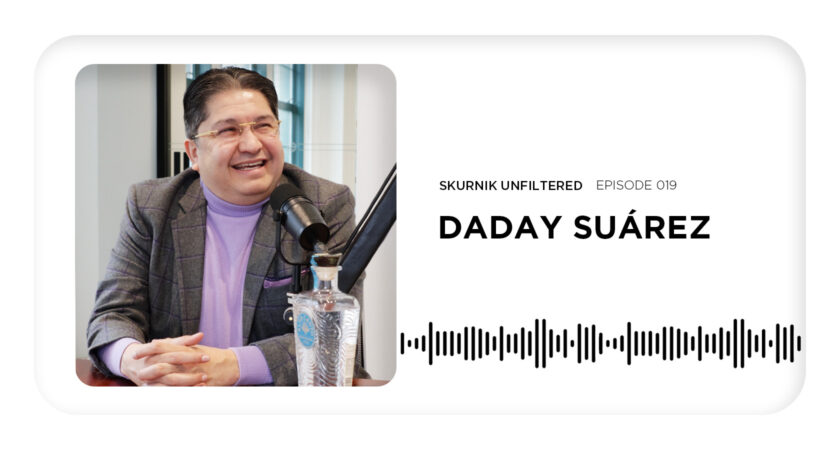
Daday Suárez is a completionist. When he was wrestling with questions of reality and being, he got a degree in philosophy. When he wanted to order wine at restaurants with more confidence, he became a certified sommelier. When he was looking for the perfect tequila, he used his degree in mechanical engineering to pave a road to the top of a mountain, then built the world’s highest elevation tequila distillery, Alto Canto.
Of all he has accomplished, Alto Canto is Daday’s crown jewel. He built it with a lasting legacy in mind—of quality tequila, yes, but also as a promise to nature. The distillery is entangled with native flora whose wild yeasts spontaneously ferment only organic, mature agaves. Coyotes and armadillos roam across the forested Sierra del Tigre range. Bees swarm, drawn to the vinaza, or liquid byproduct from distillation, which gets repurposed as fertilizer for local avocado farmers.
In this episode with Justin Lane Briggs, Daday shares his thoughts on what it takes to craft the highest quality distillate with as little intervention as possible, and where additive-free tequilas like Alto Canto fit in the flashy league of premium craft Mexican spirits.



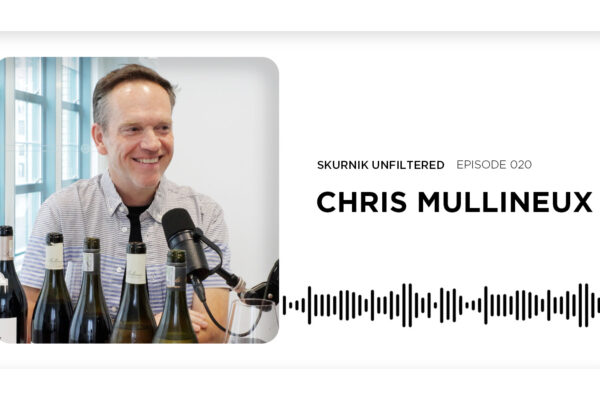
Next week, tune in as South African wine ammbassador Desiree Russo interviews her good friend Chris Mullineux of the Swartland.
Be sure to subscribe to Skurnik Unfiltered wherever you find your podcasts so you can stay up to date on all the exciting content to come.
Introduction
Daday Suárez
Everything that we do, it’s very pure. We are mingled or entangled with other species, with the trees, with everything. That’s one of the purposes of this tequila: not only producing tequila, but maintaining the harmony and equilibrium with the surroundings.
Harmon Skurnik
This is Harmon Skurnik, and welcome to another episode of Skurnik Unfiltered. Today we are going to Mexico together. I’ve got with me one of my favorite people in the company, Justin Briggs, who is the portfolio manager for all things Mexico. And you recently sat down with one of our top tequila producers, Daday Suárez. Did I say that right?
Justin Lane Briggs
You did. You nailed that. He’s a really fascinating character. It was a fun conversation. When he gets interested in something, he just dives in head, shoulders, knees, and toes. He made his career previously in the corporate headhunting world and human resources, and then decided that he wanted to pivot into something that would have more of a relationship to his heritage and be a legacy for his kids. He’s a fascinating and remarkable character. An example of that, when he decided to move beyond his corporate headhunting and human resources background and pivot his life direction a little bit to investigate why he wanted to make that change, and he went back to school and proceeded to get a degree in philosophy to understand where his head was at. When he became frustrated with reading wine menus and being stumped by what he was reading and not knowing what to what to look for, he decided to address that not by picking up a book on understanding wine, Wine for Dummies or something like that—he went and got a Sommelier certification.
Harmon Skurnik
So it’s your typical story of somebody who wants a career change, he builds up this business, goes and gets a degree in philosophy, and then starts a tequila brand. I mean, it’s just your typical story.
Justin Lane Briggs
Classic move, classic move.
Harmon Skurnik
So he started a brand called Alto Canto. That suggests something high.
Justin Lane Briggs
High song, yeah.
Harmon Skurnik
Is that something to do with where the agave that’s sourced for this tequila is located or not?
Justin Lane Briggs
Not actually where the agave is coming from. I often say that in agave spirits, done the traditional way, when you’re, in particular, using ambient yeast and allowing the the flora of the environment to impact the final yield of your distillate, there’s multiple moments for terroir to be expressed. There’s the terroir of where your raw ingredient was grown, your agave, but there’s also the terroir of where your fermentation happened, where your production happened. In Mezcal, you might see that impacting what kind of wood you’re using to smoke your agave or what kind of people will control ambient yeast by planting different kinds of flora around their palenques or their vinatas. This is an example of that. The agave is coming from both the highlands and the valley below, but they have the distinction of being the highest elevation distillery in all of Mexico at 9,000 feet above sea level. And the flora that’s there is unlike any other distillery in the entire country.
Harmon Skurnik
That’s interesting, that where the tequila is distilled has just as much impact on its final flavor as where the agave is grown. Amazing. And like all the tequilas in our portfolio, they’re additive free, isn’t that right?
Justin Lane Briggs
Of course.
Harmon Skurnik
That’s not typical for tequila.
Justin Lane Briggs
No, across the broad spectrum of the category, especially when you look at a lot of the more industrial tequila that remains most popular in Mexico, the use of additives to adjust flavor profile is widespread, even the, I would say, the de rigueur method of production. In the US, consumers have started to catch on to the question of being additive free or not, and that is no longer just the sole barometer of quality. But that being said, it’s helped to inform a lot of the luxury segment of tequila as we start to move away from luxury brands that are heavily dosed with all the things and made with really agriculturally questionable methods. A lot of the historic luxury segment for tequila is really rooted in celebrity adjacency and marketing and things like that. It’s much more rooted in in appearance than it is in things like transparency and integrity of production. And one of the things that makes Alto Canto, I think, really interesting is that it is so wildly unique. It is also playing in that kind of luxury space, but really aiming at transparency, integrity, sustainability—ethics of production—as a cornerstone as well, which is really unheard of in the category until very recently, and they’re really spearheading that that perspective.
Harmon Skurnik
As are we, aren’t we?
Justin Lane Briggs
Exactly, exactly! That’s like our wheelhouse.
Harmon Skurnik
Great. Ready?
Justin Lane Briggs
Sounds like fun.
Daday’s background
Harmon Skurnik
All right, let’s do it.
Justin Lane Briggs
Hey there, everyone. I’m Justin Lane Briggs. I’m the portfolio manager for Mexican Spirits for Skurnik Wines & Spirits, and I have the great privilege of sitting here today with Daday Suárez, who is the founder of Alto Canto Tequila, which is one of the most exciting new tequilas that we’ve had the opportunity to launch and work with, period. It’s a really, really wonderful and very new brand, and we’re gonna unpack that a little bit together today.
Daday Suárez
Thank you, Justin, for the introduction.
Justin Lane Briggs
It’s a pleasure. It’s an honor.
Daday Suárez
Thank you.
Justin Lane Briggs
I wanted to dive in before we get into—I know we have a kind of a structure, but I’m gonna mess with it right off the bat. Before we dive into a sense of place and where you’re based, I think that one of the things that I find really compelling, having gotten to know you, is your background and what led you to create this tequila label. There’s something about you that I’ve learned in talking with you, where you have this wonderful attitude of like, if you fall in love with something or you decide you want to do something, you invest your whole heart in it in a really deep way and in a really skilled commitment that I think is unusual in people. I’m thinking about when you became interested in philosophy and so you went and got an extra degree in it. You were interested in learning more about wine so you could order with more aplomb at restaurants, and then you went and became a sommelier. There’s this kind of like, “Well, if I’m gonna do it, I’m gonna do it” attitude that’s quite fascinating. And I would love to hear about how that came to bear upon creating a tequila label.
Building Alto Canto
Daday Suárez
Yeah, sure. Well, when I was young, well, young in my 20s, I had to stay a little bit longer at college. I missed my window of recruiting in these big corporations, so I couldn’t have the traditional way, the corporate way to establish a career in a big company. So after a few years, around my 30s, early 30s, I started a human resources company. And this was because I knew about human resources and quality. In 20 years, I started to lose a little bit of interest. So I decided to do another thing, and one of the other things that I decided was to study philosophy. I always had an itch or an interest in other things, not only engineering, which is my background or human resources. I’m curious, let’s say, in that way. And philosophy is something that I really like because it’s for my soul; it’s just to keep my mind growing, to understand more what I’m dealing with with reality, let’s say, the being, and that’s where I started. And right now I think it has served me in two or three different purposes. First, to raise my kids. I have three sons, and that helped me. Secondly, to be a better person and to understand better society and where I’m doing business or which people I’m talking to. And the third, it’s developing the tequila. Understanding what everything is. When I decided to start tequila, I said “What kind of tequila do I want to do?” So, in a very philosophical and reflexive way, I decided to ask that question. What kind of tequila do I want to do? How do I consider which is the best tequila? What’s the purpose of doing a tequila? So, I started to develop all these questions in my head and answering them. Mainly I’ve been studying all the things that I like, and that’s how I entered into tequila.
Justin Lane Briggs
A lot of people might start a tequila label and, let’s say, happily contract from somebody well established or even somebody kind of industrial. People might be very comfortable just launching a brand. And in very sharp contrast to that, you’ve gone ahead and built a brand new fabrica, a brand new distillery, but with intention and very clear design behind it. You’ve built it in a place where no one else is distilling. You’ve pursued all these things that are quite unique, and you’ve also pursued a lot of things that are very, very traditional and have rooting in other productions that you admire. You’re taking these two different things and really fully investing in them. Again, that sense of if you’re going to do something, let’s fully do it. And I guess I would like to hear about how you came to, let’s say, the choice of elevation. So for listeners out there, Daday’s distillery is the highest elevation distillery in Mexico.
Daday Suárez
In Tequila, regarding it’s the highest, and I think it’s the third or fourth all over the world, so 9,000 feet above sea level. Yes, I started as many other brands reaching out to suppliers to outsource the liquid and just bottle it. That was my first approach because the investment in a distillery is quite huge. I thought it would be almost impossible for me to build a distillery. I got the first approach to several high-end producers, the high-end distilleries. At that moment, I saw that it was very difficult for me to say we’re the best tequila if somebody else is producing the liquid or doing the process. And also at the time, the agave was really expensive, so it wasn’t really a business for me with those prices in 2019 and 2020. I hired a very good master distiller, and I talked to him and I asked him how costly it would be, building a distillery. So we started running numbers, planning it, and when I saw it’s feasible economically for me to build a distillery, I asked him, “Where do we build it?” And he told me we needed to do it in a high altitude. And he lives in Mazamitla, where the distillery is, and he took me there. And I told him, “You want to build a distillery here because it’s your home place and your birthplace.” And, “No, no, no, no. Listen to me, let me explain to you why it’s important the altitude.” So he expressed to me that at that height, all the processes behave in a better way. The cooking, the fermentation, and distillation take place on lower temperatures and high humidity. So that helps to cook the agave in a softer way, that helps the yeast to ferment in a better environment, and the distillation, because the alcohol evaporates in a lower temperature, it keeps some other kinds of alcohols that at higher temperatures are not allowed to. So all of this is only able to be done at that 9,000 feet altitude. That’s how we choose the elevation. On the other hand, we place it in a high mountain when there’s nothing, there’s no roads, there’s no buildings, there’s anything whatsoever.
Justin Lane Briggs
How do you get there?
Daday Suárez
It was very difficult. It would it took us almost a year to find land because most of the lands over there are forestal or not allowed to build something.
Justin Lane Briggs
Like they’re preserved or protected?
Daday Suárez
Yeah, they’re preserved and protected. You can find armadillos and coyotes and these nice birds all around the place. It was difficult for us to find a place where we can build a distillery. Then we had to put electricity. We brought the electricity 500 yards from the nearest place. We had to pave a little the road because it was extremely bumpy. We had to bring the water, the internet, everything from scratch. It was challenging, but if I really wanted to do the best tequila, it was to be in a special place, and that’s how we found that place.
Justin Lane Briggs
I love that moment of the story. Your master distiller’s named Juan, sí?
Daday Suárez
Juan Reyes, yeah, he’s like a very, very unique person. I love him. We’re like an old married couple. He was at Patrón for over 10 years. He was under Francisco Alcaraz, a very recognized master distiller. But when Bacardi took Patrón, things changed, and he decided to leave. He left Patron, and two weeks later, I was interviewing him for a job. He already had been offered another position in another mezcal company. But at the moment I interviewed him, and I started talking with him like you, and after 10 minutes, I said, “You’re hired. You’re the guy, you are the one that I want.” We’ve been together since December 2018, and it’s been an extremely fun and challenging ride because we both want to do the best tequila, but each one of us has a different path and different ideas, yes.
Justin Lane Briggs
I was gonna say, I love the moment of imagining him saying to you, “We need to go high elevation,” and you saying, “Okay.” And then what we wind up with, which speaks to both, of course, where he’s from, but also again to my mind, hearing it completely, placing it in the narrative of how I see you, I suppose, sort of like, “Oh, high elevation? I’m gonna go fully into that too. Let’s go 9,000 feet up. Let’s just keep going.”
Crafting the recipe
Daday Suárez
Exactly! I wanted more more altitude, but it wasn’t possible. But yeah, but I wanted more. Before I built the distillery, Juan had been working in many areas inside Patrón. And I told him, “Do you know how to do tequila? It’s one thing working in a huge company producing tequila, but it’s another thing to do A to Z, the whole process. So we built a micro distillery with a small copper pot still, a small oven.
Justin Lane Briggs
How big was that first copper pot that you were playing with?
Daday Suárez
20 liters.
Justin Lane Briggs
So it was tiny.
Daday Suárez
Tiny, yeah, and we used a canoe. We built a canoe.
Justin Lane Briggs
For those of you listening in who don’t know, a canoe is almost like a mortar and pestle. You’d use a mallet or a hammer or kind of almost like a giant baseball bat, and you mill it down mortar and pestle style, just pounding the agave away.
Daday Suárez
Exactly.
Justin Lane Briggs
That’s wild.
Daday Suárez
We built that micro distillery at that high altitude to know if we were able to develop the tequila. He came up to me with the first batch and he told me, “We nailed it, it’s a beautiful tequila.” And I drank it, and I didn’t like it. So I told him, “I’m sorry, but this is not good enough.” And he did 16 or 17 batches. We tried different kinds of yeast processes, and at the end, wild fermentation, it was the flavor and the profile that we wanted, and I said, “This is it.” The reason that I choose wild fermentation also is because of the nose. As a sommelier, in wines, for me, the nose is as important or more important than the taste of a wine itself. We’ve been trained to be able to detect all the aromas and spices and fruits that a wine delivers. That’s what I wanted to do with the tequila. We used the top-tier tequilas as a benchmark. Fortaleza, Cascahuin, G4, and I don’t remember, a couple more we were using to test our profiles against them in a blind tasting. And we used another sommelier so we don’t be biased about our tequila. And once I thought we were in that conversation, then I said to Juan, “We’re ready to go and build a distillery.” First we tried in a micro distillery. Funny story about that, we were using a small tower or condensation equipment and needed to have ice because it was so rudimentary.
Justin Lane Briggs
Like a small column still?
Daday Suárez
Yes, with ice. It was all improvised. In one of the productions, he finished the ice of the whole town. He started buying all the ice boxes or bags, and he finished the ice of the town, and they were complaining that the bars and other people didn’t have enough ice for the restaurant. It was fun. It was fun at that at that time doing that. Then we started building the distillery through the pandemic, so it wasn’t easy because the the workers got sick, and it was tough.
Justin Lane Briggs
It’s harder to get things, the supply chain is all messed up. You’re trying to get what you need, your resources.
Daday Suárez
Exactly. Also, the trucks didn’t want to go that high. They feared that they will, how do you say?
Justin Lane Briggs
I’ve been on some of those roads. Tip over.
Daday Suárez
Tip over, yes.
Justin Lane Briggs
That’s a very real concern.
Organic agave and wild yeast
Daday Suárez
So it was slow. It’s a small distillery. It’s not as big as these high-end producers or big huge corporations, but it’s more than enough to produce the tequila and the volume that we are aiming to sell. The philosophy that is behind Alto Canto, it’s bringing the best tequila to the market with the least intervention possible. We don’t want to mess with the agave, we just want to bring out the flavors and the aromas and all its nutrients and all its properties in a distillation process, but not putting anything whatsoever, no additives, obviously, it’s organic agave. We don’t want to put yeast, we don’t want to put nutrients, we don’t want to put anything. It’s very difficult to have a good product without intervening the process. That’s a little bit what we were struggling with at the beginning to develop the formula.
Justin Lane Briggs
I pumped my fist when you were mentioning the eventual decision to use ambient, wild yeast. There are many spirits and fermented beverages that I love that have all kinds of different controls through yeast and pitching and inoculation. I certainly never—not not getting dogmatic about that—but I do gravitate towards that in terms of agave spirits because it feels closer to to both mezcal, which is where I came into the agave spirits world, and also it feels like one of the spaces where you can see the most clear sense of terroir. Quite often in an agave spirit, it’s the place of production and the way that the yeast of that place is reflected in the eventual product. I have to wonder, at 9,000 feet up, how different is that environment, not just for growing agave. I don’t know if you grow at that elevation, or you probably can’t, right? Probably you’re growing at lower elevation.
Daday Suárez
Yeah, I source the agave from two different suppliers because it’s organic, and obviously, because of the time that it takes to grow the agave until it’s mature, six, seven years. So we are planning in.
Justin Lane Briggs
If it was planted in 2018, you’d just be starting your first batches now.
Daday Suárez
Exactly. I’m planning to start harvesting our own agave in the future, but right now we have two suppliers of organic agave, one from the highlands and one from the lowlands. There are just a handful of organic agave suppliers in Mexico because it’s not well recognized, the quality in that organic process. But yes, it’s difficult to have yeast at that elevation.
Justin Lane Briggs
Yeah, I was imagining there must be less, not just agave, which, it sounds like you’re agreeing there, you’re reinforcing my assumption that maybe it can’t grow at that elevation. Does agave even grow at 9,000 feet up in your experience?
Daday Suárez
No, no, no, there wasn’t any problem. But at the beginning, when we finished the distillery and we started to produce the first batch, Juan told me, “I hope that it works. I hope it ferments.” And I was like, “What! We just invested all this time and resources!” And he didn’t know if it was going to ferment like that.
Justin Lane Briggs
Ha! He’s like, “I’ve been spitballing this whole time!” I was curious about the flora. What other kinds of things are influencing the yeast that’s in the air.
Daday Suárez
There are a lot of fruit trees, and there are a lot of berries surrounding the mountains. It’s very fertile, the land. So what we did is, we planted several kinds of trees that their yeasts are very well engaged with the agave fermentation, which are cranberries, apples, agave, obviously, just for the yeast, not for the production.
Justin Lane Briggs
Are there certain varieties of agave that work better at that elevation for you?
Old-school techniques
Daday Suárez
Yeah, I don’t remember the different species, but they are wild agaves over there. But we planted a blue agave, so whatever the yeast, it will help the fermentation. Also, there’s a Mexican fruit called the jocote. It’s a yellow plum. There’s a lot of fruits surrounding the distillery, and we made a curtain surrounding the distillery with these plants. And also we planted lavender to propagate. That’s some of the things that we are trying to do with less intervention. We need to play with mother nature in a sense so that it can do its work in the fermentation. The first batch, it took us like eight days to ferment. Now it’s taking us three and a half days. It’s almost as if we use a propagated yeast or industrial yeast. It takes almost the same time, so the yeast are helping us. The distillery is built with bricks, and the reason we did that is because we wanted the yeast to live inside the bricks, so we can make a micro-ecosystem inside the distillery, so they can propagate naturally without having to do anything other than that. I think we are still trying to understand many things because the trees are growing. We are getting each time more and more yeast inside the distillery. We are still, I think, very new or very early in the process. I believe that in a couple of years we’re gonna be able to pick the profile, even though I believe it’s really, really good so far, but we are still understanding many things.
Justin Lane Briggs
When you ferment, you’re using like wood tinas, wood fermenters?
Daday Suárez
Yes, we are as old school as we can get. Stone brick ovens. The bricks were tailored or handmade from the surroundings. We’re using tahona. We brought the stone from Oaxaca because we wanted that kind of stone in the milling. The fermentation is in wooden tanks, American oak barrels. We only use American oak barrel to maintain consistency in everything. It’s open fermentation, and we do two fermentations. The first one, obviously, the alcoholic with the wild yeast, and we do a second fermentation, malolactic, in order to bring down the alcohol notes, create more viscosity or oiliness in the tequila, and create some different notes. Then after we do that, we do it with the fibers. We do the fermentation with the fibers, which is more mezcal process than tequila.
Justin Lane Briggs
Do you leave the fibers in during distillation as well?
Daday Suárez
Exactly. We use almost all the fibers in the distillation. We don’t use all of them because our pot stills are small and it doesn’t fit all the fibers, but we use as much fiber as we can get on the first distillation. They are copper pot stills. They are tiny, they are—well, tiny for the industry—600 liters. And we do two fermentations. We don’t filter the tequila, we only use paper filter some debris or some little things, but we don’t use anything. So what you’re drinking, it’s exactly what we’re bringing out from the copper pot. We don’t have any aldehydes which are very toxic. Most of the batches are zero or 0.002, so it’s as pure as it can get. And the esters, the alcohols that give the nose and the mouth, most of the tequilas are around 20 units. We are around 60 or 70 units. That’s what gives Alto Canto the flavor and the aromas.
Justin Lane Briggs
When you open the bottle, you smell it from a little distance that way. Yeah, that makes sense.
Daday Suárez
We haven’t been able to do all the testings during the process. We don’t have the equipment yet. That’s why I’m very confident that we are still going to improve the process because we are going to start doing more testing during all the stages.
Justin Lane Briggs
Well, practice makes closer and closer to perfect, too.
Altitudinal influence
Daday Suárez
Exactly. Exactly.
Justin Lane Briggs
Before we get too far into that side of the conversation, I wanted to spend one more moment with the elevation, if I could, and just ask you how else you feel that that unique place and unique elevation influences the final results of your process.
Daday Suárez
It works and runs smoothly. I don’t want to get too holistic or anything.
Justin Lane Briggs
Get philosophical! You have a degree. Come on.
Tasting Alto Canto High Proof Blanco
Daday Suárez
The nature. Because there’s nothing surrounding, everything runs really smoothly. The temperature in that area during the year, it’s around 50º or 60º Fahrenheit. That’s more or less the average temperature. It’s kind of chilly, it’s humid and it’s pure, the air. Everything is pure. The water, we bring the water from that elevation, so it’s like glacier water because it’s really cold. It’s very neutral without any metals or anything. Everything that we do, it’s very pure. The fermentation. You can see, smell, and feel. We have wasps and bees coming inside the distillery, and we cannot avoid that. They smell the sugar and they come running into the distillery. The residuals, the vinasa, I don’t know the name in English, we use it for the farmers. We have several avocado farmers nearby and they use it to fertilize their avocados, and they have these huge avocados as a result of using our vinasa and our fiber. They don’t do anything to you, but if you enter during winter, you can have like 20 or 30 bees all over you. They’re very cordial, very polite. If you don’t bother them, they don’t bother you, they don’t sting to you. So, as you can see, we are mingled or entangled with with other species, with with the trees, with everything. That’s that’s one of the purposes of this tequila, not only producing tequila, but maintaining the harmony and equilibrium with with the surroundings. Once we get bigger, we want to do another bioecological project in order to be more sustainable. For instance, we are trying to do the next batch with rainwater because it brings some nitrogen, and the nitrogen is the nutrient for the fermentation. That’s the whole purpose, not to affect the the surroundings of the of the mountain.
Justin Lane Briggs
Before we continue, should we have a small toast because we’re sitting here with a bottle and glasses poured here? What do we have in our glasses here?
Daday Suárez
Here is one of the best expressions that we have released so far. It’s Alto Canto High Proof. It comes in at 48% ABV. It’s directly from the still. We don’t filter it, it’s just agave, water, wild yeast, and that’s it.
Justin Lane Briggs
it’s delightful
Daday Suárez
For those of you who who are watching but you cannot smell, you can place your nose all the way inside the glass, and there’s not this huge burn or alcohol note. It’s very soft in that regard. It’s fresh, it’s like being in a meadow or in a forest or something like that.
Justin Lane Briggs
Very green, slightly floral.
Daday Suárez
Exactly.
Justin Lane Briggs
Really pretty tropical fruits.
Daday Suárez
Some citrusy, cut hay, I think is a little there. Cooked agave, and in the mouth it runs very smoothly.
Justin Lane Briggs
Yeah, the texture is awesome. It’s been one of my favorite things since I first started tasting your work.
Daday Suárez
Oily. It doesn’t burn. You don’t feel the burn either on your lips or your palate, and the aftertaste is really good. This was all Juan. I didn’t want to do a high proof, and he told me it’s necessary, a high proof, and I said, well, let’s do it.
Justin Lane Briggs
Juan was saying we need to do a high proof. Is that a response to trend in the market?
Thoughts on the tequila market
Daday Suárez
No, no, no. He liked it. Because he told me at 40% ABV, “It’s really soft. We can still put more alcohol and it be really soft and and very unique.” And he convinced me that high proofs were a valuable expression because these discussions took place like four years ago, before it got this huge trend about high proofs that has been on the market for the past two years. We developed the packaging and everything four years ago. He was the visionary man. Juan was the one who thought about this, and we’re loving this.
Justin Lane Briggs
Yeah. Why do you think that there is a trend towards higher proof tequilas? And what else do you see happening in the larger scope of tequila right now? Where does Alto Canto fit into that conversation? Are you guys an outlier or are you guys part of a growing movement? That’s kind of a number of questions at once, but.
Daday Suárez
Perfect. First of all, regarding the market, I wanted to do the best tequila possible with less intervention, but I wanted to be sure that the market was going to understand the product. And it’s one thing doing the things you think are the right way, and it’s another thing that the market accepts them. We saw a hole in the market, or a gap. In a higher category, most of the brands are not as artisanal or have high quality liquid. They are more focused on the branding and the lifestyle regarding tequila. But I don’t think that there are enough brands out there that are very, very consistent with the environmental awareness that we are producing our tequila with. We are aiming to that point to have a space in luxury, in high quality, but also as a craft process. I think the market is shifting, regarding tequila. I don’t know a lot about bourbon or whiskey or other things. I am more focused on tequila. I think in the premium 100% agave category, the the consumer is becoming more aware. He learns more, he’s more interested in how their tequila is being done and processed and everything. That doesn’t happen in Mexico, for instance. In Mexico, we don’t have that level of interest and education regarding tequila. It’s impressive how much more brands you have here in the US. The tequilas that you have here are way better than what we have in Mexico. It’s very difficult to have most of the brands that I can look and see in the stores in Mexico. We just have less access, so that’s the reason we are exporting here. I’m very thankful to Skurnik and you guys that you are giving me the opportunity to get here into the US market. It’s not easy for a new brand to get here from what I’ve seen in in these months that I’ve been here in the US working. Many other stuff is going on here in the US. I don’t know really how how this is going to happen, but I hope for the best of the both of us, you and I, well, the US and Mexico, because we are so close, not only economically—families, culture, traditions, many, many things. I hope that after these bumps we can get back to a steady relationship.
Justin Lane Briggs
Yeah, keep sharing the space. I agree.
Daday Suárez
Yes, I think so. Each time a consumer can drink or taste Alto Canto, I want you to take a sip and feel the warmth, the work, the integrity. Feel that you’re in the mountains and sipping a beautiful tequila, that is made with little or no intervention at all. Enjoy it and feel a little bit of Mexico.
Justin Lane Briggs
Beautiful. Well, I want to thank you again for spending time with us and and joining us here on the ninth floor, aI have nd nothing left to say besides salute.
Daday Suárez
Salucita, like you say here.
Justin Lane Briggs
Salucita.
Daday Suárez
Thank you so much, Justin.
Skurnik Unfiltered is recorded at Skurnik Wines & Spirits headquarters in the Flatiron District of New York City, which is why you might hear some city noises as we go along, like horns honking. If you found the conversation interesting, please consider liking, subscribing, and leaving a review. You can stay up to date on our show and upcoming events by following @skurnikwines on Instagram and visiting our website at skurnik.com