

The standard California playbook of Chardonnay and Cabernet often overshadows a rich history of alternative varieties perfectly suited for the modern climate.
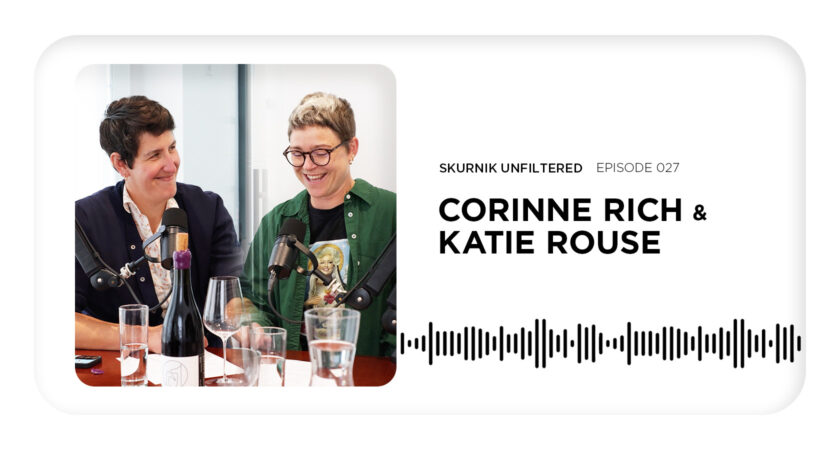
This week’s episode features two guests: Corinne Rich and Katie Rouse, the partners and winemakers behind Birdhorse. Balancing their own independent label with day jobs at respected wineries, they discuss how they built a brand from scratch, choosing to champion forgotten, climate-resilient Mediterranean grapes through close grower partnerships rather than traditional landownership.
The conversation centers on the unexpected potential of Valdiguié—a historic, bulletproof grape once known as “Napa Gamay.” Corinne and Katie explain how working with lesser-known varieties creates an even playing field for drinkers, stripping away the gatekeeping of traditional “wine speak.” They share their vision for making the industry more inclusive through approachable pricing, thoughtful low-intervention winemaking, and joyful, colorful labels designed to bring everyone into the conversation.



Next week, tune in as German wine expert Michael Lykens sits down with Nicola Libelli of Dr. Bürklin Wolf.
Be sure to subscribe to Skurnik Unfiltered wherever you find your podcasts so you can stay up to date on all the exciting content to come.
Introduction
Corinne Rich 0:03
I think joyful, colorful people can still make very beautiful, classically-styled, serious wines.
Katie Rouse 0:09
We’re a couple, we make wine, and bringing people along with us has been really important.
Corinne Rich 0:15
The goal is to bring people into the conversation always, and I think that’s top of mind for us.
Harmon Skurnik 0:20
This is Harmon Skurnik, and welcome to another episode of Skurnik Unfiltered. Today I’m with Camille Elguero, a portfolio manager here at Skurnik for our American portfolio. You recently sat down with Corinne Rich and Katie Rouse, who are the owners and winemakers together of Birdhorse, which is a relatively new label that we’re really excited about, right?
Camille Elguero 0:47
Yeah. We sat down, we chatted about their experiences, how they met—because they’re a wife and wife team—and what their philosophies are. It was lovely getting to catch up with them. They were really excited to visit New York, of course, and excited to be in our office for the first time.
Harmon Skurnik 1:04
Great. I know that they still have day jobs. Corinne is an assistant winemaker at Scribe, and right next door, Katie is an assistant winemaker at Bedrock.
Camille Elguero 1:13
That’s correct. They love that model. They love the opportunity to collaborate with some really great people, but also have a side gig to experiment on their own.
Harmon Skurnik 1:23
And I believe they also together worked a harvest down in South Africa with one of our favorite wineries, Mullineux.
Camille Elguero 1:31
That’s right. I think that’s where they formed their combined winemaking philosophy and decided to go into business together.
Harmon Skurnik 1:41
I really love their wines. They focus on varietals that are atypical. They’re not just your Chardonnay/Pinot/Cabernet winery. They have varieties like Arneis from Italy, Vermentino, Verdelho, and Valdiguié is their number one red wine. So, not your typical varietals.
Camille Elguero 1:59
They like the idea that not everyone knows what to expect from a Valdiguié, so people don’t feel like they need to know.
Harmon Skurnik 2:07
There’s not an expectation of what makes a typical Valdiguié, and therefore they feel free to express however they want to express it. Is that what they’re saying?
Camille Elguero 2:17
Yeah. It’s an opportunity for them to work with some vineyards that you don’t see every day. A lot of vineyards in California, especially old vine vineyards, are actually not Pinot Noir, Cabernet, and Chardonnay.
Harmon Skurnik 2:29
Yeah, it’s an interesting trend in California these days where a lot of these old vines that are producing some really great fruit, years ago, they may have gone into jug wines and blended away in some kind of Gallo ‘Hearty Burgundy’ or something like that. And today they’re being rediscovered by young winemakers, able to produce a wine from these old vines that is really distinctive and really expressive, allowing them to stand on their own. It’s kind of a cool trend.
Camille Elguero 2:59
Yeah, that’s exactly right. We represent some people who have been doing this for a long time, like Tegan Passalacqua of Sandlands, and I think it speaks to the history of California that we’re seeing more value in keeping these old vineyards around.
Harmon Skurnik 3:14
Well, on that note, let’s go to your conversation with Corinne and Katie.
Camille Elguero 3:19
Great.
Meet Corinne and Katie
Camille Elguero 3:22
I am Camille Elgero, and I’m here with Corinne Rich and Katie Rouse, who are from Birdhorse. The first question I’m going to ask is how you guys met.
Katie Rouse 3:31
Awesome. Well, thanks for having us. So excited to be in. I’m Katie. Corinne and I met in grad school officially. Corinne was my tour guide and TA for many courses at UC Davis, getting our master’s in viticulture and enology.
Corinne Rich 3:47
Officially, we met in grad school. Unofficially, we did meet a few years prior at a mutual friend’s cat funeral in the town of Sonoma.
Camille Elguero 3:54
Wow.
Corinne Rich 3:55
A very, a very memorable occasion, which we later realized on one of the later times we were hanging out. It came to light that we knew some of the same people in the town of Sonoma. And I was like, “Oh yeah, I know Jenny. I went to her cat’s funeral.” And Katie was like, “I went to that cat’s funeral!” Sidebar.
Katie Rouse 4:11
Sidebar, yeah. A lead-in to our life now as cat ladies. But I didn’t know it. I was a dog person, and here we are now, ten years later.
Corinne Rich 4:23
Ten years later.
Katie Rouse 4:24
Married.
Corinne Rich 4:25
Very much in love.
Katie Rouse 4:26
We met at Davis, studying winemaking and we both had worked in the industry for five plus years separately, both had a passion to make wine ourselves in a different way than we were exposed to in our jobs that we had had previously.
Corinne Rich 4:42
And I think a lot of the wineries we’d worked for in the past were on the more classic side, so we’d seen a lot of the world of Pinot Noir and Chardonnay and Cabernet. I think there were some really important lessons to take from all that, of site specificity and terroir and what it means to craft fine wines. But I think that we, as a younger generation of winemakers, were sitting here, like, California is vast, right? It is huge, and there’s such a tremendous amount of diversity of terroirs and microclimates. And I just don’t buy the notion that Chardonnay should be planted everywhere. There’s got to be other varieties out there that are better suited, that can showcase these very special and historic grape growing regions that maybe don’t have the the clout or the fame that a Napa or Sonoma does. How can we discover and explore that ourselves and then bring it to other people was really the idea.
Katie Rouse 5:43
Yeah, and we worked a harvest in South Africa about a year after we started dating. There’s a lot of energy behind a new generation of winemaking there that really inspired us for what Birdhorse became when we got back to the States.
Camille Elguero 5:59
That’s so cool. South Africa. I’ve never been, always wanted to go.
Katie Rouse 6:02
So beautiful.
Corinne Rich 6:03
Highly recommend it.
Katie Rouse 6:04
So cool, so interesting.
Corinne Rich 6:06
And an industry that— the parallel between them and California was so clear to us. It’s an industry that’s really undergoing rediscovery, where the world of of Chenin Blanc and Pinotage are still very important, but there are these regions like the Swartland where people were talking about these heritage vine plantings and Syrah and things that have not been a part of the zeitgeist for South African wine. And we were like, “I think this exact thing exists in California.”
Camille Elguero 6:32
Yeah, I’m always surprised when looking at California. The older vineyards are not necessarily planted to Pinot Noir, Chardonnay, and Cabernet.
Corinne Rich 6:42
Almost never.
Katie Rouse 6:42
Some interplantings of Cabernet and other varieties, but yeah, often not at all.
Camille Elguero 6:48
It turns out that French influence came much later, and it’s more like Italian, Croatian, and some other things, like fishermen who were in that region. When looking at Birdhorse, the Valdiguié, which we have on the table, is one of your main wines. Do you have a favorite variety that you work with?
Corinne Rich 7:08
Don’t ask us to choose between our children. On the record, they’re all our favorite.
Prioritizing site and uncommon varieties like Valdiguié
Katie Rouse 7:14
I think Valdiguié is definitely a darling. I think the tie-in of both the history in California, where it used to be planted really broadly across Napa and broader than that, called Napa Gamay. I used to work with it at a previous winery, and it was used as a blender. It started me on the path of thinking about varieties that I had never heard of. This is growing just over in Suisun Valley, just east over the Vaca Mountains from Napa, and no one’s really giving it any time of day; it’s just used as a blender. But this is delicious on its own. People should be making this wine! Fast forward 10 years to Birdhorse, it was like, Oh, what an exciting place to start.
Corinne Rich 8:00
And 70 years ago, when Valdiguié was first coming to the United States, vignerons of that time were planting it everywhere. And later on, when Robert Mondavi was getting into the business, he was singing its praises and talking about how it was the great future of red wine winemaking in California. Clearly, that is not how it shook out when Cabernet started making a lot of money, but people saw potential in this a long time ago.
Camille Elguero 8:26
What are the qualities of Valdiguié that make it so compelling in California?
Corinne Rich 8:31
From a grower’s perspective, it is highly mildew resistant. It crops fairly generously. In terms of growability, it is a variety that isn’t terribly finicky.
Katie Rouse 8:47
Yeah, pretty bulletproof, honestly.
Corinne Rich 8:49
Which gives it a lot of range and diversity to grow in a lot of places.
Katie Rouse 8:53
And it’s also a grape that, as a red variety, is pretty malleable to winemaking style. It’s a very bright, fruited, juicy, low-tannin variety, and so getting to play with it and building more texture and tannin on the palate is a really fun way to explore the grape and how it expresses itself while maintaining the freshness and pushing either brighter, fresher, or broodier, spicier. It takes to winemaking really well, and I think that’s a through line of a lot of our varieties, while maintaining the core identity of what we think these grapes are, especially in California, where Mediterranean grapes do so well in the climate, they hold their acid. That’s what has driven Birdhorse in choosing the varieties that we’re working with.
Camille Elguero 9:43
To get a run of what you’re currently making or what’s currently in the cellar, you make about 10 different varieties?
Corinne Rich 9:52
I think we’re officially at eight.
Katie Rouse 9:54
Yeah. Verdelho was our first white, and now we make a Vermentino and Arneis on the white side, and then for reds, Valdiguié, as we’ve discussed, we make a Carignan, we make Barbera, and then we make a “red blend,” but mostly Cinsault-dominated.
Corinne Rich 10:12
So actually that was only seven.
Katie Rouse 10:14
Oh, well, there you go. Sometimes you have to expand to bring it back in.
Corinne Rich 10:20
That’s actually one of the hardest conversations to have. One of us, usually me, has found a parcel of some variety where I’m like, “This would be so cool!” And then Katie’s like, “We make eight SKUs for a thousand cases. Maybe those numbers don’t really make sense and we shouldn’t add another SKU.” The temptation is kind of like the Pokémon mentality of “Gotta Catch ‘Em All” is easy to slide into on accident. That’s been an evolution over the years, too, where I think it started with wanting to cast a wide net, and then with time—because we’re now seven years into this, which feels wild—the driving creative force is more around the refinement of what we’re already doing. How can we push the boundaries? How can we make these wines even better instead of add another, add another, add another.
Camille Elguero 11:11
I was going to ask how the vision for Birdhorse has changed over the years, and that kind of answers it. You’re refining it.
Finding inspiration in partnerships with growers and each other
Camille Elguero 11:19
I think of you guys as prioritizing site, prioritizing interesting varieties, and then your refinement of that is continuing to make the things you have been making and only adding top-notch sites. How do you decide on a new site?
Katie Rouse 11:36
A lot of research goes into it, whether it’s tasting a lot of varietal expressions of it from California, from the Old World, where they come from, and then getting to know the grower. Those relationships are so critical for our success, and what the farming practices are, if they’re able to establish a longer-term relationship, as we’re getting small amounts of fruit, we want to be able to have a through line and not just be a one-off. Tasting comps and then evaluating the site for what its benefits are, tasting other varieties that are grown in the vineyard, seeing how it expresses itself.
Corinne Rich 12:15
And we had that exact thing two years ago. We were really flirting with buying some pretty premium Moon Mountain Sangiovese that was a very exciting, cool, volcanic vineyard. And we we did just that. We already knew the grower, we tasted a whole bunch of comps, we had a lot of conversations about it, and honestly, it came down to where does this fit, in terms of the structure of the wines we’re already selling, and price point. And ultimately it just wasn’t the right time.
Camille Elguero 12:48
Martha Stoumen was on here a bit ago and she was mentioning the partnerships that you build with these growers who are really focused on just growing—and maybe have been growing for generations—is something to be valued as well in California, and getting away from this estate model—not on purpose getting away from it, but .
Corinne Rich 13:12
I was saying this yesterday when we were out on the town. Katie and I live and reside in the county of Sonoma. I think we know the ins and outs of farming, but I’m not sitting here thinking that I know how to farm land in Amador or Contra Costa better than someone who has spent their whole life out there, and has been raised out there, and knows the ins and outs and the nuances of the climate and the geology and all the little pieces.
Katie Rouse 13:37
Yeah, and we are foundationally grounded in the relationships that we’ve fostered with our growers and the vineyard owners, and we won’t be successful unless they are, and so being able to tell their story and broaden that landscape allows us to do what we do. We make a pretty small amount of wine all in, but being able to buy the same fruit year in, year out, and have discussions about farming methods and how we’re getting the highest quality grapes is critical to our success. As we’re not landowners, it’s an exciting part of the job.
Corinne Rich 14:11
Millennial landownership is not a term we use very often for a reason. The world, for our generation, looks a lot different in terms of how you can start a wine brand. There are certainly a lucky few who, through connections and business savvy, can get the big investment and buy the piece of land and go the more traditional route. But I think for most of us, this model of custom crush clients, mostly purchased fruit, maybe farming a few small vineyards, is where a lot of people get started and where a lot of people end up staying because the barrier to entry of having your own little slice of land is pretty high.
Camille Elguero 14:51
I know you both work for other wineries on the side, or rather, however you want to say that. That’s common for our younger California winemakers. I’m thinking Tegan Passalacqua, I’m thinking Martha Stoumen. Do you find that having multiple jobs is challenging? Or does it help that you’re sharing a wall with Bedrock Wines?
Corinne Rich 15:19
There’s no wall, we just share the whole facility.
Katie Rouse 15:22
There’s a curtain, but it is a joined curtain. It’s an interesting landscape of winemaking for smaller, newer brands. I feel like there historically has been this ethos in some places, like there are wine secrets and there has to be separation. And certain businesses, absolutely you have to be focused fully on what you’re doing. But I think, at least in our case, we’re really lucky to work for brands that are really collaborative and excited about us being excited. We all lift each other up by bringing new ideas to the table, doing things differently, having different perspectives. And through getting to make our wine at Bedrock, where I work, it’s afforded a lot of flexibility and creativity that we wouldn’t have otherwise. And resources, of course. We get to bounce ideas off of each other; someone picks up an idea that we do, we pick up an idea from Morgan Twain-Peterson or my colleague Cody, who has his own brand, Desire Lines. There’s a constant dialogue of winemaking.
Corinne Rich 16:32
When we first started Birdhorse, there was this idea: can we grow this enough that this becomes somebody’s full-time job? The dream was to strike out on our own and work for ourselves, and over time, that’s the biggest thing that has changed. I don’t think either one of us feels anymore like that is the path forward. But I think a lot of that has been because we have really learned the joy in getting to do both—in having a full-time job where we’re working for someone else, with other people, and the opportunities to collaborate and learn and grow, but then having this side project that is such a cool opportunity for creative expression and our own exploration. That is likely the future for us for this brand.
Camille Elguero 17:21
What’s it like working so closely together? It’s kind of unique to work with your life partner, your wife now. Congrats.
Corinne Rich 17:29
Thank you very much.
Katie Rouse 17:30
It felt so natural and an easy place to start the brand at first. And then Corinne and I started working in the cellar together and realized quickly that we both have very different ways of working. As we’re both making the wines, it certainly required a little bit of patience and a natural division of labor.
Corinne Rich 17:56
But it’s interesting. As Katie was alluding, day-to-day, boots on the ground, we crash into each other a little bit. But in terms of the vision for the brand, the vision for the wines, those conversations have always been really easy. We’ve always been very much in alignment and see a lot of the same things or a lot of complementary things in the varieties we work with. When we’re spitballing ideas for tweaks we want to make, things we want to change, those conversations have always been pretty straightforward, which is really cool.
Katie Rouse 18:32
Yeah. Micro, there are moments of conflict, but macro, it’s always really inspiring to look out and see what we’ve created together and be really excited about it. I think it’s constantly inspiring, as cheesy as that sounds. We are able to do it together, and that’s been really foundational.
The Birdhorse style
Katie Rouse 18:53
Camille Elguero 18:53
How do you situate your winemaking style in terms of California? Are you more low-intervention? Are you more conventional? Are you somewhere in between? How do you decide that?
Corinne Rich 19:07
I think it certainly evolved over time. We would definitely throw ourselves more towards the low-intervention camp, but that was never a dogma of, like, this is how the best wines are made. We started from the perspective of, so much of this is new. These regions are newer to us, these varieties are varieties we’ve worked with somewhat before, but we want to do as little as possible to see what that does for each of these varieties, how that expresses, and then from there, start building in the different winemaking elements that we think can make them really beautiful and really express the terroir.
Katie Rouse 19:44
Yeah, at the core of that, it’s always been just expressing the wine and the location as best as possible. And so from that, like Corinne said, minimal intervention. We do native fermentations for all of the wines. We do use sulfur to make sure they’re protected. Certainly not a very strict dogma behind what we’re doing.
Corinne Rich 20:04
Even though we’re experimental, the style and expressions of our wine are meant to be very, very classic.
Katie Rouse 20:10
Yeah, exactly. Classic expressions of these varieties that aren’t as common in California’s landscape, but we think should be more readily available, should be planted more widely, well suited for the climate, expressions of the varieties and the places they come from.
Corinne Rich 20:24
We’re not like the old guard, but we’ve both been doing this long enough that the techniques that people like to ostracize themselves from—I understand why people have strong feelings about things like inoculated yeast or filtration—but I think we’ve also seen enough fermentations and worked enough wines where we’ve seen instances where those techniques can also really work. And I think being prescriptive about it is where you get into wines that are uninteresting and don’t have a lot of life in them. But I think if you’re being very thoughtful about selective moments where maybe some of those things can be helpful to you, you can still make really beautiful wines.
Making wine inclusive and accessible
Camille Elguero 21:01
You’ve both been vocal about broadening the conversation about who gets to make and drink wine. What does that look like for you?
Katie Rouse 21:10
As we have grown into Birdhorse, it became a natural part of telling our story , to see people in the wine industry who look like us, who identify as we identify, and making a space to showcase that we’re here and we exist. We’re a couple, we make wine, and bringing people along with us has been really important.
Corinne Rich 21:37
Yeah. Things have changed so much in the wine industry in the last 10 years in a really positive way, which is not to say that there isn’t more change that needs to be enacted. But 10 years ago, I was of the belief that men with dogs in flannel shirts had the singular grip on what terroir expression meant in California. Because that’s all that was out there. That was on all the websites and all the marketing. Those are the only faces you saw.
Camille Elguero 22:04
That flannel just had a chokehold on it.
Corinne Rich 22:07
Right? And you gotta have the dog next to you, and you’re walking through a vineyard, you’re really looking at a vine—you can picture the whole thing in your mind. And I remember seeing all that, being a young person in the industry, and just being like, Well, where do I fit in? I am so far from that. How do I get to have a voice in all of this? And I honestly think that was one of the biggest pieces of the genesis for Birdhorse, where we were just like, We can do this too, and we can be vocal and visible about it, and we want people to see that.
Katie Rouse 22:35
Yeah, as women, as queer women, it’s like, yeah, why not?
Camille Elguero 22:39
Absolutely. We’re happy that you’re in our portfolio.
Katie Rouse 22:43
Yeah, we’re thrilled for that. There’s a broader perspective in the wine industry that is much more inclusive, even from 10 years ago, like Corinne said. It feels like things have changed in a really meaningful way, and there’s still a lot of change to be made, but it’s exciting that it’s moving that direction.
Corinne Rich 23:02
The other piece of the question that you posited was the narrative of who gets to drink wine. And that’s an even bigger question, right? One of the biggest ways to bring people in—and one of the things we have always talked about, honestly—is price point. I cannot make a $70 wine and say this is for everybody because it’s not, right? That is the economic reality of the world that we live in. So, wanting to have a range of price point and accessibility for younger drinkers, for drinkers from different socioeconomic backgrounds, I think that is one of the easiest ways to bring people in.
Katie Rouse 23:43
Yeah, exactly. Price point and language. There’s a lot of wine speak that is sometimes really hard to get past. It’s like, Oh, I don’t know anything about wine, so that’s something that I think we really love is having a more whimsical, playful perspective and language around our wines to make them feel more approachable.
Corinne Rich 24:05
Which in some ways ends up being kind of funny because, we’re sitting here having this conversation with you, and I think if we want to get into the really nerdy, nitty-gritty, I think we have the capacity to do that, but I don’t think that we ever want to feel like we need to lead with that and show everybody how smart we are. That’s not the goal. The goal is to bring people into the conversation always. And I think that’s top of mind for us.
Katie Rouse 24:27
Yeah, and it makes it easier with less common varieties because everyone’s a little bit more on an even playing field. I think it’s an important way to bring people in, like Corinne said.
Camille Elguero 24:37
Especially at this moment, it feels as if bringing more people in can only help. And at the end of the day, sharing wine shouldn’t feel like you need a degree. It’s communal, it’s a hedonistic product. It’s supposed to be enjoyed. We’re supposed to drink it and be like, “Ooh, that was delicious,” and that’s it. It’s nice to bring people in, and then they dig into it a little bit more. That’s exciting because you can go deep with wines. It’s never-ending, what you can learn about wine. The more you know, the more you realize you don’t know. I think that’s really great to bring new people in and make people realize it is for everyone at the end of the day. It’s a beautiful product. Let’s taste the Valdiguié. And I can ask you, “Why the name Birdhorse?” because I forgot that in the intro. And you can talk about this, which is one of your core wines.
Katie Rouse 25:37
Yeah, our flagship wine.
Corinne Rich 25:39
The name Birdhorse… First of all, finding a name for your wine brand when you don’t want to name it after yourselves—what a vision board, what a creative process that is. But we always wanted a name that was reflective of the two halves of something, because this brand is such a journey of our partnership, and us, and our combined vision. When we were playing around with those ideas, we had recently listened to an episode of “Wait, Wait, Don’t Tell Me,” the NPR news quiz. They were having a discussion with a celebrity guest about how they all classify people in the world, and one of the interviewers said that they have three descriptors, and everybody gets two. The order of the matters, and it’s sort of like a self-actualization thing. You are either bird, horse, or muffin.
Katie Rouse 26:32
And if you listen to the taping of that explanation on “Wait, Wait, Don’t Tell Me,” it’s very physical. They’re like, “You’re a bird, horse, or a muffin.” But we’ve really come to take it as spiritual.
Corinne Rich 26:45
Obviously, that stemmed some very fruitful discussion between the two of us, in which we came to the conclusion that Katie’s a bird-muffin and I am a horse-muffin. And thus, put them together, you get Birdhorse.
Camille Elguero 27:00
Bird, horse, muffin, muffin.
Corinne Rich 27:02
Exactly. But it’s too long to put all that on the label.
Katie Rouse 27:04
Muffin doesn’t roll off the tongue quite as readily. And it is funny, that was so easy and it made so much sense, but there also are so many wine brands that are oriented around birds or horses. It wasn’t intentional to be that on the nose, but sort of in a whimsical way.
Corinne Rich 27:25
And it is a really funny journey. Let me tell you, when you are designing your wine label and you are trying to work with a graphic designer and telling them, “No, no, no, make it less horsey,” it’s very difficult. Katie actually ended up designing all of our labels because she was the only one who really got the vision.
Camille Elguero 27:45
Wow, well done. I was saying earlier how much I like your labels. I like that it’s really simple and that you have different colors for each different wine too. It’s a nice through line.
Katie Rouse 27:58
Yeah. An important marker of our identity too, in that color palette.
Corinne Rich 28:03
Yeah, I think joyful, colorful people can still make very like beautiful, classically-styled, serious wines, and you don’t have to be the consummate philosopher winemaker to make wines that are beautiful and expressive.
Katie Rouse 28:15
Corinne is also a philosopher winemaker.
Corinne Rich 28:18
Absolutely
Katie Rouse 28:18
For the record.
Corinne Rich 28:20
100%. That’s me.
What makes the perfect wine?
Camille Elguero 28:23
Cheers.
Katie Rouse 28:24
Cheers. Valdiguié.
Corinne Rich 28:27
It’s so funny, we were just talking about this yesterday, how Valdiguié is a variety that’s just so exactly what it is. That aromatic, that big, bright, fruity, berry-driven bouquet is always the core of the wine, regardless of vintage, regardless of technique. It smells like that from the day we barrel it down to the day it goes into a bottle.
Camille Elguero 28:52
When you think about an ideal wine and an ideal winemaking style or vision, do you have something in mind that you aim for? How do you handle the idea of perfection in winemaking?
Katie Rouse 29:09
Ha! What is a perfect wine?
Corinne Rich 29:10
I think we live in the world of like, no wine is ever finished, which we were talking about earlier, constantly trying to find ways to iterate and push the boundary of what we did last year, what did we like, what did we not like, all within within some stylistic confines. Because I think if we took our barrel-fermented Verdelho this year and then made it into a 100% skin-ferment aged n stainless steel, that’s stylistic whiplash. Within the the boundaries we’ve created for ourselves, we’re always trying to find ways to refine and improve.
Katie Rouse 29:44
Yeah, exactly. I don’t think we’re ever expecting to make a perfect wine. I don’t think that that exists necessarily, but we’re trying to craft it into what feels ideal. My coworker at my day job asked me the other day, “What’s the best wine you’ve ever made, Katie?” I’m like, I don’t know! I don’t think that’s a fair question because I think we’re always striving for more and more refinement. I think there’s always opportunity for growth there.
Corinne Rich 30:12
And I also—this is really getting into it—but I just think that perfection is antithetical to the narrative of wine, a thing that is supposed to be so expressive of the time and the place and the moment that it’s made. How can you find a technique that if you carbon copy or repeat year on year continues to make the best, perfect wine? Those two things seem to be at odds with each other to me.
Camille Elguero 30:42
Yeah, that makes sense. You just iterate and try to improve whatever you did the previous year. You get one shot, right?
Katie Rouse 30:50
Yeah, it’s always going to be different, year to year. Perfection one year looks different from another year.
Camille Elguero 30:58
Thank you so much for being here with us.
Corinne Rich 31:00
Thank you for having us. Cheers.
Katie Rouse 31:02
Cheers. Such a pleasure, always a delight.
Skurnik Unfiltered is recorded at Skurnik Wines & Spirits headquarters in the Flatiron District of New York City, which is why you might hear some city noises as we go along, like horns honking. If you found the conversation interesting, please consider liking, subscribing, and leaving a review. You can stay up to date on our show and upcoming events by following @skurnikwines on Instagram and visiting our website at skurnik.com
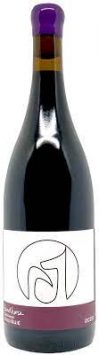
Birdhorse ‘Suisun Valley’ Valdiguié
- Practicing Organic
- 100% Valdiguie
- Letty’s Vineyard (Suisun Valley AVA)
- Planted in early 1900s
- Clay loam soil
- Native yeast fermentation
- 3 separate fermentations occurred for this wine. One was 100% whole cluster in tank, another 50% whole cluster in tank and the last was full destemmed and fermented in an anaerobic chamber.
- The tank fermented wines were foot trodden and fermented for 19 days on the skins. The Anaerobic wine had nearly 0 air in it’s vessel and was allowed to ferment outside in the sun for 16 days.
- All wine was kept separate for 9 months when aging in barrel after their fermentations and then blended together at the end
- 12.5% ABV