


Bodega Cerrón
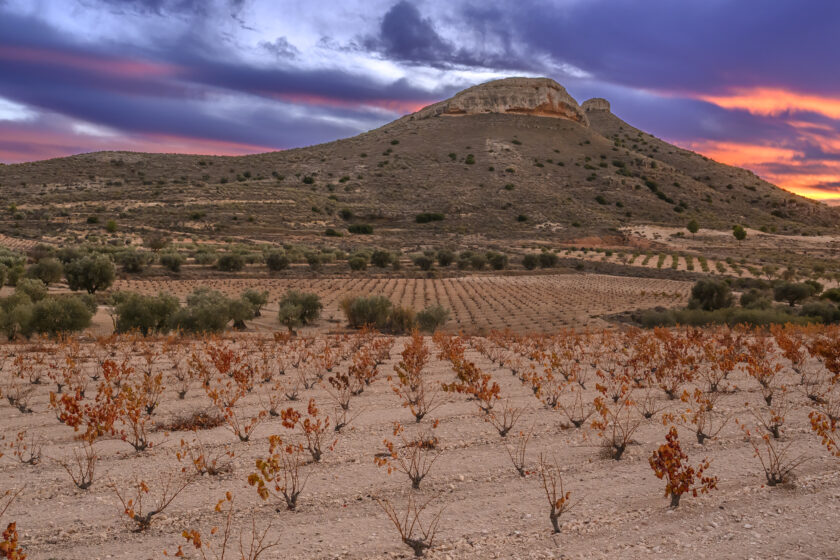
How comes it that Jumilla and Monastrell, an appellation and grape hardly known for dazzling elegance, are producing some of the most electrically refreshing wines in Mediterranean Spain today? The answer is that a decade of pathbreaking work by the rising generation of the Cerdán family is now coming to full fruition at Bodegas Cerrón. This young three-sibling team, led by winemaker Carlos, is harnessing old vines, high altitudes, and extremely poor limestone soils to produce a stunning collection of wines, wines so distinctive that the greats of Bandol have been known to pop over to see what the fuss is all about…
The story begins three generations ago, when the Cerdán family began planting vines around Fuente-Álamo outside Albacete, in a stretch of what is now the Jumilla appellation that straddles both sides of the political border between Castilla – La Mancha and Murcia. Many of the family’s top holdings among their 30 hectares today date to this period, but it was not until 2004 that Carlos, Juanjo and Lucía’s parents decided to break away from the local cooperative and begin domaine-bottling at their own Bodega Cerrón. After little more than a decade, however, the family stood at a crossroads: farming their old bushvines was labor-intensive and unremunerative in the face of a market fed on cheap, cheerful Jumilla that frequently offered little more than sugar ripeness. Could the project continue?
Carlos’ answer was an emphatic yes, driven by the sense that abandoning the family tradition would result only in remordimiento—regret—a word proudly emblazoned on two of their cuvées. Grabbing the winemaking reins in 2016, he put a swift and decisive stamp on the project and has rapidly brought Cerrón into the top rank of the peninsula today. As the inheritor of superb dry-farmed bushvine sites on pure calcaire at 800 meters and up, Carlos brought in more vineyard workers to inaugurate a high-precision (and now Demeter-certified) farming regimen. The resulting Monastrell, Garnacha, Airén, Macabeo, and Chardonnay (!) grapes enter the cellar at full ripeness but markedly low pH for the region. His meticulously dialed approach in the cellar favors spontaneous ferments at high temperatures, large-format oak and concrete, recipe-free stem inclusion per vintage, and minimal sulfur (combined with a violent distaste for wine faults!).
While the majority of the production is red, centered around Monastrell with varying additions of Garnacha, it would be a mistake to ignore the delicious Remordimiento white, whose Airén and Macabeo in fact play second fiddle to Chardonnay—stunningly delicious Chard at that. These are wines that marry ravishing fruit with unique (for the region) mineral and acidic spine. They are thrillingly alive expressions of the modern Mediterranean, at amazingly accessible pricepoints. We are thrilled to offer them!