

Amity Vineyards
Amity Vineyards occupies a special place in the history of Oregon wine. The original vines went into the ground in 1971 and the winery was founded in 1974 by Myron Redford — one of the state’s true pioneers, at work a decade before most of his neighbors and long before anyone outside Oregon took the Willamette Valley seriously. Redford was an experimenter to the core: he produced the country’s first organically grown, sulfite-free wines and championed Gamay Noir when nobody else would risk it, decades before the variety became a sommelier favorite.
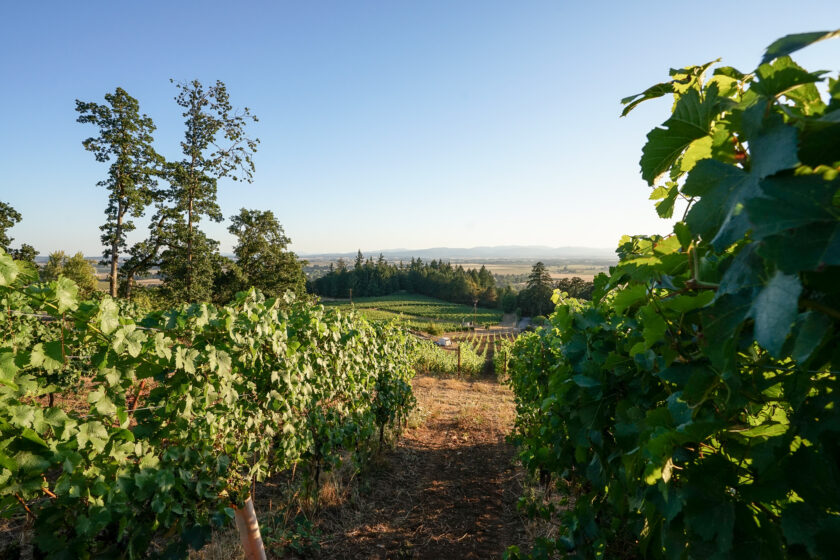
The estate sits in the heart of what would become the Eola-Amity Hills AVA, where iron-rich volcanic soils meet the cooling breath of the Van Duzer Corridor — the gap in the Coast Range that floods the hills with Pacific air each afternoon, extending the growing season while preserving the bright acidity and aromatic lift that define the appellation. The original plantings of Pinot Noir, Riesling, and Pinot Blanc established Amity as one of the region’s foundational sites.
In 2014, Ryan and Eric Harms of Union Wine Company purchased Amity from Redford — the name, the winery, and the estate vines — taking up stewardship of a property they treat less as an acquisition than an inheritance. The brothers have invested steadily in the vineyard’s next fifty years: tired blocks replanted, entirely new ground broken for additional acreage, and the old vines and varietal identity that made the estate famous carefully preserved. Redford’s signature Gamay Noir remains central to the portfolio.
The farming follows Union’s long-view philosophy: sheep graze the rows for vegetation management and natural fertility, pollinator islands and native plant corridors run through the property, and when an old block was recently pulled, the vines were converted to biochar and worked back into the soil to feed the next planting. It is farming done as though the land will be handed down — because it will be.
Today’s Amity wines — Pinot Noir at the core, joined by Riesling, Gamay Noir, and Pinot Blanc — are made to put the site first: vibrant acidity, savory complexity, and the structural elegance that distinguishes the Eola-Amity Hills. They offer something increasingly rare in Oregon — a working piece of the state’s pioneer era, farmed for the future and still priced for the table.