


J. Palacios Remondo
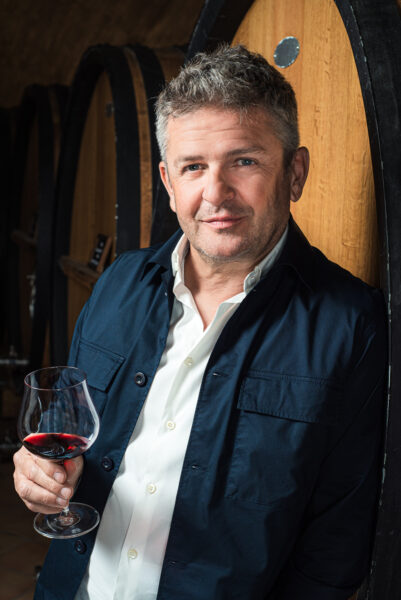
The Palacios name is quite simply one of the single most consequential in Spanish wine of the last four decades. No fewer than three of its scions lead domaines considered at or near the top of their respective appellations: Rafael in Valdeorras, Ricardo in Bierzo, and, most famously, Álvaro in Priorat. It was he, the seventh of nine children, who, after staging with Jean-Pierre Moueix at Château Pétrus, went to Gratallops in 1989 and joined a then-ragtag bunch who reshaped the appellation, creating in the process the legendary Finca Dofí and L’Ermita bottlings. The latter remains today one of Spain’s single most sought-after collector’s items. And yet, amidst all this glamor, the story of the family’s origins has flown curiously under the radar in the United States. For the cradle of the clan, the place whence Álvaro left for Priorat, returned triumphantly in 1999, and continues today at the highest level of his career, is none other than J. Palacios Remondo, established by Álvaro’s father José in 1947 in Alfaro, the capital of Rioja Oriental.
Rioja Oriental—formerly known as Rioja Baja, until Álvaro himself pushed for the change—shows a very different face of Rioja from the more familiar long-aged Tempranillo-dominant wines of the Alta and Alavesa districts. This is Garnacha country. Because it’s warmer and lower altitude on average than Alta and Alavesa, Oriental has historically been associated with cooperativism, high yields, and modest quality, but in the right hands, and in the right places, it is unquestionably one of the world’s great Garnacha terroirs. Álvaro’s vineyards lie on the east-facing foothills of the Monte Yerga from around 400 to 600+ meters of altitude on mix of iron-rich clay and limestone with alluvial material. In this sweet spot, Garnacha ripens to spicy and utterly varietally-correct flamboyance with a juicy, stony spine of freshness. That said, Garnacha isn’t the whole story: Álvaro’s holdings are sprinkled throughout with traditional seasonings like Bobal, Moristel, pink-skinned Garnacha roja, and Tinto Velasco, known locally as Graciano de Alfaro—no relation to ‘regular’ Graciano.
His single most important holding, a group of parajes from 400-500 meters of altitude collectively known as Finca la Montesa, is a 100-hectare block of 100% estate-owned, organically-farmed vines that supply a cuvée of the same name. La Montesa is the estate’s calling card, and, amazingly, is at the same time both one of the single greatest quality-for-value propositions and one of the single most important organic cuvées in the entire country of Spain. Like all his wines, it eschews the more northerly tradition of long aging and frequent racking in favor of a shorter elevage and fresher fruit profile (though it does still technically qualify as a Crianza). Vines are on the younger side here, meaning mostly 15 to 40 years old, but it’s very notable that starting around 15 years ago, Álvaro has done all new plantings here en vaso, or as bushvines, a practice nowadays nearly extinct from lack of know-how.
Higher up the Monte Yerga, at 600 meters and above, is the remoter bastion of the oldest vines, 90 years and older, clinging on amid mountain pasturage. These parcels supply the old-vine blend Propiedad de Yerga, which is only produced in the best vintages and ages in strictly traditional fashion in larger barrels rather than barriques, disqualifying it from anything other than cosecha on the label. There is also an intermittently-available, very small-production white wine produced from Viura grapes up here called Plàcet de Valtomelloso.
Winemaking is clear and transparent, intended to show Garnacha’s true colors as the queen of the Mediterranean, the only grape that, in Álvaro’s words, is profoundly capable of transmuting sunlight, drought, and limestone into “an indescribable sense of pleasure and excitement”. All grapes are hand-harvested and fermented with native yeast—truly impressive at the scale—and new oak is minimal. The French and American barriques used on La Montesa will give way entirely to larger bocoyes within a couple vintages, formats already used on the other cuvées.
These are profoundly delicious and true-to-type wines from a world-class winemaker and estate which have flown under the radar in the United States for too long. We invite you to dive in and discover why J. Palacios Remondo is the great domaine of Rioja Oriental, and one of the world’s most important Garnacha producers!