

Nikolaihof
Nikolaihof (22ha)
Mautern / Wachau / Austria
Nikolaihof is one of the oldest wine estates in Austria, with a history going back almost 2000 years to the Roman Empire. Originally chosen by the Romans because it was considered a Celtic holy site prior to 800 B.C., the foundations of the current house date to a Roman tower which existed as early as 63 B.C. Wine has been produced here since the time of the Celts and continued throughout the time of the Romans. Germanic monks obtained the estate during the collapse of Rome, and the first written evidence of winemaking comes from 470 A.D. This writing documented the monk’s ownership of the vineyard ‘Im Weingebirge’, the earliest named vineyard site in all of Europe that Nikolaihof still farms to this day.
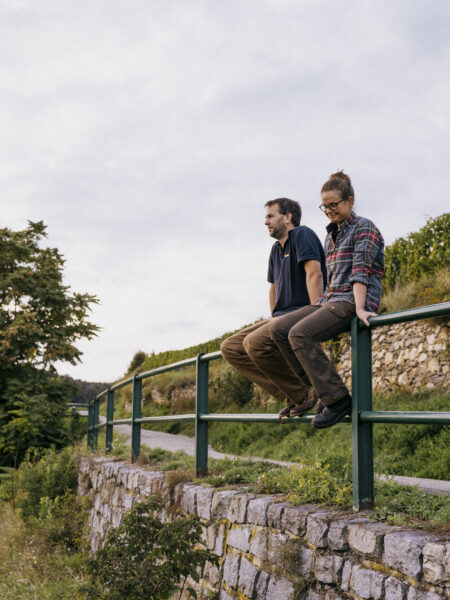
The Saahs family acquired Nikolaihof in 1894 and carried on the traditions that the monks had long established. Integrated farming continued, and even as grape growing and winemaking took a larger role at Nikolaihof in the 1960s, chemicals were never used in farming. Essentially, this estate has always been organic. Nicholas and Christine Saahs took over the estate in the late 1960s, and Christine began the conversion to biodynamic farming. Nikolaihof has been practicing biodynamics since 1971, making them one of the longest biodynamic practicing wineries in the world. Nikolaihof became Demeter certified biodynamic in 1998. Nikolaus (Niki) Saahs, Christine and Nicholas’ son, took over in 2005 and has since been joined at the estate by his partner, Katharina Salzgeber who is now the estate’s cellarmaster.
Nikolaihof still functions as an independent, biodiverse farm, growing all kinds of herbs, fruits, and flowers, tending beehives for honey, and even using seeds for grapeseed oil. The average age of the vines at the estate is around 50 years old and the vineyards are farmed without herbicides, pesticides, artificial fertilizers, or synthetic sprays. Instead, stinging nettles, manure, valerian root, and other specially produced preparations are used. Natural fermentations are the rule, in Austrian oak vessels, deep in the cold, 700-year-old cellar. Long lees contact and aging are the norms, with some wines aging as long as 15 years before being bottled.
- Vineyard Area: 22 hectares
- Top Sites:
- Ried Im Weingebirge: The oldest named vineyard site in Europe, the soil is varied with loess on the higher terraces and deep topsoil over primary rock lower down the slope
- Ried Vom Stein: Vom Stein is a sub-site of the Silberbichl vineyard. The soils are gneiss with mica inclusions; there is a layer of loess and topsoil
- Ried Steiner Hund: Primary rock with river pebbles, very stony, just outside of the Wachau borders hence the labeling of “Reserve” and not Smaragd
- Soil Types: Primary rock topped with humus or gravel, and eroded primary rock
- Grape Varieties: 55% Riesling, 35% Grüner Veltliner, 10% Weissburgunder, Malvasier, Neuburger, and Chardonnay