

Makarounas
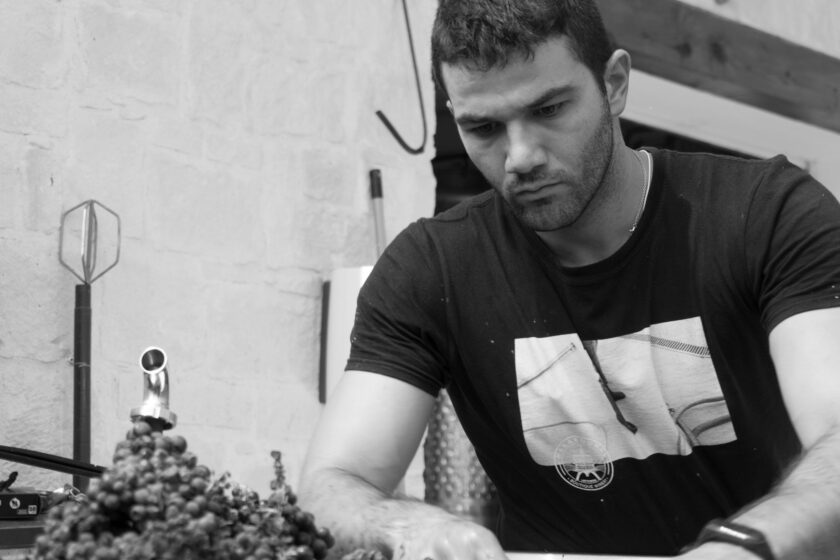
Theodoros Makarounas may well be the most important winemaker in Cyprus since medieval times, when its world-renowned sweet wine, Commandaria, was considered ‘the wine of kings’. Centuries of subjugation to the Ottoman and British empires would crush the island’s winemaking, leaving only bulk production, co-operatives, and indifferent wine. Theodoros is changing all that.
When he returned home to Cyprus in 2016 with a UC-Davis enology degree, he decided not to follow the established path of selling fruit to larger producers as his family had done for generations. Rather, as the only producer on the island who retains control of the grapes from vineyard to winery, he built something unprecedented in modern Cyprus: an estate winery.
Theodoros organically farms 25 hectares climbing from 400 to 600 meters in the village of Letymbou, situated in the foothills of the Troodos Mountains, where ungrafted vines root into crystal gypsum, limestone, and quartz-rich soils that provide natural drainage while retaining enough moisture for deep root systems. The Troodos foothills are central to modern Cypriot wine. Being closer to Turkey or Syria than even to Greece or Europe, Cyprus boasts a climate more Levantine than Greek– hotter, drier, and more intense. The mountains’ elevation moderates the island’s otherwise intense heat, while cool nighttime temperatures preserve acidity, freshness, and aromatic precision. The Troodos range is also geologically unusual: an uplifted section of ancient oceanic crust whose fractured volcanic and sedimentary soils produce patchwork diversity across short distances. Historically, these writhing mountain foothills also served as a haven for old vineyards, indigenous varieties, and ungrafted vines.
Theodoros works almost exclusively with native Cypriot varieties: Maratheftiko and Xynisteri, Spourtiko and Giannoudi, Promara and Vasilissa. Hardly museum pieces, these are living expressions of milennia of adaptation to this exact climate and soil, thus making compelling cases for themselves. Maratheftiko offers dark fruit and violet aromatics with uncommon verve for a warm climate. Xynisteri gives saline minerality and citrus tension that recalls both Assyrtiko’s power and Vermentino’s ease. He’s also built a reputation for his masterful winemaking of Cabernet Franc, a variety that found its way here by accident but has become a cornerstone of the property.
In addition to organic farming, Makarounas’ vineyards are 100% ungrafted. He ferments with indigenous yeasts and is minimal in approach, producing wines that exhibit the true character of each variety without masking flavors with oak or additives. His use of amphora and cement for fermentation follows this philosophy.