

Karanika
Laurens Hartman-Karanika (kah-rah-NEE-kah) was raised in the Netherlands to a Dutch father and a Greek mother. Though an economist by training and profession, his formative years were far from a bookish retreat of financial modeling: his fraternity wine club at the University of Leiden had the pleasant habit of spending most weekends tasting through northern European cellars anywhere in car range of Leiden. This was a deep schooling in the halls of the Mosel, the Rhineland, Luxembourg, Alsace, and even Burgundy and the upper Loire. But most of all, it was a yearslong apprenticeship in Champagne. This was the mid-‘80s, when cellars still had plenty of bottles dating back to the ‘60s for anyone who bothered to show up, and it was before the twin revolutions of warming climate and changing vinification styles made a significant stamp on wine culture. A stamp, it must be said, that was not entirely to Hartman’s taste.
Years later, lamenting to friends the ‘lost’ wines of his youth, Laurens heard two basic responses: get over it, or be the change you want to see. It was around then, during the notorious heatwave summer of 2003, that he found himself by chance on family travel in the quiet, out-of-the way Macedonian nook of Amyndeon in far northwest Greece. It was here that he found his destiny: Xinomavro grapes still on the vine in mid-September, inching their way to ripeness under temperate skies, almost a month after the vats of Champagne had already been filled. From this moment forward, starting his own project became an obsession, an obsession that led as far as an enology degree at UC Davis and the decision made with his wife, Annette van Kampen, to relocate full-time to Amyndeon and harness the potential of old-vine, cool-climate Xinomavro to create Domaine Karanika, an estate focused entirely on top-quality traditional-method sparkling wine.
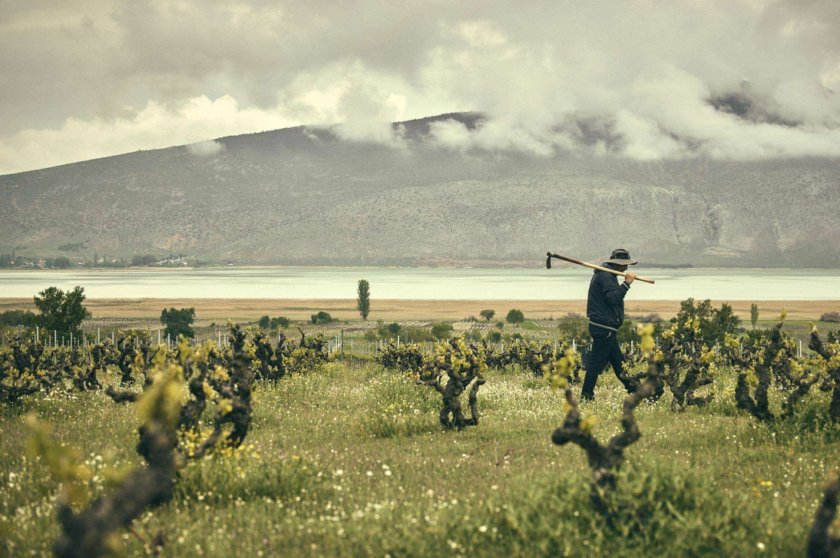
From the first vintage in 2006, the standards of quality at this address have been exceptional. The bulk of their raw material, akin to that which that so struck Laurens in 2003, consists of 60 year-old Xinomavro vines that are both certified organic and ungrafted, thanks to the predominant sandy soil texture. These are supplemented by a small amount of younger Assyrtiko vines and non-organic vineyards on long-term contract. All of them enjoy the unique conditions of Amyndeon, Greece’s highest-altitude and coolest-climate growing region. Base wines are fermented only with wild yeast and unfiltered, and every one of the domaine’s approximately 120,000 bottles produced annually are riddled by hand before disgorgement. Perhaps most impressively, all of Karanika’s wines are produced with 100% free-run juice, a surpassingly unusual protocol that sacrifices a staggering additional volume potential on the altar of strict quality and produces wines of captivating concentration and character given their crisp, lithe, low-alcohol frames.